How Much Should You Spend on Housing?

Deciding how much of your hard-earned income to allocate toward housing is one of the most critical financial choices you will ever make. Whether you are hunting for your first starter home, eyeing a suburban upgrade, or navigating a competitive rental market, housing costs consistently command the largest share of the average household budget.
When housing expenses spiral out of control, they quietly sabotage your ability to save, invest, build wealth, or achieve long-term financial independence. Conversely, choosing the right housing sweet spot allows you to live comfortably today while systematically securing your financial tomorrow.
This comprehensive guide explores the math, psychology, and modern strategies behind housing affordability. By the end, you will have a clear, actionable framework to determine your ideal housing budget with absolute confidence.
The Golden Rules of Housing Affordability: Traditional Benchmarks vs. Modern Realities

For decades, personal finance experts have leaned on standardized rules of thumb to help consumers gauge how much house they can afford. While these formulas serve as excellent starting points, understanding their nuances helps you tailor them to your unique financial ecosystem.
The Classic 28/36 Rule
Dating back generations, mortgage lenders and financial planners widely utilize the 28/36 rule as a baseline for creditworthiness and affordability:
- The Front-End Ratio (28%): Your total monthly housing costs—including principal, interest, property taxes, homeowner’s insurance, and homeowners association (HOA) fees—should not exceed 28% of your gross monthly income.
- The Back-End Ratio (36%): Your total monthly debt obligations (housing costs plus student loans, car payments, credit cards, and personal loans) should not exceed 36% of your gross monthly income.
While this rule provides a helpful ceiling, it assumes a traditional financial landscape with minimal consumer debt. In today’s economy, carrying high-interest student loans or auto financing means your 36% back-end ratio might feel suffocating, even if your housing ratio sits comfortably at 28%.
The 30% Rule for Renters
For renters, the conventional standard dictates that housing costs should consume no more than 30% of your gross income. Originally popularized by U.S. housing policy in the mid-20th century as a measure of rent burden, spending more than 30% classifies a household as “cost-burdened.”
However, in high-cost-of-living metropolitan areas like New York, San Francisco, or Boston, adhering strictly to the 30% rule can force individuals into severely compromised living situations or lengthy, exhausting commutes. Consequently, many modern financial advisors suggest looking at your net income (take-home pay) rather than your gross income when applying these percentages, as taxes and mandatory deductions drastically shift your real-world purchasing power.
Gross Income vs. Net Income: Which Metric Should Guide Your Housing Budget?
One of the most common pitfalls in financial planning is relying exclusively on gross income when calculating housing affordability. Your gross income is your total earnings before taxes, retirement contributions, health insurance premiums, and other payroll deductions.
Why Gross Income Can Be Misleading
If you earn $100,000 annually, the 28% rule suggests you can safely spend $2,333 per month on housing ($28,000 per year). However, after federal income taxes, state taxes, FICA, health insurance, and pre-tax 401(k) contributions, your actual take-home pay might be closer to $70,000—or roughly $5,833 per month. Suddenly, a $2,333 housing payment consumes 40% of your net monthly income, leaving significantly less room for groceries, utilities, savings, and discretionary spending than the gross calculation implied.
Shifting to a Cash-Flow Mindset
To build a bulletproof housing budget, modern financial planners recommend calculating your affordability using net take-home pay.
- Calculate Your True Take-Home Pay: Look at your last three months of bank statements or pay stubs to determine your average monthly cash inflow after all automatic deductions.
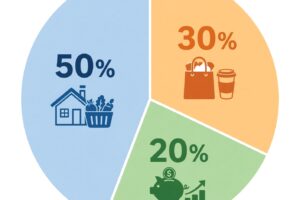
- Apply a Conservative Percentage: Aim to keep your total housing expenditure between 25% and 35% of your net income.
- Account for Phantom Costs: Ensure your calculations account for fluctuating utility bills, internet, routine maintenance, and local property tax hikes.
Hidden Housing Costs Homeowners and Renters Frequently Overlook
When individuals ask “How much should I spend on housing?”, they often fixate exclusively on the base monthly rent or the principal and interest portion of a mortgage payment. This narrow focus frequently leads to budget strain, as numerous secondary expenses accompany any living arrangement.
The True Cost of Homeownership
Owning a home involves financial responsibilities that extend far beyond the monthly mortgage statement. Smart homeowners plan for the following variables:
- Property Taxes: Local municipal and county taxes fluctuate over time and can increase significantly as property values appreciate. These are often escrowed into your monthly payment, driving up your total bill year after year.
- Homeowner’s Insurance: Depending on your geographic location, insurance premiums are rising rapidly due to climate risks, natural disasters, and inflation in construction materials.
- Maintenance and Repairs: A reliable rule of thumb is to set aside 1% to 2% of your home’s total value annually for ongoing maintenance. A leaking roof, a failing HVAC system, or plumbing emergencies can quickly drain an emergency fund if you budgeted solely for the base mortgage.
- HOA and Condo Fees: If you live in a planned community or condominium, monthly association dues cover shared amenities and exterior maintenance. These fees are subject to annual increases and do not build equity.
Hidden Expenses for Renters
While renters avoid property taxes and structural maintenance, they face their own set of financial considerations:
- Rent Escalation: Unlike a fixed-rate mortgage where principal and interest remain stable for 30 years, rent prices typically increase annually upon lease renewal, influenced by local market demand and inflation.
- Renter’s Insurance: While relatively inexpensive, liability and personal property insurance are essential to protect your belongings from theft, fire, or water damage.
- Moving and Setup Costs: Security deposits, broker fees, utility hookup charges, and furnishing a new space require upfront capital that can deplete liquid savings if not properly forecasted.
Balancing Housing With Other Life Goals and Financial Priorities
Your home is a place to live, relax, and build memories, but it is also one piece of your broader financial puzzle. Over-allocating your income to housing restricts your ability to fund other essential pillars of a balanced financial life.
The Opportunity Cost of Housing
Every dollar spent on excess housing square footage or high-end finishes is a dollar that cannot be deployed elsewhere. Consider the financial trade-offs:
- Retirement Accumulation: Compound interest is your most powerful wealth-building ally. Funding your retirement accounts (such as a 401(k), IRA, or Roth IRA) early in your career creates exponential long-term growth that a primary residence alone cannot always match, especially when factoring in maintenance and transaction costs.
- Emergency Reserves: Maintaining a robust emergency fund covering three to six months of living expenses protects you against sudden job loss, medical emergencies, or unexpected economic downturns. A high housing payment makes building and replenishing this safety net substantially more difficult.
- Debt Freedom: Carrying high-interest consumer debt, such as credit card balances or personal loans, while maintaining an expensive housing footprint can trap you in a cycle of financial stress. Prioritizing debt elimination often yields a higher guaranteed return than buying a larger home.
Lifestyle Design and Personal Values
Personal finance is deeply personal. Some individuals prioritize a minimalist lifestyle with low housing overhead to maximize travel, entrepreneurship, or early retirement (the FIRE movement). Others find immense psychological value in a spacious suburban home, a short commute, or living in a vibrant urban cultural hub.
The key is conscious spending—ensuring that your housing expenditure aligns with your genuine core values rather than societal pressure or external expectations.
Strategic Frameworks to Determine Your Personal Housing Budget

To synthesize these principles into a concrete decision, walk through this step-by-step framework before signing a new lease or making an offer on a property.
Step 1: Audit Your Current Financial Baseline
Begin by reviewing your past 6 to 12 months of spending. Categorize your expenditures into fixed needs (groceries, insurance, minimum debt payments), financial goals (savings, investments, retirement), and discretionary wants (dining out, entertainment, hobbies). This audit reveals your true spending patterns and highlights how much cash flow is genuinely available for housing.
Step 2: Stress-Test Your Budget
Financial life is rarely linear. Before committing to a specific housing payment, run stress tests against potential future scenarios:
- Income Reduction: Can you comfortably manage your housing payment if you or your partner experiences a job loss, takes a pay cut, or transitions to freelance work?
- Interest Rate and Tax Shifts: If you are buying a home with an adjustable-rate mortgage or anticipating property tax reassessments, model how a 15% to 20% increase in monthly costs would impact your cash flow.
- Family Changes: Anticipate upcoming life milestones, such as starting a family, caring for aging relatives, or pursuing higher education, which alter financial demands.
Step 3: Factor in Down Payments and Liquid Reserves
Purchasing a home requires more than just making monthly mortgage payments. You must maintain sufficient capital for:
- Down Payment: Putting down 20% eliminates the need for Private Mortgage Insurance (PMI) and lowers your monthly payment, though lower down payment options (like 3% to 5%) exist for first-time buyers.
- Closing Costs: Loan origination fees, appraisal fees, title insurance, and transfer taxes typically add 2% to 5% of the purchase price in upfront closing costs.
- Post-Purchase Reserves: Never empty your savings account entirely to close on a home. Maintaining a separate cash buffer ensures you are prepared for immediate post-move surprises or repairs.
Crafting a Sustainable Housing Strategy
Determining how much you should spend on housing requires a delicate balance between mathematical prudence and personal lifestyle design. While traditional benchmarks like the 28/36 rule or the 30% rent guideline provide helpful guardrails, your final decision should reflect your net income, total debt obligations, long-term wealth-building goals, and psychological comfort.
By looking beyond base rent and mortgage numbers, accounting for hidden maintenance and tax costs, and protecting your capacity to save and invest, you can secure a living space that enhances your quality of life rather than restricting it. Approach your housing search with clarity, patience, and a long-term perspective, and you will build a solid financial foundation for years to come.