How Fear Changes the Way Investors Think

Financial markets are often perceived as vast, rational systems driven by cold calculations, corporate earnings reports, and macroeconomic indicators. Yet, beneath the veneer of numbers, spreadsheets, and algorithmic trading lies a powerful, often overlooked engine: human psychology. Among all the emotions that dictate market movements, none holds as much sway as fear.
Fear is an evolutionary survival mechanism designed to protect us from physical threats in the natural world. However, when applied to modern financial markets, this primal emotion can distort reality, impair cognitive function, and lead to catastrophic financial decisions. Understanding how fear alters investor thinking is not merely an academic exercise; it is an essential survival skill for anyone seeking to preserve and grow capital in volatile economic environments.
The Neurobiology of Fear: How the Amygdala Hijacks Rational Decision-Making

To understand why investors panic during market downturns, we must first examine what happens inside the human brain during periods of perceived threat. When market volatility spikes or asset portfolios drop precipitously, the brain’s processing shifts dramatically.
The Fight-or-Flight Response in Trading
At the center of emotional processing is the amygdala, an almond-shaped cluster of nuclei located deep within the temporal lobes. The amygdala acts as the brain’s emotional sentinel, scanning the environment for danger. When it perceives a threat—such as a sharp decline in portfolio value or breaking news of an economic crisis—it triggers the sympathetic nervous system, initiating the classic “fight-or-flight” response.
This neurological activation releases a flood of stress hormones, including cortisol and adrenaline, into the bloodstream. While these chemicals prepare the body to outrun a predator or fight an attacker, they wreak havoc on financial decision-making. Specifically, they suppress activity in the prefrontal cortex, the region of the brain responsible for:
- Long-term strategic planning
- Complex mathematical reasoning
- Probabilistic thinking
- Impulse control
When the prefrontal cortex is effectively bypassed by an amygdala hijack, investors stop thinking in terms of probabilities, risk-adjusted returns, and fundamental valuations. Instead, they think in terms of immediate survival: Get out now before everything is lost. This neurological shift explains why otherwise intelligent, rational individuals engage in irrational panic selling during market corrections.
Cognitive Biases Amplified by Market Fear
Fear rarely operates in isolation. Instead, it acts as a powerful amplifier for a wide array of cognitive biases—systematic errors in thinking that derail objective analysis. When fear takes the wheel, several psychological shortcuts distort how investors interpret market data.
Loss Aversion and the Asymmetry of Pain
Behavioral economists Daniel Kahneman and Amos Tversky revolutionized our understanding of decision-making with Prospect Theory, demonstrating that the psychological pain of losing money is roughly twice as intense as the joy of making an equivalent gain.
When fear enters the equation, loss aversion goes into overdrive. Investors become hyper-focused on protecting what remains of their capital, viewing every downward tick not as a temporary fluctuation, but as an existential threat to their financial security. This asymmetry causes investors to abandon long-term investment horizons in favor of immediate risk mitigation, often locking in permanent losses at the absolute worst possible time.
The Availability Heuristic and Recency Bias
During periods of extreme market stress, the human brain relies heavily on mental shortcuts known as heuristics. The availability heuristic leads people to assess the likelihood of an event based on how easily examples of it come to mind.
When stock markets plunge, terrifying headlines, catastrophic predictions from commentators, and images of historical market crashes flood media channels. Because these vivid images are readily available in memory, fearful investors overestimate the probability of total economic collapse.
Closely related is recency bias—the tendency to overemphasize recent events while discounting historical context. A fearful investor experiencing a three-week market correction acts as though markets will decline indefinitely, completely ignoring decades of market history showing that corrections are a normal, recurring part of economic cycles.
The Social Contagion of Panic: Herding Behavior and Market Meltdowns
Humans are fundamentally social creatures, hardwired for tribal inclusion. Throughout evolutionary history, staying with the tribe meant safety, while straying alone meant certain death. In financial markets, this deep-seated evolutionary trait manifests as herding behavior.
Why Panics Spread Faster Than Optimism
Fear is contagious. Psychological research demonstrates that humans can unconsciously detect fear through pheromones and facial expressions, triggering mirror neurons that replicate the emotional states of those around us.
When stock prices begin to tumble, anxious chatter spreads rapidly across social media platforms, financial forums, and office hallways. As more participants sell, prices drop further, validating the initial fears of hesitant observers. This creates a powerful feedback loop of panic.
[ Market Decline Begins ]
        │
        ▼
[ Fear Triggers Amygdala ]
        │
        ▼
[ Social Contagion & Herding ]
        │
        ▼
[ Panic Selling & Liquidity Drain ]
During major liquidity crises or panic-driven sell-offs, independent critical thinking vanishes. Investors look to the actions of the crowd for guidance, operating under the dangerous assumption that “everyone else must know something I don’t.” Ironically, the crowd is often reacting to the exact same phantom fears, creating self-fulfilling prophecies of market crashes.
Fear of Missing Out (FOMO) vs. Fear of Loss: The Dual Nature of Market Anxiety
While fear is most commonly associated with terror and panic selling during market crashes, it also manifests during raging bull markets in the form of FOMO—the Fear of Missing Out. FOMO is driven by anxiety, insecurity, and envy, yet it originates from the same emotional machinery that causes panic.
The Psychology of Speculative Bubbles
When asset prices surge—whether in technology stocks, real estate, or cryptocurrencies—non-participating investors watch peers accumulate seemingly effortless wealth. This triggers a potent emotional discomfort: the fear of being left behind, looking foolish, or failing to secure financial freedom while others succeed.
FOMO overrides fundamental analysis just as effectively as panic does. Driven by this anxiety, investors abandon disciplined asset allocation models, buy overvalued assets near market peaks, and take on excessive leverage. They convince themselves that “this time is different,” falling prey to the greatest illusion in finance.
Ultimately, FOMO and panic are two sides of the same psychological coin. Both represent a failure to anchor decisions in rational valuation, substituting emotional reactions for disciplined strategy.
Long-Term Portfolio Destruction Caused by Emotional Reactions
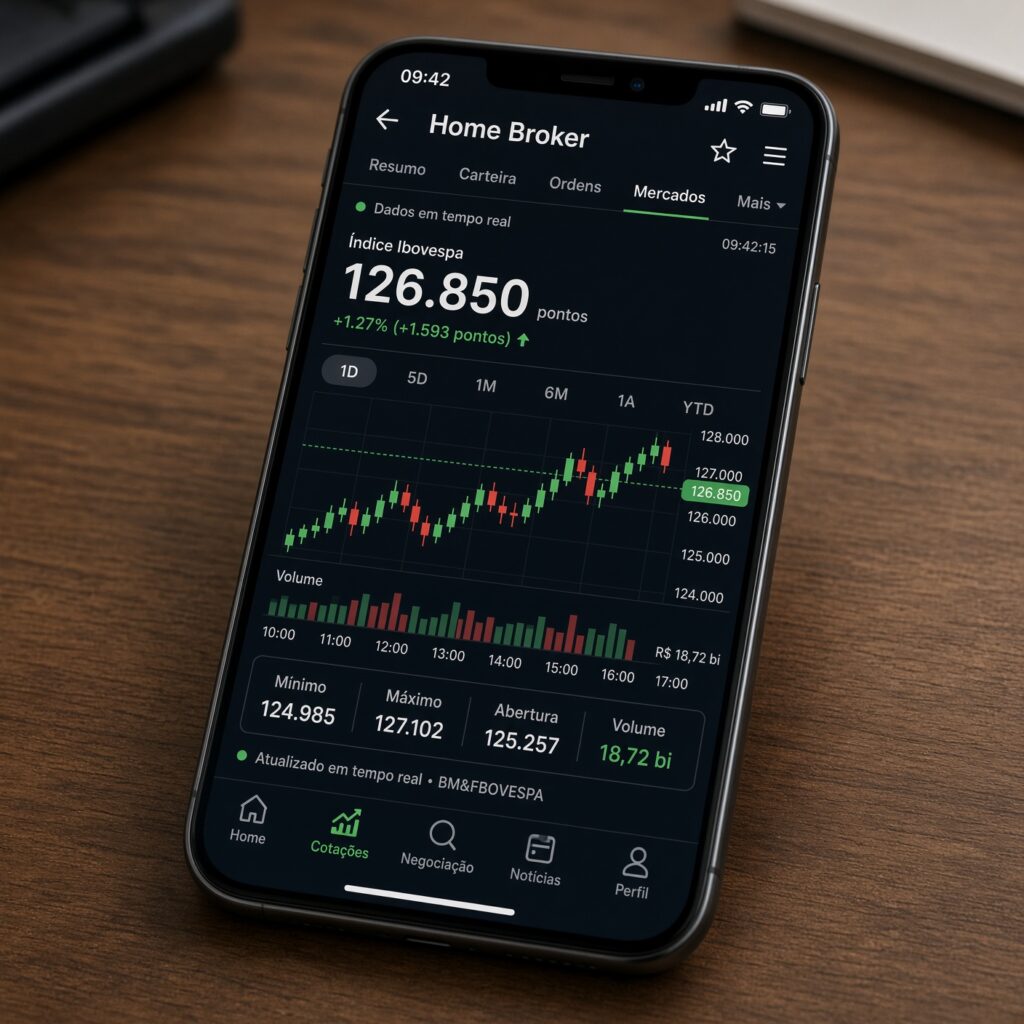
The financial cost of letting fear dictate investment strategy is staggering. Countless academic studies, including regular analyses by financial research firms like DALBAR, have consistently shown that the average retail investor underperforms the broader market indices by a wide margin over long periods.
The Cost of Market Timing and Chasing Returns
Why do individual investors consistently lag behind simple index funds? The answer lies almost entirely in emotional market timing.
- Buying at the Top: Driven by FOMO and optimism, investors pour fresh capital into markets only after prolonged bull runs, when valuations are highest.
- Selling at the Bottom: Driven by terror and loss aversion, those same investors capitulate and sell their holdings during market troughs, locking in maximum losses.
This cyclical pattern of buying high and selling low destroys compounding growth. Compounding requires time and emotional resilience; interrupting it with panic-driven portfolio adjustments severely degrades long-term wealth accumulation. A portfolio subjected to constant emotional interference fails to capture the full recovery cycles that historically drive long-term capital appreciation.
Practical Strategies to Overcome Fear and Maintain Investment Discipline
Recognizing the neurological and psychological roots of fear is the first step toward conquering it. Because human biology cannot be easily rewired, successful investors do not rely on willpower alone. Instead, they build robust structural frameworks and systematic rules designed to protect their portfolios from their own emotional impulses.
1. Implement a Written Investment Policy Statement (IPS)
Emotions thrive in ambiguity. When markets drop and panic sets in, a lack of clear direction leaves investors vulnerable to impulsive decisions.
An Investment Policy Statement acts as a personal constitution. It explicitly defines:
- Your long-term financial goals and time horizon
- Your target asset allocation (e.g., specific percentages of equities, fixed income, and cash)
- Exact criteria for rebalancing portfolios
- Rules regarding when and how capital can be deployed
By committing your strategy to writing during a calm, rational state of mind, you create an objective anchor to consult when market turbulence tests your emotional fortitude.
2. Automate Portfolio Management and Dollar-Cost Averaging
One of the most effective ways to remove emotion from investing is to remove yourself from the execution loop.
Dollar-cost averaging (DCA)—the practice of investing a fixed dollar amount at regular intervals regardless of market conditions—systematically mitigates fear and FOMO. When markets fall, DCA automatically purchases more shares at lower, discounted prices. When markets rise, it buys fewer shares. This automated approach turns market volatility into an ally rather than a source of psychological stress.
3. Establish Information Hygiene and Limit Media Consumption
Modern financial media operates on an attention economy model. Headlines are deliberately sensationalized to provoke strong emotional responses—fear, urgency, and outrage—because engagement drives advertising revenue.
Constant monitoring of portfolio balances and financial news networks elevates cortisol levels and triggers the amygdala. To protect your investment psychology:
- Drastically reduce how often you check your portfolio balance.
- Filter out speculative commentary and hyper-frequent market updates.
- Focus on variables you can control: your savings rate, asset allocation, and overall financial plan.
4. Reframe Market Volatility as a Feature, Not a Bug
Stock market volatility is not a malfunction of the financial system; it is the fundamental price of admission for achieving higher long-term returns than cash or government bonds.
Investors who expect smooth, uninterrupted upward trajectories are perpetually vulnerable to fear when corrections inevitably occur. By accepting volatility as a natural, predictable mechanism of wealth transfer from the impatient to the patient, you transform your psychological relationship with market downturns.
Mastering the Mind to Master the Market
Investing is ultimately less about analyzing balance sheets, price-to-earnings ratios, and macroeconomic forecasts, and more about managing one’s own internal landscape. Financial markets serve as an unforgiving mirror, reflecting our deepest anxieties, greed, and impatience.
Fear will always exist within the financial ecosystem. Market crashes, economic uncertainty, and geopolitical tensions are permanent fixtures of the global economy. However, fear only becomes destructive when it dictates action. By understanding how the brain processes threat, recognizing the insidious pull of cognitive biases, and establishing rigorous, rules-based systems to insulate your capital from emotional turbulence, you can transform fear from a portfolio-destroying liability into a disciplined opportunity for long-term growth. True financial mastery begins not with predicting the market, but with mastering the mind.