
What Are Penny Stocks and Why Are They Risky?

The financial markets have long captivated everyday investors with the allure of turning a small amount of money into a fortune. Among the most popular avenues for this kind of speculative dream are penny stocks. Often associated with stories of overnight windfalls, these low-priced shares command a massive following online.
However, behind the exciting headlines lies a high-stakes arena filled with unique financial hazards. For beginners stepping into the world of investing, understanding what penny stocks actually are—and recognizing why they carry extraordinary levels of risk—is essential for protecting hard-earned capital.
What Exactly Are Penny Stocks?
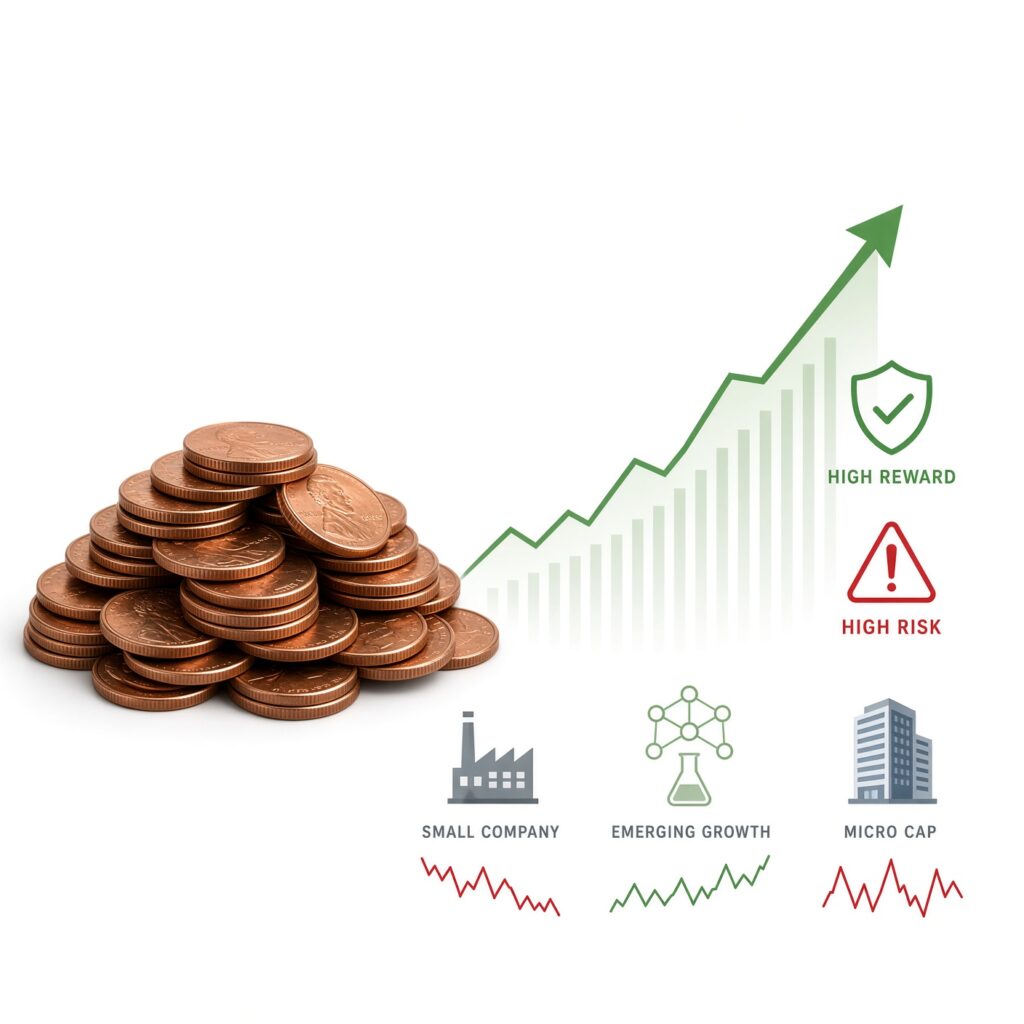
Formally defined by the U.S. Securities and Exchange Commission (SEC), a penny stock is generally classified as a security issued by a small company that trades at a price below $5 per share. While some low-priced shares trade on major national exchanges like the New York Stock Exchange (NYSE) or Nasdaq (often companies that have fallen below the $1 minimum bid requirement), the vast majority trade over-the-counter (OTC) through networks like the OTC Bulletin Board or OTC Link LLC.
These companies are usually micro-cap or nano-cap businesses, meaning their total market capitalization (share price multiplied by the number of shares outstanding) is often under $250 million to $300 million, and frequently much lower. Because these businesses are typically in their infancy, restructuring, or experiencing financial distress, their shares sell for fractions of a dollar—sometimes changing hands for mere pennies.
The Core Appeal: Why Do Investors Look at Penny Stocks?
It is easy to understand the magnetic pull of penny stocks. When a stock trades at $0.50 per share, a modest $500 investment buys 1,000 shares. If that stock rises by just fifty cents to $1.00, the investment doubles in value.
- High Percentage Growth Potential: Low absolute prices mean that small upward movements in price can translate into massive percentage gains.
- Access to Ground-Floor Opportunities: Investors like to imagine they are buying into the next major corporation before it hits the mainstream market.
- Low Barrier to Entry: You do not need thousands of dollars to build a position in dozens of different companies.
Yet, this mathematical potential cuts both ways. The very characteristics that make these stocks cheap also make them exceptionally volatile and dangerous.
Key Risk Factor 1: Low Liquidity and Trading Friction
One of the most dangerous traps for new traders is liquidity risk. Liquidity refers to how easily an asset can be bought or sold in the market without causing a drastic change in its price.
Because many penny stocks trade on OTC markets rather than major exchanges, they suffer from thin trading volumes. There may be very few buyers and sellers active at any given time.
- The Trap of the Exit: If you purchase a thinly traded penny stock and the company releases bad news, you might find that there are zero buyers willing to take those shares off your hands. You could be trapped in a declining position, forced to accept massive losses just to exit.
- Wide Bid-Ask Spreads: The gap between what buyers are willing to pay (the bid) and what sellers are asking for (the ask) can be enormous. Entering a trade immediately puts you at a disadvantage because crossing that wide spread eats straight into your capital.
Key Risk Factor 2: Limited Public Information and Financial Transparency
When you buy shares of a large, established company like Apple or Microsoft, you have access to extensive, audited financial statements, daily analyst coverage, and institutional oversight.
Penny stock companies, particularly those on lower OTC tiers, are held to much lighter reporting requirements.
- Delayed or Missing Reports: Many issuers fail to file regular quarterly (10-Q) or annual (10-K) reports on time.
- Information Voids: Without transparent, verified data, retail investors are essentially flying blind. It becomes nearly impossible to evaluate a company’s true debt levels, revenue streams, or operational health. Rumors and social media hype frequently fill the vacuum left by legitimate financial reporting.
Key Risk Factor 3: Extreme Volatility and Price Manipulation
The combination of a low share price and a small “float” (the number of shares available to the public for trading) creates a recipe for extreme volatility.
[Low Public Float] + [Low Trading Volume] = Massive Price Swings on Small Orders
Because it takes very little capital to move the needle on a micro-cap company, these stocks are prime targets for market manipulation, most notably “pump-and-dump” schemes. Unscrupulous promoters or online actors will artificially inflate a stock’s price by spreading exaggerated or entirely false claims of upcoming breakthroughs. Unsuspecting buyers rush in, driving the price up, while the insiders who orchestrated the scheme quietly sell off their shares at a peak—leaving retail investors holding worthless paper when the price collapses.
Practical Risk Introduction: What Are Penny Stocks and Why Are They Risky?
When scrolling through financial news or browsing online trading communities, you have likely heard stories about everyday investors turning a small amount of money into a fortune overnight. Often, these dramatic tales revolve around penny stocks. Promising massive percentage gains from tiny investments, these low-priced equities capture the imagination of beginners and speculative traders alike.
However, behind the allure of quick wealth lies a turbulent, highly speculative corner of the financial markets. For every investor who scores a massive win, countless others watch their capital vanish due to hidden traps, extreme volatility, and a lack of reliable information.
If you are thinking about adding penny stocks to your portfolio, you need more than just hope—you need a clear understanding of what they are, how they operate, and why they carry risks that can easily outweigh their rewards. This comprehensive guide breaks down everything you need to know about penny stocks, designed in plain English to help you navigate this high-stakes arena safely.
What Exactly Are Penny Stocks?

To understand penny stocks, we first need to clear up a common misconception based on the name itself. Historically, penny stocks were defined literally as shares trading for less than one dollar—costing mere pennies. Today, the U.S. Securities and Exchange Commission (SEC) defines a penny stock more broadly: any equity security that trades for less than $5.00 per share and is not listed on a major national securities exchange like the New York Stock Exchange (NYSE) or NASDAQ.
Where Do They Trade?
While some stocks priced under $5 do trade on major exchanges, traditional penny stocks are usually traded over-the-counter (OTC). This includes platforms like the OTC Bulletin Board (OTCBB) and OTCIQ (Pink Sheets).
- Unlike major exchanges with strict listing requirements, financial reporting standards, and high liquidity, OTC markets have much lower barriers to entry.
- This makes it easy for small, micro-cap companies, shell corporations, and financially distressed businesses to list their shares.
Company Characteristics
Companies issuing penny stocks typically share a few distinct traits:
- Micro-Capitalization: Their total market value (market cap) is usually very small, often under $50 million, and sometimes just a few million dollars.
- Early Stage or Distressed: They are frequently young startups with unproven business models, or older companies struggling to stay afloat after hitting financial trouble.
- Low Revenue: Many of these businesses generate little to no consistent revenue and lack profits, relying instead on raising capital through issuing new shares.
The Core Allure: Why Do Investors Gravitate Toward Them?
It is easy to see why penny stocks remain perpetually popular despite their dangerous reputation. The psychological pull comes down to a few powerful factors:
1. The Power of Percentage Gains
Imagine you buy a stock priced at $100. For your investment to double, the stock price must climb to $200—an increase of $100 per share. Now, imagine you buy a penny stock priced at $0.50. If that stock rises by just 50 cents to reach $1.00, your investment has also doubled.
New retail traders often fixate on the low absolute price, believing it is much easier for a $0.50 stock to reach $5.00 than it is for a major blue-chip stock like Apple or Microsoft to double in value. This perception of “cheapness” creates a powerful psychological bias.
2. Low Barrier to Entry
You do not need thousands of dollars in capital to start trading penny stocks. With just $100 or $500, an investor can purchase hundreds or thousands of shares. This accessibility appeals strongly to budget-conscious beginners who want to test the waters of the stock market without risking major savings.
3. High-Profile Speculation and FOMO
Social media platforms, stock message boards, and financial forums are packed with screenshots of massive gains from low-priced stocks. This fear of missing out (FOMO) draws waves of inexperienced traders hoping to catch the next big breakout before it hits the mainstream media.
Unpacking the Risks: Why Penny Stocks Are Dangerous
While the potential for rapid gains is real, the risks associated with penny stocks are severe, systematic, and frequently underestimated. Understanding these dangers is essential for protecting your hard-earned money.
1. Extreme Volatility and Price Swings
Because penny stocks usually trade in low volumes, it does not take much money to drastically move their prices. A single large buy order can spike a stock by 50% in minutes, and a single sell order can crash it just as fast. This extreme volatility means you can watch your portfolio surge in the morning and completely evaporate by afternoon.
2. Severe Lack of Liquidity
Liquidity refers to how easily you can buy or sell an asset without affecting its price.
- Major stocks like Amazon or Tesla have millions of shares traded every minute, meaning you can sell your shares instantly at the current market price.
- Penny stocks often suffer from low trading volume. There may be buyers when you want to buy, but when you decide to sell, you might find zero buyers on the other side of the trade. This phenomenon, known as being “trapped in a stock,” can force you to sell at a steep loss just to get out.
3. A Dearth of Transparent Financial Information
Publicly traded companies listed on major exchanges must adhere to rigorous reporting standards, filing detailed quarterly (10-Q) and annual (10-K) reports audited by certified public accountants.
- Many penny stock companies are exempt from these strict reporting requirements.
- Finding accurate, up-to-date, and reliable financial data can feel like detective work. When you invest in a company with opaque finances, you are essentially flying blind.
4. Vulnerability to Fraud and Manipulation
The lack of regulatory oversight and thin trading volumes make penny stocks a prime target for criminal manipulation. Some of the most common schemes include:
- Pump-and-Dump Schemes: Bad actors (sometimes called internet promoters or “boiler rooms”) buy up millions of shares of an obscure, worthless penny stock for fractions of a cent. They then launch aggressive marketing campaigns—using spam emails, social media hype, and fake news releases—to convince everyday investors that the company is about to explode. As eager buyers flood in, the stock price spikes (“the pump”). Once the price peaks, the manipulators sell off their shares for a massive profit (“the dump”), causing the stock price to instantly collapse and leaving everyday investors holding worthless shares.
- Corral and Spoofing Tactics: Manipulators use artificial orders to create fake demand, tricking algorithms and human traders into thinking a stock has strong momentum.
How Penny Stocks Compare to Blue-Chip Investments
To put the risk profile of penny stocks into perspective, it helps to compare them directly with traditional investments like blue-chip stocks and index funds.
| Feature | Penny Stocks | Blue-Chip Stocks (e.g., Microsoft, Apple) | Broad Market Index Funds (e.g., S&P 500) |
| Price per Share | Usually under $5.00 | Varies ($50 to $500+) | N/A (represents a basket of stocks) |
| Exchange Listing | Over-the-Counter (OTC), Pink Sheets | NYSE, NASDAQ | Track major indices |
| Transparency & Data | Very low; hard to verify financials | High; fully regulated by the SEC | High; diversified across 500+ companies |
| Liquidity | Extremely low; hard to sell quickly | High; instant execution | High |
| Risk Level | Extremely High / Speculative | Moderate | Low to Moderate (Long-term) |
| Growth Potential | High speculative upside, high total loss risk | Steady, compounding growth | Consistent, historical market growth |
Smart Strategies for Risk Management (If You Choose to Trade)
While financial professionals generally advise the average investor to avoid penny stocks entirely, some experienced traders choose to include them as a speculative, high-risk component of a diversified portfolio. If you decide to dip your toes into this market, you must follow strict risk management rules to protect your capital.
1. Only Invest “Risk Capital”
Never trade penny stocks with money you cannot afford to lose. This means keeping your rent, grocery money, emergency savings, and retirement accounts completely separate from speculative trading funds. Treat any money put into penny stocks as if it were spent on entertainment—if you lose it all, it should not impact your standard of living.
2. Conduct Deep Independent Research
Do not trust stock tips from social media influencers, unsolicited emails, or online chat rooms. If you are considering a penny stock, look for:
- A Real Business Model: Does the company sell a tangible product or service, or is it just an empty corporate shell?
- Transparent Management: Look up the executive team. Do they have a history of successful business ventures, or a track record of failed companies and regulatory violations?
- Real Assets and Revenue: Check if the company has actual revenue coming in or if it is entirely dependent on dilutive share offerings to pay its bills.
3. Use Strict Stop-Loss Orders
Volatility can work against you in seconds. Always use stop-loss orders with your broker to automatically sell a stock if it drops below a predetermined price point. This prevents human emotion from overriding your logic and stops a small bad trade from turning into a total financial catastrophe.
4. Beware of Share Dilution
Penny stock companies frequently raise money by issuing new shares rather than generating profits from operations. When a company issues millions of new shares, it dilutes the value of the shares you already own, meaning your slice of the corporate pie shrinks significantly, often driving the stock price down over time.
Are Penny Stocks Worth the Risk?

Penny stocks offer a seductive siren song: the promise of turning pocket change into a small fortune through a single brilliant trade. However, reality tells a different story. For the vast majority of retail investors, trading penny stocks functions more like a trip to the casino than a disciplined wealth-building strategy.
Between extreme volatility, low liquidity, murky financial reporting, and the constant threat of market manipulation, the odds are heavily stacked against the everyday trader.
Building long-term wealth does not require chasing speculative micro-cap stocks in the shadows of the market. By focusing on diversified index funds, stable blue-chip companies, and patient, long-term investing, you can grow your wealth steadily without risking financial ruin. If you do venture into the world of penny stocks, proceed with extreme caution, keep your position sizes tiny, and always remember: if an investment opportunity sounds too good to be true, it almost certainly is.