
What Is a Credit Freeze and When Should You Use One?

Data breaches happen with alarming regularity, leaving millions of Social Security numbers, birth dates, and home addresses exposed on the dark web. If you have ever worried about someone opening a credit card, taking out a car loan, or leasing an apartment in your name, you are not alone.
One of the most powerful, effective, and completely free tools available to protect your financial identity is a credit freeze (also known as a security freeze). Despite its intimidating name, a credit freeze is simple to set up, easy to manage, and does not hurt your credit score.
This comprehensive guide will walk you through what a credit freeze is, how it works, when you should use it, and how to set one up across the major credit bureaus without spending a dime.
What Is a Credit Freeze?
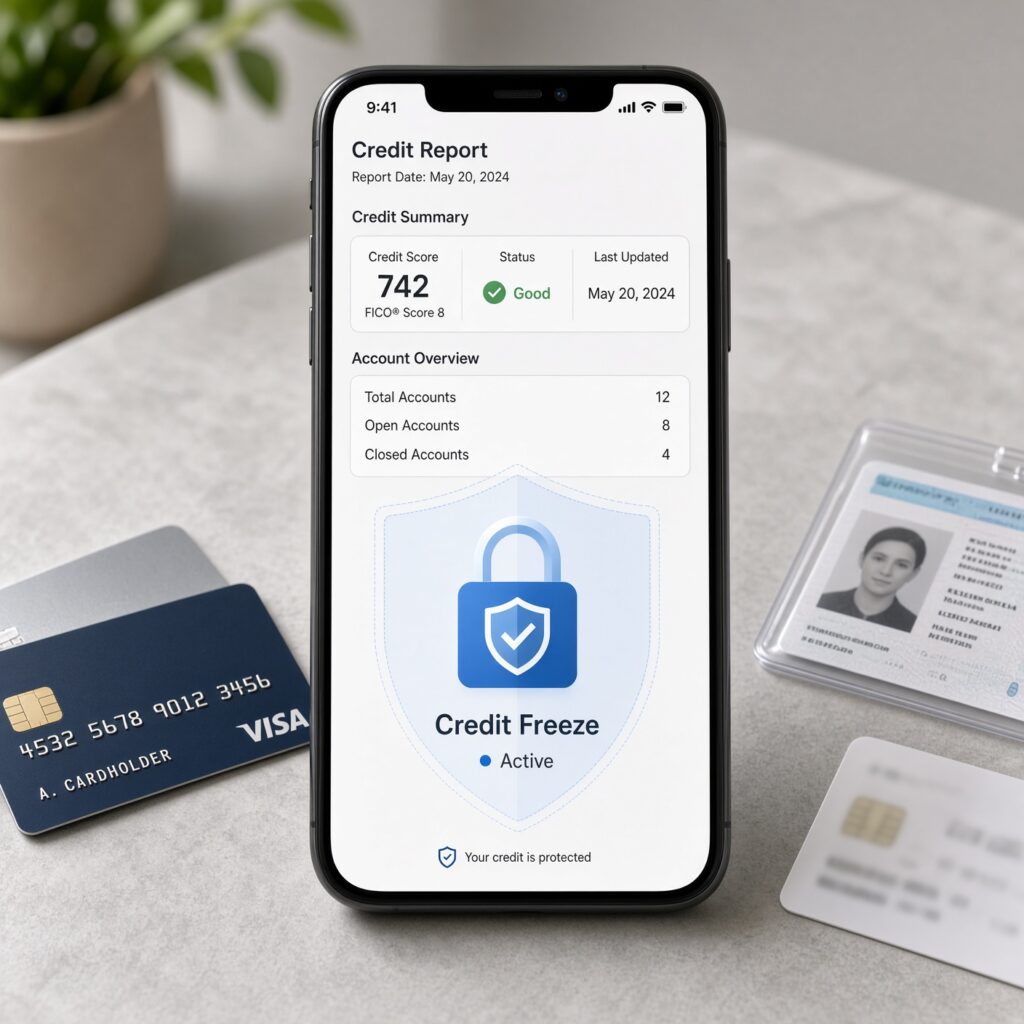
A credit freeze is a restriction you place on your credit reports with the major nationwide credit reporting agencies: Equifax, Experian, and TransUnion.
When your credit file is frozen, prospective lenders, credit card companies, and utility providers cannot access your credit report or credit score. Because legitimate financial institutions always pull your credit report before approving a new line of credit, a freeze stops identity thieves dead in their tracks. Even if a criminal has your exact Social Security number and date of birth, they cannot successfully open a new account in your name because the lender will be blocked from viewing your file.
Key Characteristics of a Credit Freeze:
- It is 100% Free: Under federal law, credit bureaus cannot charge you anything to place, temporarily lift, or permanently remove a credit freeze.
- It Never Expires: A credit freeze stays in place indefinitely until you choose to lift or remove it.
- It Does Not Affect Your Credit Score: Freezing or unfreezing your credit has zero impact on your credit score. Your existing accounts continue to report payment history normally.
- You Can Still Check Your Own Credit: A freeze does not stop you from accessing your own free credit reports or monitoring services.
How Does a Credit Freeze Work?
To understand how a credit freeze protects you, it helps to understand what it blocks—and what it does not.
When active, a credit freeze restricts third-party access to your credit history for the purpose of extending new credit. However, federal law establishes specific statutory exceptions. A credit freeze does not stop:
- Companies or lenders you already do business with from reviewing your existing accounts.
- Landlords or employers performing background, tenant, or employment screenings (depending on state regulations).
- Insurance companies underwriting new policies.
- Government agencies looking into your file for child support enforcement or tax matters.
Furthermore, a credit freeze is not a cure-all for existing account fraud. If a scammer skims your debit card at a gas station or takes over your current checking account, a credit freeze will not prevent that. It is specifically engineered to stop new-account identity theft.
When Should You Use A Credit Freeze?
While financial institutions often market identity theft protection packages for monthly subscription fees, a credit freeze provides robust, legally mandated protection for free. You should consider placing a credit freeze in the following situations:
1. Your Personal Data Was Compromised in a Data Breach
If you received a notification that your employer, healthcare provider, retail store, or financial institution suffered a data breach, your data may be circulating on underground forums. Freezing your credit immediately locks down your profile before cybercriminals can exploit your information.
2. You Want Proactive Financial Defense
You do not have to wait until you are a victim of identity theft to use a credit freeze. In fact, security experts recommend that every capable adult freeze their credit proactively. Because most people do not apply for loans or new credit cards every single day, keeping your credit frozen year-round serves as a digital deadbolt on your financial identity.
3. You Are Traveling or Protecting Vulnerable Family Members
If you have elderly relatives who are vulnerable to scams, or if you want to protect your minor children, you can establish security freezes for them. Parents and legal guardians can freeze the credit files of children under the age of 16—preventing fraudsters from using a child’s clean Social Security number to build fraudulent credit profiles over years.
Credit Freeze vs. Credit Lock: What Is the Difference?
When researching credit security, you will likely encounter credit locks alongside credit freezes. While they sound similar, they operate under entirely different rules:
- Credit Freeze: Regulated by federal statute. It is permanently free, legally binding, and handled directly through each individual credit bureau.
- Credit Lock: A proprietary commercial product created and sold by the credit bureaus (sometimes bundled into paid monthly subscription plans). While credit locks often feature convenient mobile app toggles, they are governed by corporate terms of service rather than federal law.
For maximum security without hidden fees or subscription traps, a federal credit freeze is universally regarded as the superior choice.
Step-by-Step Guide: How to Freeze Your Credit With All Three Bureaus
Unlike fraud alerts—where contacting a single bureau forces them to notify the other two—a credit freeze must be placed individually with each of the three major nationwide credit reporting agencies.
The process is easiest and fastest online, but you can also complete it via phone or mail. To verify your identity, prepare your full legal name, date of birth, Social Security number, past addresses from the last two years, and a government-issued photo ID.
1. Equifax
- Online: Visit the Equifax Credit Freeze Center.
- Phone: Call 1-888-298-0045.
- Mail: Equifax Information Services LLC, P.O. Box 105788, Atlanta, GA 30348.
2. Experian
- Online: Visit the Experian Security Freeze Portal.
- Phone: Call 1-888-397-3742.
- Mail: Experian Security Freeze, P.O. Box 9554, Allen, TX 75013.
3. TransUnion
- Online: Visit the TransUnion Credit Freeze Page.
- Phone: Call 1-800-916-8800.
- Mail: TransUnion, P.O. Box 160, Woodlyn, PA 19094.
Tip: Keep the PIN numbers or login credentials provided by each bureau in a safe place. You will need them later when you want to lift the freeze.
What Happens When You Want to Apply for Credit?
Having a frozen credit report does not mean you can never borrow money again. It simply means you must temporarily lift—or thaw—the freeze when you plan to apply for a mortgage, car loan, apartment lease, or credit card.
How to Temporarily Lift a Freeze:
- Identify the Bureau: Ask the lender or creditor which credit bureau they pull your report from (e.g., some lenders pull exclusively from Experian).
- Request a Thaw: Log into your account or call the specific bureau. You can request an immediate lift or schedule a temporary thaw window for a set number of days.
- Speed of Removal: By law, online and phone thaw requests must take effect within one hour. If requested by mail, it may take up to three business days.
- Automatic Re-engagement: If you set a temporary thaw for a specific timeframe, the freeze will automatically re-engage once the period expires. Alternatively, you can manually log back in and re-freeze your report as soon as your application is processed.
Securing Your Financial Future
Identity theft can disrupt your life, damage your credit history, and take months or even years to resolve. Taking 15 minutes to establish a credit freeze across Equifax, Experian, and TransUnion builds a powerful barricade around your personal finances. Because the service is free, legally protected, and easy to adjust when you actually need to borrow money, it stands as one of the smartest preventive steps you can take today.