What Should You Know Before Making Your First Investment?

Taking your first steps into the world of investing is one of the most effective decisions you can make to secure your long-term financial freedom. However, venturing into the financial markets without a clear roadmap can feel overwhelming. With thousands of assets available—ranging from stocks and bonds to mutual funds and real estate—knowing where to begin requires preparation, discipline, and a solid understanding of basic economic principles.
Before allocating a single dollar of your hard-earned cash, you must build a strong foundational strategy. Successful investing is rarely about finding a shortcut to overnight wealth; instead, it is a disciplined practice of wealth preservation, asset accumulation, and risk management over time. Below is a detailed, step-by-step guide covering everything you must know, prepare, and evaluate before placing your very first investment.
Establishing Clear Financial Goals and Investment Timelines

Before exploring brokerage platforms or analyzing stock charts, you need to determine precisely why you are investing and when you will need access to your capital. Your personal goals directly dictate your investment strategy, risk tolerance, and the types of assets that belong in your portfolio.
Financial goals are generally divided into three main time horizons:
- Short-Term Goals (1 to 3 Years): These objectives include saving for a home down payment, purchasing a vehicle, or funding an upcoming wedding. Because you will need these funds in the immediate future, market volatility presents a significant risk. Short-term capital should primarily be placed in low-risk, highly liquid instruments like high-yield savings accounts or short-term government certificates.
- Medium-Term Goals (3 to 7 Years): Examples include starting a business venture or funding higher education. A medium-term horizon allows for a moderate balance between growth assets and income-generating investments.
- Long-Term Goals (7+ Years): Retirement planning and building generational wealth fall into this category. With a long timeline, short-term market fluctuations matter much less, allowing you to allocate a higher percentage of your portfolio to growth-oriented assets like equities.
Auditing Your Current Financial Health and Eliminating High-Interest Debt
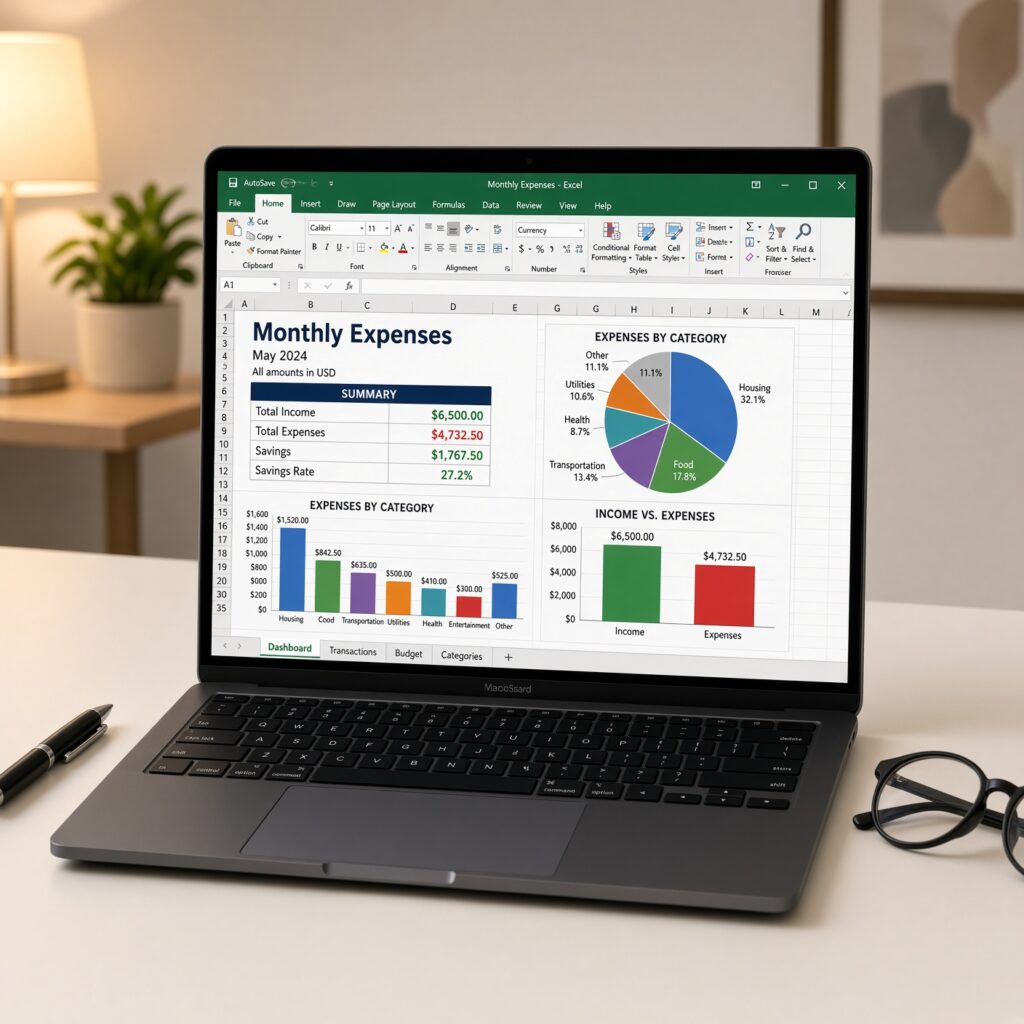
Investing without assessing your current balance sheet is like building a house on a shaky foundation. Before purchasing investments, conduct a thorough personal audit of your cash flow, existing debts, and overall net worth.
Pay primary attention to high-interest consumer debt, such as credit card balances or high-rate personal loans. High-interest debt carries a guaranteed negative return that almost always surpasses the expected average returns of the stock market. For instance, if you carry a credit card balance with an annual interest rate of 20%, paying off that balance provides a guaranteed 20% return on your money by eliminating future interest charges. No market investment can reliably offer a guaranteed return of that magnitude.
Ensure that all high-cost debts are completely cleared before committing substantial capital to volatile market instruments. Lower-interest obligations, such as fixed-rate mortgages or low-interest student loans, can typically be managed alongside a regular investment routine.
Building a Robust Emergency Fund Before Buying Assets
An emergency fund is your financial safety net. It protects your long-term investments from being prematurely liquidated during unexpected life disruptions, such as sudden job loss, medical emergencies, or urgent home repairs.
If you invest all your available cash and encounter an emergency during a market downturn, you may be forced to sell your investments at a loss to cover immediate expenses. Liquidating assets during a market drop locks in losses and undermines your long-term compound growth.
A standard emergency fund should cover three to six months of essential living expenses. Keep these reserves in a secure, liquid account that offers immediate access without penalties, such as a high-yield savings account or a money market fund. Only after this financial cushion is fully established should you deploy excess cash into the markets.
Understanding the Mechanics of Risk and Return Trade-Offs
One of the foundational axioms of finance is the direct relationship between risk and return. Higher potential returns invariably come with higher potential risk. Understanding this dynamic prevents costly mistakes driven by unrealistic expectations or emotional decisions.
Risk manifests in several forms across the financial markets:
- Market Risk: The possibility that overall economic shifts or investor sentiment will cause asset prices to drop across entire markets.
- Inflation Risk: The risk that the purchasing power of your money will decline over time because your investment yield fails to keep pace with rising inflation rates.
- Liquidity Risk: The difficulty of quickly converting an asset into cash without accepting a substantial discount in price.
- Credit/Default Risk: The chance that a bond issuer or borrowing entity fails to fulfill its interest or principal repayment obligations.
Evaluating your personal risk tolerance is essential. Ask yourself how you would react if your portfolio lost 15% or 20% of its value during a temporary market contraction. If price swings cause sleep disruption or panic selling, your portfolio structure may be too aggressive for your comfort level.
Exploring the Primary Asset Classes for Beginners
Navigating the financial marketplace requires familiarity with the primary vehicles available to individual investors. Diversifying across different asset classes helps manage overall exposure and smooths out returns over time.
1. Equities (Stocks)
Buying a stock grants you fractional ownership in a publicly traded corporation. Equities historical yield strong long-term growth and capital appreciation, alongside potential dividend income. However, individual company stock carries higher volatility and requires diligent research.
2. Fixed Income (Bonds)
Bonds are debt instruments issued by governments or corporations seeking to raise capital. When you purchase a bond, you effectively loan money to the issuer in exchange for periodic interest payments and the return of principal at maturity. Fixed-income assets are generally more stable than stocks and serve to cushion portfolios against market volatility.
3. Mutual Funds and Exchange-Traded Funds (ETFs)
For beginner investors, broad-market pooled funds represent one of the most practical entry points. An ETF or mutual fund pools capital from thousands of investors to purchase a diversified portfolio of underlying stocks, bonds, or other securities. Instead of picking individual companies, an index ETF allows you to own a representative piece of an entire market index (such as broad corporate indexes) in a single transaction, instantly spreading your risk.
4. Cash and Cash Equivalents
These include short-term Treasury bills, certificates of deposit, and high-yield savings vehicles. They offer low yield potential, but provide maximum liquidity and safety of principal.
The Power of Diversification and Asset Allocation

Concentrating all your financial capital into a single stock, sector, or asset class creates unnecessary, uncompensated risk. If that specific company or industry faces structural challenges, your portfolio suffers disproportionate damage. Diversification is the strategic practice of spreading capital across diverse asset types, industries, geographic regions, and market caps.
Asset allocation refers to how you divide your total portfolio among different categories like stocks, bonds, and cash. Your ideal asset mix depends primarily on your age, timeline, financial goals, and comfort with risk:
- Aggressive Allocation (e.g., 80% Stocks / 20% Bonds): Best suited for younger investors with multi-decade horizons who can comfortably endure market swings for greater long-term growth.
- Moderate Allocation (e.g., 60% Stocks / 40% Bonds): Balanced strategy offering growth potential alongside downside cushioning, suitable for medium-term goals.
- Conservative Allocation (e.g., 30% Stocks / 70% Bonds): Focused on capital preservation and steady income, ideal for individuals nearing or currently in retirement.
Understanding Investment Costs, Management Fees, and Friction
Investment performance is not solely determined by asset price movements; investment fees and transaction costs quietly erode long-term gains over time. Understanding fee structures is critical for maintaining overall net returns.
Pay close attention to these key expense factors:
- Expense Ratios: The annual management fee charged by mutual funds and ETFs, expressed as a percentage of your investment. An expense ratio of 0.05% means you pay $5 annually for every $10,000 invested, whereas a 1.0% fee costs $100 annually. Over several decades, high expense ratios can significantly diminish the value of your accumulated wealth due to lost compounding power.
- Brokerage Commissions and Platform Fees: Fees assessed by investment platforms for placing trades, maintaining accounts, or handling inactivity. Opting for low-cost, commission-free platforms helps keep overhead minimal.
- Tax Drag: Capital gains taxes and dividend taxation can impact net returns. Utilizing tax-advantaged accounts (such as specialized retirement vehicles or tax-deferred savings accounts) can significantly optimize long-term wealth accumulation compared to standard taxable accounts.
Leveraging the Mathematical Advantage of Compound Interest
Compound interest is often referred to as the single most powerful engine of wealth accumulation. Compounding occurs when your investment generates returns, and those returns subsequently earn returns of their own in following periods.
Time is the most critical variable in the compounding equation. The earlier you begin allocating capital, the less principal cash you need to contribute out of pocket to reach your long-term goals. Consider two hypothetical investors:
- Investor A starts setting aside $300 a month at age 22.
- Investor B delays investing until age 32, but sets aside $600 a month to catch up.
Assuming identical average annual market returns, Investor A will frequently accumulate a significantly larger portfolio balance by age 60 despite contributing less total principal money overall. Starting early grants compound interest more decades to work exponentially on your behalf.
Choosing the Right Brokerage Account and Investment Platform
To buy and sell securities, you need an account with a regulated brokerage firm or investment platform. Selecting the right platform requires comparing features, usability, safety, and fee transparency.
When evaluating platform options, keep these criteria in mind:
- Regulatory Oversight and Insurance Coverage: Ensure the brokerage firm is fully registered with relevant national regulatory bodies and offers industry-standard investor protection coverage for account balances.
- User Interface and Tools: Beginners benefit from intuitive interfaces, robust educational resources, simple research tools, and automatic recurring deposit features.
- Customer Support Availability: Confirm that the platform offers accessible customer support through multiple channels during standard trading hours.
- Account Types Offered: Check whether the brokerage supports both taxable brokerage accounts and tax-advantaged account structures geared toward long-term savings.
Avoiding Common Emotional and Psychological Pitfalls
Behavioral finance shows that human emotion is often an investor’s greatest obstacle to achieving sustained market success. Fear and greed routinely drive individuals into classic psychological mistakes: buying assets at market peaks out of fear of missing out, or selling at market bottoms during periods of widespread panic.
To cultivate a resilient investment mindset, adopt these practical habits:
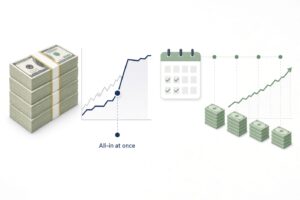
- Dollar-Cost Averaging (DCA): Instead of attempting to market-time bottom prices—a task that challenges even seasoned professionals—invest a fixed amount of money at regular intervals (e.g., monthly). Dollar-cost averaging ensures you purchase more shares when prices are low and fewer shares when prices are high, lowering your average cost per share over time and removing emotional guesswork.
- Maintain a Long-Term Focus: Daily financial news coverage thrives on volatility and sensational headlines. Short-term noise rarely reflects the true underlying growth trajectory of world markets over decades. Avoid obsessively checking your portfolio during periods of temporary market weakness.
- Create an Investment Policy Statement: Write down your strategy, rules, asset allocation targets, and reasons for holding your assets. When market turbulence occurs, consult your written plan rather than making impulsive emotional trades.
A Checklist of Essential Steps Before Making Your First Trade
Before executing your initial buy order on your platform of choice, run through this final checklist to ensure all prerequisites are met:
- Clear all high-interest consumer debt obligations.
- Build a fully funded liquid emergency reserve covering 3 to 6 months of expenses.
- Define clear short-term, medium-term, and long-term financial goals.
- Determine your true personal risk tolerance and time horizon.
- Select a reputable, regulated investment platform with low management fees.
- Choose simple, well-diversified core holdings (such as broad index ETFs) rather than speculative assets.
- Automate regular monthly contributions to maintain long-term discipline.
Preparing thoroughly prior to making your first investment turns an intimidating endeavor into a controlled, structured process. By combining clear financial planning, proper risk management, low cost structures, and a long-term perspective, you set yourself up to steadily accumulate wealth and reach your financial goals with confidence.