What Are the Alternatives to Taking Out a Personal Loan?

When unexpected expenses arise, a medical emergency pops up, or you need to consolidate high-interest debt, a personal loan often seems like the go-to solution. Personal loans offer predictable monthly payments, fixed interest rates, and lump sums of cash that can be used for almost anything. However, they are not always the ideal financial product for every situation. High origination fees, strict credit score requirements, and steep interest rates for borrowers with less-than-stellar credit can make personal loans surprisingly expensive.
Fortunately, the financial marketplace is filled with viable alternatives. Whether you want to avoid paying interest altogether, leverage existing assets, or find a more flexible borrowing structure, exploring different options can save you hundreds—or even thousands—of dollars. In this comprehensive guide, we will break down the best alternatives to taking out a personal loan, how they work, and how to choose the right financial path for your unique circumstances without falling into common debt traps.
1. 0% APR Balance Transfer Credit Cards: The Best Choice for Short-Term Debt Consolidation

If your primary goal for a personal loan is to pay off existing credit card debt or finance a major purchase that you can pay off within a reasonable timeframe, a 0% introductory APR credit card is often a superior alternative.
Many major credit card issuers offer promotional periods ranging from 12 to 21 months with 0% interest on purchases, balance transfers, or both. During this promotional window, every dollar you pay goes directly toward the principal balance rather than accumulating heavy interest charges.
How Balance Transfer Cards Work
To use this strategy for debt consolidation, you apply for a card with a 0% introductory APR offer and transfer your existing high-interest credit balances to the new card. Most cards charge a one-time balance transfer fee—typically between 3% and 5% of the transferred amount—but this fee is usually far lower than the interest you would accumulate over a year on a traditional loan or credit card.
Pros and Cons
- Pros: Potential for zero interest payments; helps streamline multiple monthly bills into one; can significantly boost your credit score over time with responsible use.
- Cons: Requires a good to excellent credit score (typically 690 or higher) to qualify for high limits; the 0% rate expires, after which the remaining balance incurs standard, often high, APR rates.
2. Home Equity Loans and HELOCs: Leveraging Property Value for Lower Rates
If you are a homeowner, your property represents one of your most valuable financial assets. Instead of taking out an unsecured personal loan—which typically carries higher interest rates due to the lack of collateral—you can tap into your home’s equity through a Home Equity Loan or a Home Equity Line of Credit (HELOC).
Understanding the Difference
A Home Equity Loan provides a single, lump-sum payout with a fixed interest rate and fixed monthly payments, functioning very much like a traditional second mortgage. A HELOC, on the other hand, operates like a revolving credit line. You can draw funds as needed during a draw period (usually 10 years) and pay interest only on the amount you actually borrow.
Why Home Equity Outperforms Personal Loans
Because these loans are secured by your home, lenders take on significantly less risk. As a result, interest rates for home equity products are frequently much lower than personal loan rates. Furthermore, under current tax laws, the interest paid on home equity loans or HELOCs may be tax-deductible if the funds are used to buy, build, or substantially improve the home securing the loan.
Pros and Cons
- Pros: Substantially lower interest rates; higher borrowing limits; potential tax advantages for home improvements.
- Cons: Your home serves as collateral, meaning default can lead to foreclosure; closing costs and appraisal fees may apply.
3. 401(k) Retirement Account Loans: Borrowing From Your Future Self
If you have built up a retirement nest egg through an employer-sponsored 401(k) plan, you might have the option to borrow directly from your own account. While financial advisors generally caution against tapping into retirement funds early, a 401(k) loan can be a practical, low-cost lifeline for urgent financial needs.
How 401(k) Loans Function
Most plans allow you to borrow up to 50% of your vested account balance or 50,000 dollars, whichever is less, with a standard repayment term of five years. The unique advantage here is that you are essentially paying the interest back to yourself. The interest rate is typically tied to the prime rate plus 1 or 2 percent, and that interest goes right back into your retirement account.
Risks and Considerations
The primary danger of a 401(k) loan is the potential impact on your long-term retirement growth. When you pull money out, those funds are temporarily out of the stock market, missing out on compounding interest and potential market gains. Additionally, if you leave your job—voluntarily or involuntarily—while the loan is outstanding, the remaining balance usually becomes due in full very quickly, often within 60 to 90 days. Failure to repay triggers taxes and a 10% early withdrawal penalty if you are under age 59½.
4. Peer-to-Peer (P2P) Lending Platforms: Community-Funded Capital
Peer-to-peer lending platforms connect everyday borrowers directly with individual investors or institutional groups willing to fund loans. While P2P loans share structural similarities with traditional personal loans, they often operate with lower overhead costs, leading to more flexible terms and competitive rates for qualified borrowers.
The P2P Lending Process
You submit an application on a specialized P2P platform, which reviews your credit profile and assigns you a risk grade. Investors then review your loan request and choose to fund all or part of it. Once fully funded, the platform disburses the cash directly to your bank account.
Why Borrowers Choose P2P
P2P platforms can be more forgiving than traditional brick-and-mortar banks, making them a popular alternative for self-employed individuals, freelancers, or borrowers with non-traditional income streams. However, you should still carefully review origination fees, which can sometimes rival those charged by traditional lenders.
5. Emergency Assistance Programs and Employer-Sponsored Hardship Funds
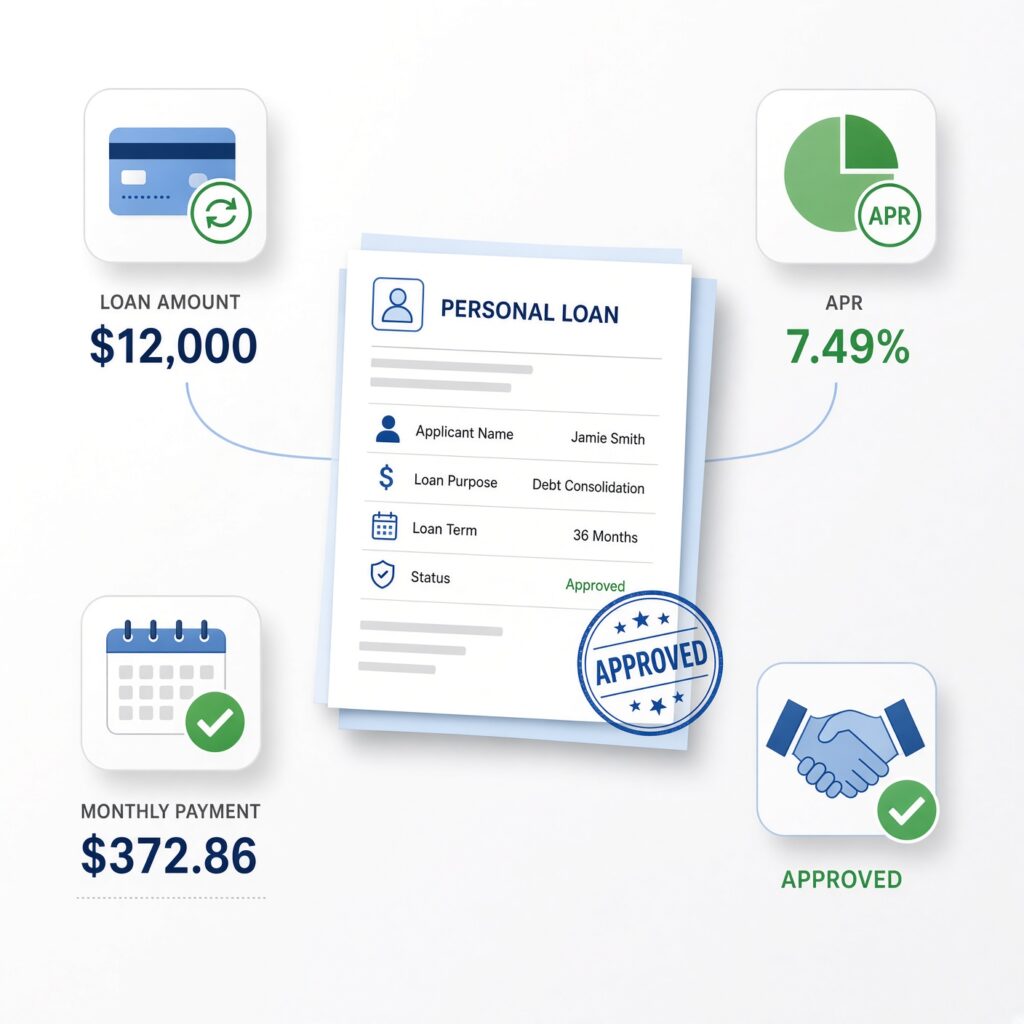
When facing a sudden cash crunch due to medical bills, natural disasters, or temporary job disruptions, many consumers overlook assistance programs designed specifically for times of crisis.
Employer Hardship and Salary Advance Programs
A growing number of modern companies offer employer-sponsored financial wellness benefits, including earned wage access (EWA) apps and emergency hardship grants. Earned wage access allows you to draw a small portion of wages you have already earned before your official payday, entirely bypassing predatory payday lenders and high-fee personal loans.
Local Nonprofits and Community Resources
Organizations such as the Salvation Army, Catholic Charities, United Way, and local community action agencies frequently offer emergency grant programs to help families cover overdue rent, utility bills, or unexpected medical expenses. These grants do not need to be paid back, making them the ultimate alternative to taking on new debt.
6. Family and Friend Loans: Personal Borrowing with Professional Boundaries
Borrowing money from a relative or close friend avoids credit checks, formal bank underwriting, and high interest rates. However, mixing personal relationships with financial transactions can be risky if not handled with absolute transparency and care.
Best Practices for Borrowing From Loved Ones
To preserve your relationship and ensure clear expectations, treat a loan from a family member just like a bank loan:
- Draft a Written Agreement: Document the loan amount, repayment schedule, interest rate (if any), and what happens in the event of financial hardship.
- Set Realistic Terms: Ensure the repayment amount fits comfortably within your monthly budget to avoid defaulting and causing personal friction.
- Communicate Proactively: If your financial situation changes, notify your lender immediately rather than missing payments silently.
7. Building an Emergency Fund: The Ultimate Long-Term Preventive Strategy
While alternative borrowing methods help solve immediate financial shortages, the most sustainable way to avoid personal loans altogether is building a robust emergency fund. Having three to six months’ worth of essential living expenses tucked away in a high-yield savings account ensures that unexpected car repairs, dental bills, or job transitions do not force you into debt.
Start small by automating a modest transfer from your checking account to your savings account every payday. Over time, consistent contributions compound, creating a financial safety net that gives you complete independence from lenders.
Choosing the Right Financial Path Forward

Taking out a personal loan is not inherently bad, but it is rarely your only option. By weighing alternatives like 0% balance transfer credit cards, home equity financing, 401(k) loans, or community assistance programs, you can match your specific financial need with the most cost-effective tool available.
Assess your current credit score, review your assets, and calculate the total cost of borrowing before making a final decision. Taking a strategic approach to your finances today will protect your hard-earned money and secure your financial future for tomorrow.