How Do Auto Loans Work?

Purchasing a vehicle is one of the most significant financial commitments you will make.For most buyers, paying for a car entirely in cash is not feasible, which is where vehicle financing comes into play.Securing a car loan allows you to acquire a vehicle immediately and pay it off over an extended period. However, diving into the world of vehicle financing without a clear understanding of the mechanics can lead to unnecessary expenses and higher interest rates.
Understanding the fundamentals of vehicle financing empowers you to navigate dealership lots and online lenders with confidence. This comprehensive guide breaks down every aspect of how financing operates, key terminology, step-by-step application strategies, and smart methods to save money throughout the repayment lifecycle.
What Is an Auto Loan and How Does It Function?

At its core, a car loan is a sum of money borrowed from a financial institution—such as a bank, credit union, or online lender—to purchase a vehicle.In exchange for advancing the funds, the lender requires you to pay back the borrowed amount plus interest over a predetermined schedule.
Most vehicle agreements are structured as secured loans.This means the car you are purchasing acts as collateral.Because the asset secures the debt, the lender holds a lien on the vehicle title until the balance is fully satisfied.If you default on your monthly obligations by failing to make payments, the lender maintains the legal right to repossess the vehicle to recover their losses.
Financing agreements typically consist of fixed monthly installments over a span of 24 to 84 months.Each monthly payment contributes partly to reducing the principal balance and partly to covering the accumulated interest and associated fees.
Core Components and Essential Terminology to Know
Navigating a financing contract requires familiarity with specific financial terms. Knowing these definitions prevents surprises when reviewing your monthly statements and final agreements.
- Principal:This is the actual amount of money you borrow to purchase the vehicle.It accounts for the vehicle’s purchase price minus any down payment, often combined with local taxes, registration fees, and optional add-ons.
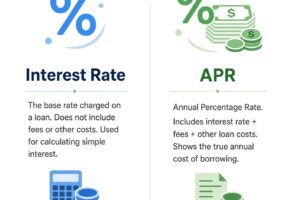
- Interest Rate:The cost charged by the lender for borrowing the principal, expressed as an annual percentage.Your specific rate is heavily influenced by your credit history, financial stability, and current market conditions.
- Annual Percentage Rate (APR):Unlike the basic interest rate, the APR encompasses the interest rate plus any mandatory lender fees or administrative charges, giving a clearer picture of the loan’s true annual cost.
- Loan Term:The scheduled duration given to repay the debt, usually measured in months (e.g., 48, 60, or 72 months).
- Down Payment:The initial upfront cash amount you pay out of pocket toward the vehicle’s purchase price at the time of the transaction.
- Amortization: The schedule detailing how your monthly payments are split between paying off the principal balance and covering the interest charges over time.
Step-by-Step Breakdown of the Financing Process
Securing a vehicle loan involves a structured progression from initial budgeting to driving off the lot. Following a systematic approach helps streamline the experience.
1. Assessing Your Budget and Financial Health
Before looking at vehicles, evaluate your monthly income and expenses to determine a realistic budget.Financial experts generally recommend keeping your total vehicle-related expenses—including the monthly payment, insurance, fuel, and routine maintenance—within 10% to 15% of your monthly take-home pay.Additionally, check your credit report and score, as this metric dictates the interest rates lenders will offer you.
2. Getting Prequalified with Lenders
Prequalification is an optional yet highly recommended step.By providing basic financial information to banks or online lenders, you receive an estimate of the loan amount and interest rate you qualify for without harming your credit score.This gives you a clear target price range before you begin shopping.
3. Shopping for Your Vehicle and Comparing Offers
Armed with prequalification estimates, you can search for a vehicle that fits your lifestyle and financial goals.Simultaneously, shop around for direct financing offers from multiple financial institutions.Comparing external loan offers with dealership financing options ensures you secure the most competitive terms available.
4. Submitting the Formal Application and Documentation
Once you select a vehicle and finalize your preferred lender, you must submit a formal application.Lenders will require documentation to verify your identity, employment, residence, and financial standing.
Required Documentation for Loan Approval
To secure formal approval, lenders need specific paperwork to verify your background and evaluate risk. Gathering these documents in advance accelerates the approval process:
- Proof of Identity:A valid government-issued photo identification, such as a driver’s license or passport.
- Proof of Income:Recent pay stubs, W-2 forms, or tax returns demonstrating stable, recurring earnings.
- Proof of Residence:Recent utility bills, a lease agreement, or mortgage statements confirming your current home address.
- Employment Verification:Contact details and employment history for your current workplace.
- Vehicle Details:The Vehicle Identification Number (VIN), purchase order, or bill of sale detailing the make, model, year, and price of the car.
Direct Lending vs. Dealership Financing
When financing a vehicle, you generally have two primary avenues to acquire funds: direct lending and dealership financing. Each option presents unique characteristics.
Direct Lending
With direct lending, you secure a loan agreement directly with a bank, credit union, or online lender before visiting a showroom.You receive a specific approval amount and go to the dealership acting essentially as a cash buyer. This method allows you to evaluate rates transparently and negotiate the vehicle price without mixing discussions about monthly payments.
Dealership Financing
Dealership financing involves applying for a loan directly through the auto dealer’s finance department.The dealership acts as a broker, submitting your application to multiple partner lenders simultaneously to find a match. Dealerships sometimes offer manufacturer-sponsored promotional rates (such as 0% APR financing) for buyers with exceptional credit profiles. However, it is vital to compare these offers against direct lenders to ensure the dealer is not marking up the interest rate.
Understanding Interest Rates and Influencing Factors
The interest rate attached to your financing contract dictates how much extra money your vehicle purchase will cost over time. Lenders evaluate several risk factors to determine your personalized rate:
- Credit Score and History:Borrowers with high credit scores demonstrate a reliable history of debt repayment, earning them the lowest available interest rates.Lower scores indicate higher risk, triggering elevated interest rates.
- Loan-to-Value (LTV) Ratio: This compares the amount you are borrowing against the market value of the vehicle. Making a substantial down payment lowers the LTV ratio, reducing lender risk and frequently unlocking better rates.
- Loan Term Length:Shorter terms (such as 36 or 48 months) generally feature lower interest rates because the lender’s exposure window is shorter.Extended terms often carry higher interest rates and increase total interest accumulation.
- Vehicle Age and Status: New cars often qualify for promotional lower financing rates through manufacturers, whereas used or older vehicles typically carry slightly higher interest rates due to faster depreciation.
The Impact of Down Payments and Loan Terms
Balancing your down payment and loan term is critical to managing your long-term financial health.
A larger down payment immediately reduces the total principal balance you need to finance.For example, putting down 20% on a vehicle significantly lowers your monthly financial obligation and reduces total interest paid across the life of the agreement. It also protects you from becoming “upside down” on your loan—a situation where you owe more on the vehicle than it is currently worth due to depreciation.
Similarly, choosing the right loan term requires a careful trade-off.While extended terms (like 72 or 84 months) result in smaller monthly payments that fit easily into tighter budgets, they substantially increase the total interest paid over the life of the loan.Opting for the shortest term you can comfortably afford minimizes overall borrowing costs.
Smart Strategies to Secure the Best Financing Terms

Securing favorable financing terms requires intentional preparation well before you sign a contract. Implement these strategies to optimize your borrowing potential:
- Boost Your Credit Standing:Pay down existing revolving debts and check your credit reports for errors several months prior to applying, giving yourself time to dispute inaccuracies and improve your score.
- Save for a Robust Down Payment:Aim to build a down payment that covers a significant portion of the vehicle’s purchase price to minimize the financed principal.
- Shop Around and Pre-Compare:Do not settle for the first financing offer you receive.Obtain pre-approval letters from multiple financial institutions to create leverage during negotiations.
- Focus on Total Cost, Not Just Monthly Payments:Some lenders lower monthly payments by extending the loan term excessively, driving up total costs.Always evaluate the total cost of the loan from inception to completion.
- Review All Contract Clauses:Carefully inspect the financing agreement for hidden administrative fees, pre-payment penalties, or mandatory add-on products before signing your name.
Conclusion
Navigating the mechanics of vehicle financing doesn’t have to be overwhelming. By understanding how lenders evaluate your application, familiarizing yourself with core terminology like principal, APR, and amortization, and preparing your documentation ahead of time, you put yourself in the driver’s seat.Taking a strategic approach to your down payment, loan terms, and lender comparisons ensures you secure a financing structure that supports both your transportation needs and your long-term financial well-being.