What Determines How Much You Can Borrow?

Securing a loan is a major financial step, whether you are buying a home, purchasing a car, consolidating debt, or funding higher education. One of the first and most crucial questions borrowers ask is, “How much money can I actually borrow?”
Lenders do not pull loan amounts out of thin air. Instead, they rely on a rigorous evaluation process designed to assess risk, measure your financial stability, and determine your capacity to repay the debt. Understanding these underlying factors can help you position yourself favorably, maximize your borrowing power, and avoid taking on more debt than you can comfortably manage.
In this guide, we will break down the primary factors that determine your maximum borrowing limit, examine the mechanics behind different loan types, and provide actionable strategies to increase the amount lenders are willing to offer you.
1. The Foundation of Borrowing Power: Income and Employment Stability

At the very core of every lending decision is a simple question: Can you afford the monthly payments? To answer this, lenders look closely at your income and how stable that income source is over time.
Gross Monthly Income vs. Net Income
When evaluating your application, lenders typically calculate your gross monthly income—your total earnings before taxes and deductions are taken out. This includes your primary salary or wages, bonuses, commissions, overtime pay, and secondary income sources such as part-time work, freelance contracts, or alimony (if disclosed).
Employment History and Consistency
Having a high income is only part of the equation; lenders want to see reliability. Generally, underwriters look for a stable employment history, typically requiring at least two years of consistent work in the same field or with the same employer.
- W-2 Employees: Lenders prefer steady, predictable pay stubs and W-2 forms. If a significant portion of your income relies on fluctuating overtime or bonuses, lenders may average those earnings over a 24-month period to determine a conservative baseline.
- Self-Employed Individuals and Freelancers: Borrowers who own businesses or work independently face a more rigorous verification process. Lenders typically require two years of personal and business tax returns, profit and loss statements, and bank statements to prove a steady cash flow and net profit after business write-offs.
2. Debt-to-Income (DTI) Ratio: The Ultimate Guardrail
Even if you earn a substantial income, if your existing financial obligations consume most of it, lenders will severely restrict how much more you can borrow. This is measured using the Debt-to-Income (DTI) ratio.
Understanding Front-End and Back-End DTI
Lenders generally look at two types of DTI ratios when assessing loan applications (particularly for mortgages):
- Front-End Ratio (Housing Ratio): This calculates the percentage of your gross monthly income that goes toward housing costs alone (such as principal, interest, property taxes, and homeowners insurance).
- Back-End Ratio: This is the total percentage of your gross monthly income dedicated to all recurring monthly debt payments. This includes housing costs, minimum credit card payments, auto loans, student loans, personal loans, and child support.
How DTI Limits Borrowing Capacity
Most lenders prefer a back-end DTI ratio below 36% to 43%, though certain loan programs (like FHA loans) may permit ratios up to 50% under compensating factors.
Example: If your gross monthly income is $6,000 and your existing monthly debt obligations (car payment and student loan) total $1,000, a lender targeting a maximum 43% DTI ($2,580 total allowable debt) will only approve a new loan payment of up to $1,580 per month. If interest rates rise or loan terms shorten, that maximum monthly payment translates into a lower overall loan principal amount.
3. Credit Scores and Credit History: The Cost and Capacity Factor
Your credit score is a numerical representation of your creditworthiness, reflecting how responsibly you have managed borrowed money in the past. While credit scores directly impact the interest rate you receive, they also play a massive role in how much a lender is willing to lend.
How Lenders Interpret Credit Scores
- Excellent Credit (740+): Lenders view you as a low-risk borrower. You will qualify for the highest borrowing limits, lowest interest rates, and most flexible terms because the lender has high confidence in your repayment history.
- Good to Fair Credit (620–739): You will likely qualify for standard loans, but the maximum borrowing amount may be adjusted downward or subject to stricter reserve requirements to mitigate the lender’s risk.
- Poor Credit (Below 620): Borrowing becomes significantly more difficult. If approved, maximum loan amounts are often heavily restricted, and interest rates will be much higher, which in turn reduces the principal amount you can safely borrow within an acceptable monthly payment budget.
Key Elements of Your Credit Report
Beyond the score itself, underwriters examine your credit report for specific warning signs:
- Credit Utilization Ratio: How much revolving credit you are using compared to your total limits. Keeping utilization below 30% (ideally below 10%) signals financial health.
- Payment History: Past bankruptcies, foreclosures, charge-offs, or a history of late payments will directly restrict your maximum loan offer.
- Recent Inquiries: Applying for multiple lines of credit right before requesting a large loan can signal financial distress to lenders, causing them to lower their maximum loan offer.
4. The Role of Down Payments, Equity, and Collateral
When borrowing money, the nature of the loan itself dictates how much leverage you have. Loans are generally split into two categories: secured loans and unsecured loans.
Secured Loans (Mortgages, Auto Loans, Home Equity Loans)
For secured loans, the money you borrow is backed by an asset (collateral), such as a house or a car.
- Loan-to-Value (LTV) Ratio: Lenders determine your borrowing limit based on the value of the asset you are purchasing or refinancing. For example, if you want to buy a $400,000 home and the lender requires a 20% down payment ($80,000), the maximum loan amount they will issue is $320,000 (an 80% LTV).
- Skin in the Game: The larger your down payment or equity stake, the lower the risk for the lender. Providing a substantial down payment often unlocks higher overall purchasing limits because the lender’s exposure is minimized.
Unsecured Loans (Personal Loans, Credit Cards)
Unsecured loans do not require physical collateral. Instead, approval is based entirely on your creditworthiness and income. Because the lender has no asset to repossess immediately upon default, unsecured loan limits are typically much lower than secured loans, often capped between $35,000 and $100,000 depending on the financial institution and your credit profile.
5. Loan Terms, Interest Rates, and Amortization Structures

The mathematical structure of the loan plays a direct role in determining the maximum principal amount you can access. Two identical monthly payment budgets can yield vastly different loan amounts depending on the loan term and interest rate.
Impact of Loan Term Length
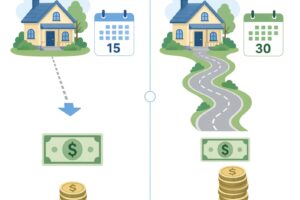
- Shorter Terms (e.g., 15-year mortgage): Require higher monthly payments to pay off the principal faster. Because the monthly payment is higher, a strict DTI limit will result in a lower maximum loan principal amount.
- Longer Terms (e.g., 30-year mortgage): Spread payments out over a longer period, resulting in lower monthly payments. This allows borrowers to qualify for a higher maximum loan principal amount under the same DTI guidelines. However, longer terms also mean paying significantly more in total lifetime interest.
Interest Rate Fluctuations
Interest rates act as the cost of borrowing money. When interest rates rise, a larger portion of your monthly payment goes toward interest rather than paying down the principal balance. Consequently, in a high-interest-rate environment, the maximum loan amount you can qualify for under a fixed monthly budget decreases significantly compared to a low-rate environment.
6. Financial Reserves and Liquid Assets
Many borrowers overlook the importance of cash reserves, yet lenders view them as a critical safety net. Financial reserves refer to the liquid assets you have left over in savings, checking, retirement, or investment accounts after closing costs and down payments are paid.
Why Reserves Matter for Borrowing Limits
- Income Interruption Buffer: If you experience a temporary loss of income, reserves ensure you can continue making loan payments without defaulting.
- Unlocking Higher Limits: For jumbo loans or complex mortgages, lenders may require proof of 6 to 12 months’ worth of principal, interest, taxes, and insurance (PITI) in reserve. Having robust savings can convince an underwriter to approve a higher maximum loan amount that they might otherwise hesitate to grant based on income alone.
7. Actionable Strategies to Maximize How Much You Can Borrow
If you are preparing to apply for a loan and want to ensure you qualify for the highest possible amount without overextending your finances, you can take several proactive steps:
1. Pay Down Existing Revolving Debt
Lowering or eliminating credit card balances reduces your monthly minimum payments, which directly improves your Debt-to-Income (DTI) ratio and instantly frees up more room for a larger loan payment.
2. Boost Your Credit Score
Take time to review your credit report for errors, dispute inaccuracies, and pay all bills on time. Moving your credit score from the “fair” tier to the “excellent” tier can qualify you for better interest rates, which increases your borrowing power.
3. Increase Your Documented Income
If you have a side hustle, freelance income, or part-time job, ensure that income is properly documented and reported on your tax returns for at least two consecutive years so lenders can include it in your qualification calculations.
4. Save for a Larger Down Payment
For secured loans, offering a larger down payment reduces the lender’s risk, decreases the Loan-to-Value (LTV) ratio, and allows you to secure a larger total asset purchase price while keeping your loan amount within safe underwriting thresholds.
5. Consider a Co-Signer or Co-Borrower
If your individual income or credit history is limiting the amount you can borrow, adding a qualified co-signer or co-borrower with strong income and pristine credit can significantly increase the maximum loan amount lenders are willing to approve.
Conclusion
Determining how much you can borrow is not a arbitrary decision made by financial institutions; it is a careful calculation balancing your income stability, existing debt load, credit health, and the nature of the collateral you provide. By understanding how lenders evaluate your financial profile through metrics like the Debt-to-Income ratio and credit score tiers, you can take control of your financial health, optimize your application, and secure the exact funding you need to achieve your goals.