Can You Trade Stocks 24 Hours a Day?

For decades, the stock market was viewed as a traditional 9:30 AM to 4:00 PM Eastern Time operation. Investors had to wait for the opening bell to buy or sell shares, leaving them vulnerable to market-moving news that broke overnight. Today, financial technology and modern trading infrastructure have radically shifted how global markets operate. If you have ever wondered whether you can trade stocks 24 hours a day, the short answer is yes—with specific limitations.
While standard stock exchanges do not operate continuously without interruption, retail brokerages, Alternative Trading Systems (ATS), and major market operators now allow retail investors to trade select stocks around the clock, five days a week. In fact, major exchanges like the Nasdaq and the New York Stock Exchange (NYSE) have pushed U.S. stock trading into a continuous 23-hour daily framework. Understanding how round-the-clock trading works, which platforms support it, and the inherent risks involved is essential before executing your first overnight trade.
How 24-Hour Stock Trading Works: The Mechanics Behind Overnight Markets
To understand 24-hour stock trading, it helps to distinguish between regular market hours, traditional extended hours, and true overnight sessions. Stock markets operate across distinct trading windows throughout the business week:
| Trading Session | Standard Hours (Eastern Time) | Execution Venue | Key Features |
|---|---|---|---|
| Regular Trading Session | 9:30 AM – 4:00 PM ET | Primary Exchanges (NYSE, Nasdaq) | Maximum liquidity, tightest spreads, full order-type support. |
| Pre-Market Session | 4:00 AM – 9:30 AM ET | Electronic Communication Networks (ECNs) | Allows reaction to early economic reports and global events. |
| After-Hours Session | 4:00 PM – 8:00 PM ET | ECNs / Primary Exchanges | Primarily used to trade quarterly earnings releases. |
| Overnight (24/5) Session | 8:00 PM – 4:00 AM ET | Alternative Trading Systems (ATS) | Enables continuous trading from Sunday evening to Friday night. |
When you trade stocks at 2:00 AM, your order does not go directly to the floor of the New York Stock Exchange. Instead, it is routed through an Alternative Trading System (ATS), such as the Blue Ocean ATS (BOATS). An ATS is a regulated private trading venue that matches buy and sell orders outside of traditional exchange operating hours. By connecting electronic communication networks across global time zones—from New York to Tokyo and London—these platforms create continuous price discovery for equities.
Key Advantages of Trading Stocks Around the Clock

Round-the-clock market access offers powerful tactical advantages for both active traders and long-term investors who cannot manage their portfolios during standard business hours.
1. Instant Response to After-Hours News and Earnings
The vast majority of public companies release their earnings reports immediately after the regular market closes at 4:00 PM ET or early in the morning before 9:30 AM ET. Similarly, geopolitical events, breaking corporate news, and macroeconomic data releases frequently occur outside standard floor hours. 24-hour trading allows investors to enter or exit positions instantly upon receiving news, rather than waiting hours for the market to open.
2. Seamless Alignment with Global Economic Events
Financial markets are deeply interconnected globally. A policy decision by the European Central Bank, unexpected economic output figures from Asia, or overnight moves in commodities can instantly influence equity valuations in North America. Traders with 24/5 access can hedge positions or capitalize on foreign market trends in real time as news breaks overseas.
3. Flexibility for Busy Schedules
For individuals with full-time jobs or non-standard working hours, monitoring price charts during regular market hours is often impractical. Overnight trading provides the convenience of analyzing charts, assessing portfolio allocations, and executing trades during personal free time, including late evenings or early mornings.
Major Risks of 24-Hour Stock Trading Every Investor Must Know
While 24-hour trading provides unmatched convenience, trading outside regular market hours carries unique financial risks. Beginners should approach overnight markets with caution due to several critical structural factors.
Lower Liquidity and Wider Bid-Ask Spreads
Liquidity refers to how easily an asset can be bought or sold without causing a drastic shift in its price. During regular trading hours, millions of institutional investors, market makers, and retail traders participate, resulting in deep liquidity. During overnight sessions, total volume drops significantly. Lower liquidity causes wider bid-ask spreads—the difference between the highest price a buyer is willing to pay and the lowest price a seller is willing to accept. As a result, buying or selling shares overnight may cost noticeably more than during normal market hours.
Extreme Volatility and Price Swings
Because overnight trading volumes are thin, even a moderately large buy or sell order can trigger sharp, erratic price fluctuations. A stock might swing several percentage points on low volume overnight, only to stabilize back to its original value once institutional liquidity returns during the regular morning session.
Unlinked Execution Venues and Fragmentation
During standard market hours, regulatory mechanisms ensure that orders across all U.S. exchanges receive the National Best Bid and Offer (NBBO), guaranteeing best execution prices. In overnight sessions, trading occurs across separate internal venues that may not be linked to one another. As a result, a stock could sell at a different price on one broker’s platform compared to another at the exact same moment.
The Threat of “Gap Risk”
Gap risk occurs when a stock price opens at a dramatically different level than where it closed. If negative news hits overnight, prices can drop instantly before your order executes. Traditional stop-loss orders may not function during extended sessions, leaving investors vulnerable to unexpected losses.
Which Brokerages Offer 24/5 Stock Trading?
Access to overnight stock trading depends entirely on your brokerage provider. Major retail firms offer varying degrees of extended-hours access:
- Robinhood: Introduced the 24 Hour Market, allowing users to trade hundreds of individual equities and popular ETFs from Sunday at 8:00 PM ET through Friday at 8:00 PM ET.
- Charles Schwab / thinkorswim: Offers 24/5 trading on select exchange-traded funds (ETFs) covering major market indexes, enabling exposure to indices like the S&P 500 around the clock.
- Interactive Brokers (IBKR): Provides overnight trading on a wide catalog of U.S. equities and ETFs via access to Alternative Trading Systems, catering to sophisticated global traders.
- Public.com: Supports overnight trading for popular single stocks and ETFs, expanding continuous market access to retail investors.
Essential Strategies for Safe 24-Hour Stock Trading
If you plan to trade stocks during overnight hours, following strict risk management protocols can protect your capital from market inefficiencies.
1. Always Use Limit Orders (Never Market Orders)
In standard market hours, a market order executes your trade immediately at the best available price. In overnight trading, market orders are dangerous due to low liquidity. An illiquid order book could result in your market order executing at a disastrously poor price. Most brokers explicitly require **Limit Orders** during extended sessions. A limit order guarantees that your trade will only execute at the maximum price you set (when buying) or the minimum price you set (when selling).
2. Stick to High-Volume Equities and Major ETFs
Avoid trading small-cap stocks or thinly traded equities overnight. Stick to highly liquid, mega-cap stocks (such as Apple, Nvidia, or Microsoft) and broad index ETFs (such as SPY or QQQ). High-volume assets maintain tighter spreads and lower price volatility during extended hours.
3. Position Size Appropriately
Due to sudden price swings and wider spreads, limit your overnight trade exposure. Keep position sizes smaller than what you would normally trade during regular session hours to manage potential downside risks effectively.
Is 24-Hour Stock Trading Right for You?
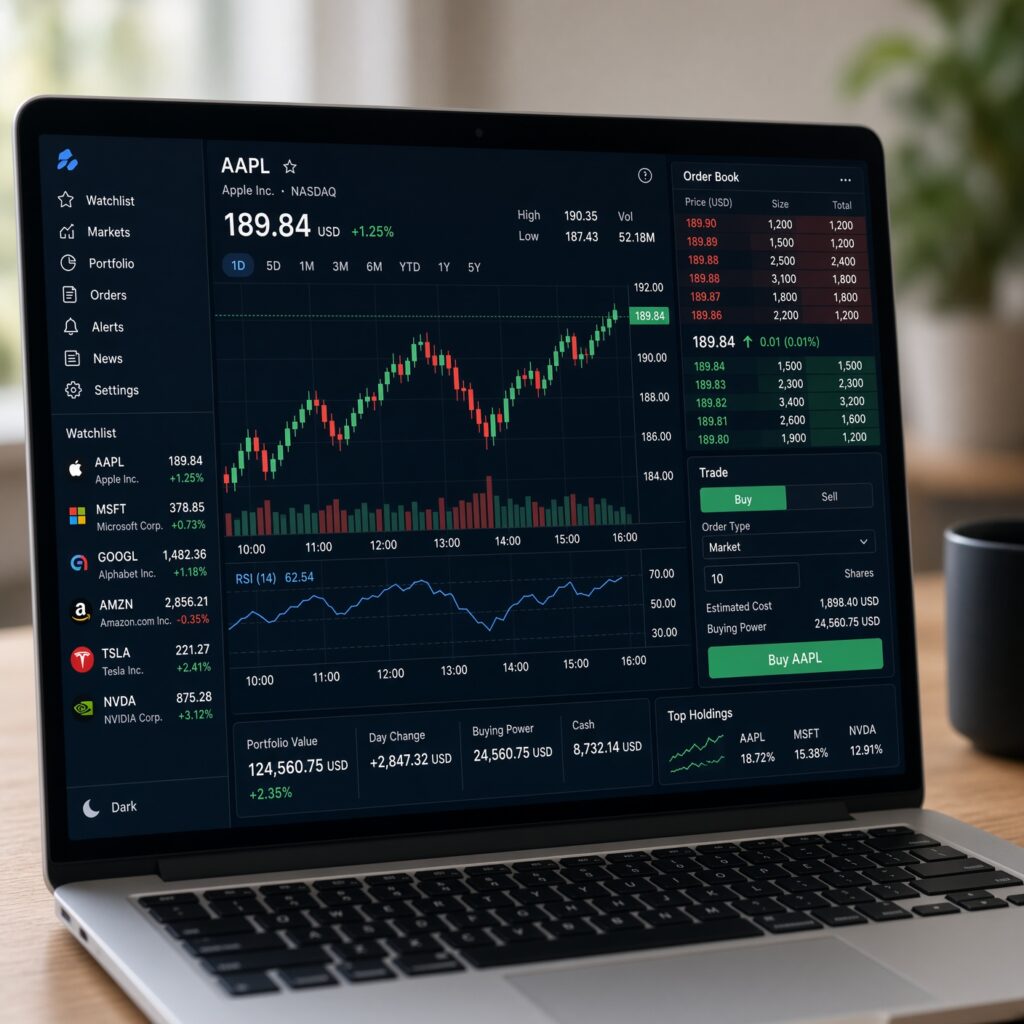
24-hour stock trading represents a major advancement in financial market accessibility. It empowers retail investors to manage portfolio risks, react instantaneously to breaking corporate news, and trade on their own schedules. However, the drawbacks—including decreased liquidity, higher volatility, and wider spreads—require disciplined trading practices.
For long-term investors, waiting for the regular market session often delivers better price execution and lower overall trading costs. For active traders seeking to capitalize on immediate global developments, leveraging 24/5 trading with limit orders offers a powerful tool in modern financial markets.