What Is the Role of Stock Exchanges in the Economy?

When most people think of a stock exchange, they picture chaotic trading floors with people shouting into phones or screens filled with green and red numbers flashing continuously. While those visuals make for great movies, they fail to capture what a stock exchange actually does.
At its core, a stock exchange is a centralized, organized marketplace where buyers and sellers meet to trade financial assets like corporate shares, bonds, and exchange-traded funds (ETFs).
Without stock exchanges, modern economies would grind to a halt. They serve as the engine room of global commerce, connecting companies that need capital to grow with individuals and institutions looking to invest their savings.
Whether you are looking to invest your first dollar, start a business, or simply understand how national wealth is built, grasping the role of stock exchanges in the economy is essential.
1. Facilitating Capital Formation for Business Growth

One of the most fundamental roles of a stock exchange is capital formation. Capital is the money a business needs to build factories, hire engineers, develop new technology, open new stores, or expand into international markets.
When a private business reaches a certain size, it often needs more money to fund expansion than traditional bank loans can provide. To raise large amounts of money without taking on debt, the company goes public through an Initial Public Offering (IPO).
[Private Company] ---> Issuance of Shares (IPO) ---> [Stock Exchange] ---> Capital Raised from Public
                                                                             │
                                                                             ▼
[Economic Growth] <--- Innovation & Jobs Creation <--- Business Expansion <──┘
During an IPO, a company issues shares of ownership to the general public and institutional investors via a stock exchange. Investors hand over cash, and in return, they receive equity—fractional ownership of the company.
- Job Creation: As companies use this new capital to expand operations, they create thousands of jobs, fueling income growth across communities.
- Innovation & Development: Capital raised on exchanges allows tech, healthcare, and green energy firms to fund expensive research and development (R&D).
- Reduced Dependency on Debt: By issuing equity rather than taking high-interest loans, companies protect themselves from bankruptcy during tough economic downswings.
By providing a structured framework for companies to raise public money, stock exchanges directly convert private savings into productive economic activity.
2. Providing Liquidity to Investors and Markets
Imagine buying a house. If you decide to sell that house tomorrow, it might take weeks, months, or even years to find a buyer and receive your cash. That is an example of an illiquid asset.
Now imagine owning shares of a public company. If you need money for an emergency, you can click a button on your phone, sell your shares, and have the money in your bank account in a short timeframe. This ease of buying and selling is called liquidity.
Stock exchanges ensure continuous market liquidity through a structured two-tiered system:
| Market Tier | Primary Function | Primary Participants |
|---|---|---|
| Primary Market | Where securities are created and sold for the very first time (IPOs). Companies receive the capital directly. | Corporations, Underwriters, Initial Investors |
| Secondary Market | Where investors trade existing shares among themselves. Companies do not receive money from these daily trades. | Everyday Retail Investors, Institutional Funds, Traders |
Liquidity is essential for a healthy economy because it eliminates fear. Investors are far more willing to part with their hard-earned money and invest in corporate growth when they know they can easily exit their positions whenever they want.
3. Establishing Fair Pricing Through Price Discovery
How do we know how much a share of a company is worth on any given day? Is it worth $10, $100, or $1,000?
Stock exchanges solve this problem through a continuous economic process known as price discovery. Price discovery relies on the law of supply and demand. Every second market transactions take place, thousands of buyers (demand) and sellers (supply) submit orders expressing what they are willing to pay or accept.
- High Demand: If a company releases a revolutionary product or strong earnings, more people want to buy the stock than sell it. The exchange matches these orders at progressively higher prices, driving the stock price up.
- High Supply: If a company suffers losses or bad management, more people want to sell than buy. The stock price drops until it reaches a level where buyers feel the price reflects fair value.
                 ┌─────────────────────────┐
                 │  Buyers & Sellers Meet  │
                 └────────────┬────────────┘
                              │
               ┌──────────────┴──────────────┐
               ▼                             ▼
     Demand > Supply               Supply > Demand
   (Strong Earnings, R&D)        (Losses, Mismanagement)
               │                             │
               ▼                             ▼
       Price Increases               Price Decreases
               └──────────────┬──────────────┘
                              │
                              ▼
               ┌─────────────────────────┐
               │ Real-Time Fair Value    │
               │    (Price Discovery)    │
               └─────────────────────────┘
Without stock exchanges, valuation would be subjective and hidden behind closed doors. By making pricing transparent and accessible in real-time, stock exchanges ensure that resources and investments flow to the most valuable, efficient, and promising businesses in the economy.
4. Serving as an Economic Barometer and Performance Indicator
Economists, financial analysts, and government officials closely monitor stock market performance because it acts as a reliable economic barometer.
Stock exchanges track market sentiment through benchmark indices—such as the S&P 500, the Dow Jones Industrial Average, or the Nasdaq Composite. These indices group together representative collections of publicly traded companies to give a clear snapshot of broader economic health.
- Bull Markets (Rising Index): When stock indices trend upward over time, it generally indicates strong investor confidence, healthy corporate profits, low unemployment, and economic expansion.
- Bear Markets (Declining Index): Sustained market drops often signal economic slowdowns, rising inflation, consumer distress, or impending economic recessions.
Because stock prices reflect what investors expect companies to earn in the next 6 to 12 months, the stock exchange is a forward-looking indicator. It often predicts economic turns months before official GDP numbers or employment reports confirm them.
5. Democratizing Wealth Creation for Everyday People
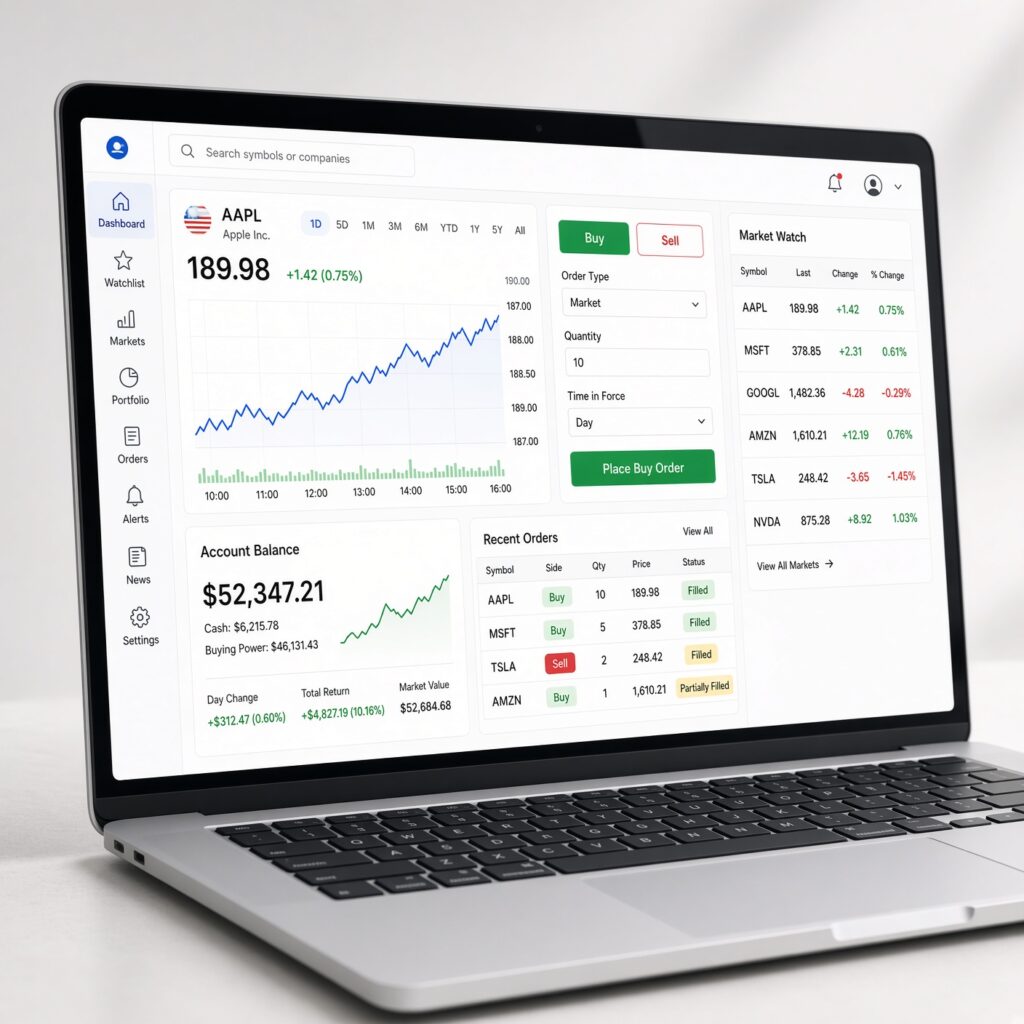
Decades ago, high-yield wealth generation was largely restricted to the ultra-wealthy, institutional funds, and venture capitalists. Stock exchanges have fundamentally transformed society by democratizing investment opportunities.
Today, anyone with a bank account and a smartphone can buy fractional shares of the world’s most successful public corporations. This offers retail investors two distinct ways to build personal wealth over time:
- Capital Appreciation: As a company grows its operations and profitability, the value of its stock increases. An investor who bought shares years ago can sell them later for a profit.
- Dividend Income: Many mature, stable corporations distribute a portion of their net earnings directly to shareholders in the form of regular dividend payouts.
By offering access to equity ownership, stock exchanges allow everyday workers to share directly in corporate growth, build long-term wealth, combat inflation, and prepare for retirement.
6. Encouraging Governance, Transparency, and Investor Safety
If investing felt like a gamble in an unregulated market, most individuals would keep their money hidden under a mattress. Stock exchanges solve this trust issue by enforcing rigorous regulatory frameworks and listing requirements.
Before a company is allowed to list its shares on a major exchange (such as the NYSE or Nasdaq), it must submit to strict oversight by regulatory bodies like the U.S. Securities and Exchange Commission (SEC).
| Exchange Listing Requirements | |
|---|---|
| Financial Disclosure | • Quarterly Reports (10-Q) • Annual Audits (10-K) |
| Corporate Governance | • Independent Boards • Anti-Fraud Measures |
| Market Integrity | • Real-Time Monitoring • Insider Trading Prevention |
Key regulatory safeguards enforced by exchanges include:
- Mandatory Financial Disclosures: Public companies are legally required to publish audited financial statements every quarter (10-Q) and year (10-K), ensuring complete visibility into earnings, debts, and executive salaries.
- Equal Access to Information: Material company news (such as earnings or mergers) must be released publicly to everyone at the exact same time, preventing unfair advantages.
- Prevention of Fraud and Manipulation: Real-time monitoring software detects suspicious trading activity, helping to eliminate insider trading, market manipulation, and price-rigging schemes.
This level of transparency builds trust, ensuring that investors can make informed financial decisions with confidence.
7. Supporting Government Funding and Infrastructure Projects
It is easy to think of stock exchanges as platforms designed strictly for corporations and private investors. However, governments at local, state, and federal levels rely heavily on exchange ecosystems to raise funds for critical public infrastructure.
Instead of raising taxes to fund large projects, government entities regularly issue debt instruments known as municipal bonds or treasury bonds on public financial exchanges.
- Public Infrastructure: Bond issuances help finance essential public works, including highways, public transportation systems, bridges, airports, and water utilities.
- Community Services: Local governments issue bonds to construct new schools, public hospitals, and municipal parks.
Institutional and retail investors purchase these fixed-income bonds through exchanges, earning predictable interest while funding essential public projects that elevate national living standards.
8. Promoting Global Capital Flow and International Trade
In an interconnected global economy, stock exchanges act as bridges across international borders. They allow international capital to flow smoothly into domestic businesses while giving domestic investors direct access to global growth stories.
Through vehicles like American Depositary Receipts (ADRs) and foreign-listed Exchange-Traded Funds (ETFs), an individual in the United States can invest in international companies across Europe, Asia, or South America without needing a foreign brokerage account.
[Domestic Investor] ──> [Stock Exchange (ADRs / International ETFs)] ──> [Foreign Enterprise Growth]
                                                                                      │
[Cross-Border Innovation] <── [Foreign Capital Deployment] <── [Global Market Access] ┘
This cross-border flow of capital delivers important economic benefits:
- Foreign Direct Investment (FDI): Developing economies can attract foreign capital to accelerate domestic infrastructure, technology, and manufacturing sectors.
- Portfolio Diversification: Investors can protect their wealth by spreading assets across different geographies, currency zones, and international industrial markets.
- Global Currency Stability: High international trading volumes stabilize exchange rates by facilitating steady demand for currencies worldwide.
The Unsung Pillar of Modern Prosperity
Stock exchanges are far more than digital charts and trading venues. They serve as an economic pillar that supports corporate expansion, drives technological innovation, protects savings, and creates jobs.
By transforming idle personal savings into productive corporate investments, stock exchanges maintain economic momentum. They offer businesses the capital needed to innovate, afford everyday investors a path to financial freedom, and provide governments with the funds required to build the future.
Understanding how stock exchanges operate isn’t just useful for traders—it is key to understanding how wealth, progress, and opportunity move across the modern economic landscape.