What Is the Euronext Stock Exchange?

Discover how Euronext grew into Europe’s largest stock exchange, how cross-border trading works, and why it matters for modern global investors.
When most beginner investors think of global stock exchanges, American powerhouses like the New York Stock Exchange (NYSE) or the Nasdaq usually come to mind first. However, on the other side of the Atlantic sits a financial titan that drives much of Europe’s economic activity: Euronext.
If you have ever considered expanding your investment horizon internationally or wondered where major European corporations like LVMH, ASML, TotalEnergies, or Heineken trade their shares, you are looking directly at the Euronext ecosystem. But what exactly is Euronext, how did a single exchange come to represent multiple nations, and how does it operate today?
In this complete guide, we will break down everything you need to know about the Euronext stock exchange in plain, simple English—no economics degree required.
Understanding the Fundamentals: What Is Euronext?
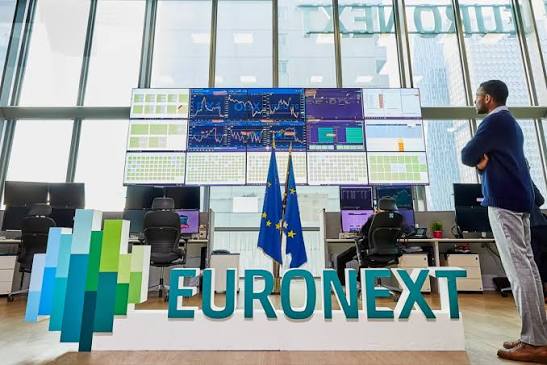
At its core, Euronext is the premier pan-European market infrastructure provider. Unlike traditional stock exchanges that belong to a single country—such as the Tokyo Stock Exchange in Japan or the Toronto Stock Exchange in Canada—Euronext operates as a unified, multi-national marketplace spanning several major European countries.
Headquartered in Amsterdam, Netherlands, Euronext operates regulated exchange markets in key European financial hubs, including:
- Amsterdam (Netherlands)
- Brussels (Belgium)
- Dublin (Ireland)
- Lisbon (Portugal)
- Milan (Italy – Borsa Italiana)
- Oslo (Norway)
- Paris (France)
By bringing these distinct national exchanges under one single technological and operational roof, Euronext allows buyers and sellers across the globe to trade equities, bonds, exchange-traded funds (ETFs), warrants, commodities, and financial derivatives seamlessly.
The History of Euronext: A Strategic European Merger
To truly understand Euronext, it helps to look at how it came to be. Historically, every European nation maintained its own independent stock exchange. While this preserved national pride, it created massive friction for global investors, who had to navigate different trading rules, different currencies, and separate clearinghouses for every country.
In September 2000, three of Europe’s oldest stock markets—the Amsterdam Stock Exchange, the Brussels Stock Exchange, and the Paris Bourse—joined forces to create Euronext N.V. The goal was simple yet ambitious: create a single, harmonized European financial market that could compete directly with Wall Street.
Key Milestones in Euronext’s History
Over the past two decades, Euronext has undergone transformative changes to expand its reach and liquidity:
- 2002: Euronext expanded by acquiring the Portuguese exchange (BVL) and the London International Financial Futures and Options Exchange (LIFFE).
- 2007: Euronext merged with the New York Stock Exchange to form NYSE Euronext, creating the world’s first truly transatlantic exchange group.
- 2013-2014: Intercontinental Exchange (ICE) acquired NYSE Euronext. Shortly after, ICE spun Euronext off through an Initial Public Offering (IPO), allowing Euronext to return to its roots as an independent European entity.
- 2018-2021: Euronext embarked on a major strategic expansion, acquiring the Irish Stock Exchange (2018), Oslo Børs in Norway (2019), and Borsa Italiana in Milan (2021).
Today, Euronext represents the largest aggregate equity liquidity pool in Europe, powering transactions across nearly a dozen asset classes.
How Euronext Works: The Single Order Book Advantage
One of the most impressive technical feats of Euronext is its **Single Order Book** model. But what does that mean for an everyday investor or trader?
In traditional setups, if you wanted to trade a company listed in Paris and another company listed in Amsterdam, you would have to submit orders to two completely separate market mechanisms. Euronext eliminated this fragmentation by introducing a single, unified electronic trading system called Optiq®.
Through Optiq®, all participating national markets share one centralized order book for each security. This structure offers several primary benefits for traders:
- Higher Liquidity: Combining orders from across Europe creates deeper order books, making it easier to buy or sell large blocks of shares without moving the market price dramatically.
- Narrower Spreads: Increased competition among market makers leads to tighter bid-ask spreads, directly lowering trading costs for institutional and retail investors alike.
- Standardized Rules: Market participants follow unified trading rules, clearing processes, and settlement schedules, regardless of which city the underlying company calls home.
Major Stock Indices Listed on Euronext
Just as the S&P 500 or the Dow Jones Industrial Average measure the health of the U.S. stock market, Euronext hosts several of the world’s most famous market indices. Because Euronext encompasses multiple nations, it manages national flagship benchmark indices along with combined regional trackers.
1. CAC 40® (France)
The CAC 40 is the premier benchmark index for the French market. It tracks the 40 largest and most actively traded companies listed on Euronext Paris. Prominent constituents include global luxury powerhouse LVMH, cosmetics leader L’Oréal, energy firm TotalEnergies, and healthcare provider Sanofi.
2. AEX-Index® (Netherlands)
The AEX Index tracks the top 25 to 30 blue-chip companies listed on Euronext Amsterdam. It is heavily weighted toward technology, semiconductor manufacturing, and consumer staples, featuring giants like ASML Holding, Prosus, and Unilever.
3. FTSE MIB® (Italy)
Following the acquisition of Borsa Italiana, Euronext added the benchmark index for the Italian equity market. The FTSE MIB captures the top 40 companies in Milan, including automotive manufacturers like Ferrari, major banking groups like Intesa Sanpaolo, and energy companies like Enel.
4. BEL 20® (Belgium) & PSI® (Portugal)
The BEL 20 tracks the 20 largest listed companies in Brussels (such as brewing giant Anheuser-Busch InBev), while the PSI (formerly PSI-20) tracks the leading publicly traded firms in Lisbon.
5. OBX® (Norway) & ISEQ 20® (Ireland)
The OBX Index tracks the 25 most liquid stocks on the Oslo Stock Exchange—often heavily featuring maritime, energy, and aquaculture sectors—while the ISEQ 20 represents Ireland’s key corporate names listed in Dublin.
What Asset Classes Can You Trade on Euronext?
Euronext is not strictly a stock market for buying individual company shares. It acts as a comprehensive financial portal offering access to diverse asset classes:
- Equities (Stocks): Thousands of small, mid, and large-cap companies across Europe.
- Exchange-Traded Funds (ETFs) & ETPs: Hundreds of index trackers, sector-specific funds, and thematic ETFs designed for passive investors.
- Bonds & Fixed Income: Euronext is one of the world’s leading centers for listing corporate, government, and ESG (Environmental, Social, and Governance) green bonds.
- Derivatives: Financial futures and options contracts based on indices, individual equities, and currencies.
- Commodities: Euronext operates Europe’s leading benchmark market for agricultural commodities futures, including milling wheat, rapeseed, and corn.
Euronext Trading Hours and Market Schedule
For international traders and investors looking to trade European assets, keeping track of time zone differences is essential. Euronext operates primarily on Central European Time (CET).
Standard cash market trading hours across most main Euronext locations (Amsterdam, Brussels, Lisbon, Paris) run as follows:
- Pre-Opening Session: 07:15 AM – 09:00 AM CET
- Continuous Trading Session: 09:00 AM – 05:35 PM CET
- Post-Closing Auction & Closing Price: 05:35 PM – 05:40 PM CET
For investors based in North America (Eastern Standard Time), the main trading session opens bright and early at 3:00 AM EST and closes at 11:30 AM EST, allowing for significant overlap with early U.S. morning research routines.
Euronext vs. NYSE vs. Nasdaq: Key Differences
To help put Euronext into perspective, it helps to compare it against the two largest exchange operators in North America:
| Feature | Euronext | New York Stock Exchange (NYSE) | Nasdaq |
|---|---|---|---|
| Primary Region | Western & Northern Europe | United States | United States |
| Structure | Pan-European (Multi-Country) | Single Nation (U.S.) | Single Nation (U.S.) |
| Headquarters | Amsterdam, Netherlands | New York City, USA | New York City, USA |
| Primary Benchmark | CAC 40, AEX, FTSE MIB | Dow Jones, S&P 500 | Nasdaq-100, Nasdaq Composite |
| Key Sectors | Luxury, Semiconductors, Banking, Energy | Finance, Industrial, Consumer, Healthcare | Technology, Biotechnology, Software |
Why Euronext Matters for Everyday Investors
You do not need to live in Europe to care about Euronext. In today’s interconnected global economy, what happens on Euronext directly impacts portfolios around the world for several distinct reasons:
1. Global Economic Indicator
European consumer sentiment, corporate earnings, and supply chain updates often show up first in early-morning Euronext trading before U.S. markets open. Major earnings reports from European industrial or tech giants frequently set the market tone for North American trading sessions hours later.
2. Access to World-Class Brands
Many of the consumer goods, pharmaceuticals, and technology components that people use daily belong to companies traded on Euronext. Investing directly or indirectly in these companies offers geographic and currency diversification beyond North American equities.
3. Leaders in Green & Sustainable Finance
European capital markets have historically led the charge in ESG investing and green bond issuances. Euronext hosts dedicated ESG index families (like the CAC 40 ESG) and strict sustainability listing standards, making it a primary destination for sustainable investing strategies.
How to Invest in Euronext-Listed Stocks
If you are interested in gaining exposure to European companies listed on Euronext, you have a few simple avenues to explore:
- American Depositary Receipts (ADRs): Many major Euronext companies list ADRs on U.S. exchanges like the NYSE or Nasdaq. ADRs represent shares of foreign stock held by a U.S. bank, allowing you to buy them in USD directly through your standard broker.
- Global Brokerage Accounts: Modern international brokerages offer direct market access (DMA) to European stock exchanges. This enables you to buy original shares directly on Euronext Paris or Euronext Amsterdam using local currencies (Euros or Norwegian Krone).
- Broad International ETFs: The easiest and most diversified way to invest in Euronext companies is through exchange-traded funds that track European equity indices, such as MSCI Europe or Vanguard FTSE Europe ETFs.
The Future of European Trading
The Euronext stock exchange stands as a powerful testament to how integration, shared technology, and unified liquidity can create a seamless financial market across international borders. By transforming multiple distinct national exchanges into one centralized platform, Euronext has solidified its spot as Europe’s premier financial hub.
Whether you are a seasoned trader looking to capitalize on European market movements or a beginner seeking a broader understanding of global finance, keeping an eye on Euronext is essential for navigating today’s modern investment landscape.