What Happens Inside a Stock Exchange?

Picture the classic image of Wall Street: a packed, noisy room filled with brokers waving paper slips, shouting prices, and frantically signaling across the floor. That image defined financial markets for more than a century. Today, however, if you step inside a major exchange or look behind the curtain of modern stock trading, the reality looks drastically different.
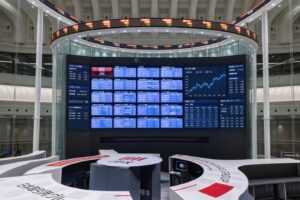
While iconic venues like the New York Stock Exchange (NYSE) still maintain a physical trading floor for key moments like opening bells and initial public offerings, the true heart of a modern stock exchange beats inside massive, climate-controlled data centers. Every single day, trillions of dollars in company shares change hands in fractions of a millisecond—faster than the blink of a human eye.
Understanding what happens inside a stock exchange does not require a finance degree. At its core, a stock exchange is simply a highly organized, strictly regulated marketplace. Whether you are buying a single share of a tech company from your smartphone or a pension fund is moving millions of dollars, every transaction follows a precise, step-by-step journey.
What Is a Stock Exchange and Why Does It Exist?
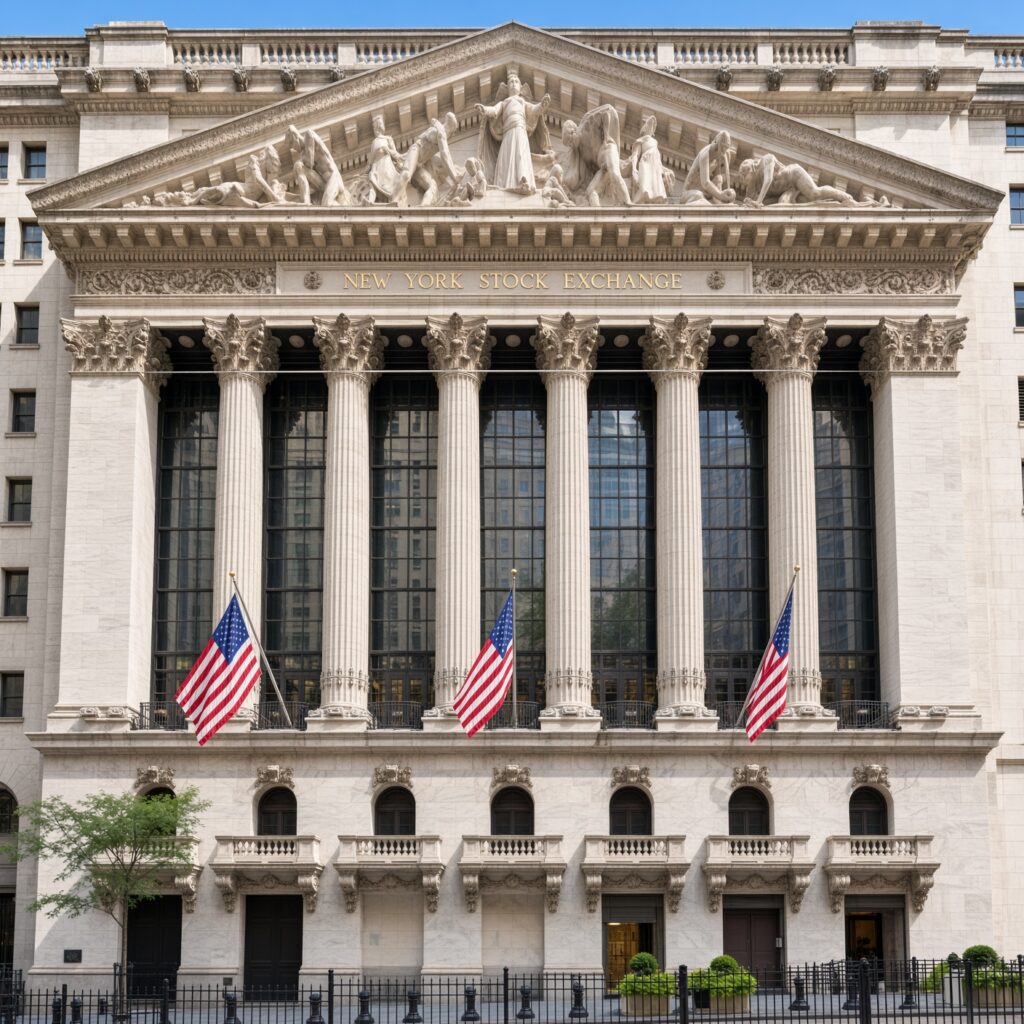
A stock exchange is a centralized marketplace where buyers and sellers come together to trade shares of publicly listed companies. Think of it like a farmers’ market, except instead of buying apples and bread, participants are buying and selling tiny pieces of ownership in businesses like Apple, Microsoft, or Ford.
Exchanges serve three critical purposes in the economy:
- Raising Capital for Businesses: When a private company wants to expand—building new factories, funding research, or hiring thousands of workers—it can “go public” through an Initial Public Offering (IPO). By listing its shares on an exchange, the company sells ownership stakes to the public in exchange for cash.
- Providing Liquidity for Investors: Imagine buying a house that you could never sell unless you personally walked door-to-door looking for a buyer. A stock exchange eliminates that friction by pooling millions of buyers and sellers into one place, allowing you to convert shares back into cash almost instantly during market hours.
- Price Discovery: Nobody sits in a back room deciding what a share of stock is worth. Instead, the exchange constantly updates prices based on real-time supply and demand. When more people want to buy a stock than sell it, the price rises; when more want to sell, the price falls.
Importantly, a stock exchange does not own the shares being traded, nor does it bet against you. It acts strictly as a neutral referee and technology provider, earning revenue through small transaction fees, company listing fees, and market data subscriptions.
Inside the Engine Room: How a Trade Actually Happens
When you tap “Buy” on a brokerage app, your order goes on an invisible, high-speed journey that takes less than a thousandth of a second. Understanding this pipeline demystifies the entire market.
Step 1: Order Routing Through Your Broker
Individual investors cannot walk directly into the NYSE or Nasdaq and place an order. Instead, you use a licensed brokerage firm. When you submit an order—whether it is a market order (buy immediately at the best available price) or a limit order (buy only at a specific price or better)—your broker’s smart order router checks where the best price is available across the national market system.
Step 2: Entering the Central Limit Order Book
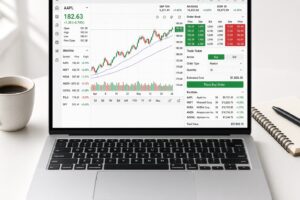
Once your order reaches the exchange, it enters a digital ledger known as the Central Limit Order Book (CLOB). The order book is essentially a real-time, two-sided scoreboard:
- The Bid Side: Every active buy order, ranked from the highest price a buyer is willing to pay down to the lowest.
- The Ask (or Offer) Side: Every active sell order, ranked from the lowest price a seller is willing to accept up to the highest.
The difference between the highest bid and the lowest ask is called the bid-ask spread. For heavily traded stocks, this spread is often just a single penny.
Step 3: The Matching Engine Takes Over
At the exact center of every modern exchange sits a powerful piece of software called the matching engine. Running on ultra-fast servers in places like Mahwah, New Jersey (home to the NYSE’s data center) or Carteret, New Jersey (home to Nasdaq), the matching engine continuously scans the order book for compatible pairs.
Most major U.S. exchanges operate on a strict rule called Price-Time Priority (often referred to as First-In, First-Out, or FIFO):
- Best Price Wins First: A buyer offering $150.05 per share always jumps ahead of a buyer offering $150.00.
- Earliest Timestamp Wins Ties: If two buyers both offer $150.05, the order that arrived at the exchange’s server first—even by a single microsecond—gets filled first.
The moment a buy price meets or exceeds a sell price, the matching engine executes the trade automatically, removes those orders from the book, and broadcasts the new official trade price out to the world.
Who Are the Key Players Inside a Stock Exchange?
Even though computers handle order matching, people and specialized institutions still play vital roles in keeping markets smooth, fair, and liquid.
| Market Participant | Primary Role Inside the Exchange | How They Benefit the Market |
|---|---|---|
| Retail Investors | Everyday individuals buying and selling through personal brokerage accounts. | Provide long-term capital and steady participation across market cycles. |
| Institutional Investors | Pension funds, mutual funds, insurance companies, and endowments managing billions of dollars. | Drive major trading volume and long-term price stability. |
| Market Makers | Specialized firms obligated to continuously quote both buy and sell prices throughout the day. | Ensure there is always someone ready to buy when you want to sell, keeping spreads tight. |
| Designated Market Makers (DMMs) | Firms assigned to specific stocks on the NYSE floor to oversee fair and orderly trading. | Step in during volatile openings, closings, or sudden imbalances to stabilize prices. |
| High-Frequency Traders (HFTs) | Quantitative firms using sophisticated algorithms and ultra-fast connections to trade in microseconds. | Narrow bid-ask spreads and keep prices aligned across different exchanges simultaneously. |
Electronic Exchanges vs. Floor Trading: NYSE and Nasdaq Compared
When people talk about the U.S. stock market, two names dominate the conversation: the New York Stock Exchange (NYSE) and Nasdaq. Together, these two giants account for nearly half of the total value of all publicly listed companies worldwide. Yet they operate using different models.
The New York Stock Exchange (Hybrid Model)
Founded in 1792 under a buttonwood tree on Wall Street, the NYSE uses a hybrid model that blends high-speed electronic matching with human oversight on its historic trading floor at 11 Wall Street. While the vast majority of NYSE trades happen electronically in its New Jersey data center, human Designated Market Makers (DMMs) and floor brokers still manage high-stakes events like the Opening Bell, the Closing Bell, and major IPOs, helping prevent chaotic price swings when massive orders hit the market at once.
Nasdaq (All-Electronic Model)
Launched in 1971 as the world’s first electronic stock market, Nasdaq has never had a traditional trading floor. Every single order is routed, displayed, and matched entirely through computer networks. Because of its digital roots, Nasdaq historically attracted major technology companies like Apple, Amazon, Nvidia, and Meta, and it relies on multiple competing electronic market makers rather than a single assigned specialist per stock.
Off-Exchange Venues and Dark Pools
Not every stock trade happens on a public, “lit” exchange like the NYSE or Nasdaq. In fact, roughly half of all U.S. stock trading volume occurs off-exchange through Alternative Trading Systems (ATS) and wholesale market makers.
Institutional investors—such as a mutual fund trying to sell 2 million shares of a company—often use private venues known as dark pools. If that fund dumped 2 million shares onto the public order book all at once, other traders would see the massive sell order and drive the price down before the fund could finish selling. Dark pools allow large institutions to match blocks of shares privately without broadcasting their intentions beforehand, reporting the completed trade to the public tape immediately after execution.
What Happens After You Buy a Stock? Clearing and Settlement
Executing a trade inside the matching engine takes milliseconds, but legally transferring ownership of shares and moving money between bank accounts takes a structured behind-the-scenes process known as clearing and settlement.
- Trade Confirmation: Immediately after the matching engine pairs a buyer and seller, both brokers receive an electronic confirmation detailing the ticker symbol, share quantity, and exact execution price.
- Clearing: The trade data is sent to a central clearinghouse—in the United States, this is the Depository Trust & Clearing Corporation (DTCC). The clearinghouse acts as a central guarantor, stepping between the buyer’s broker and the seller’s broker to guarantee that the trade will be honored even if one firm suddenly goes out of business.
- Settlement (T+1): Under U.S. market rules, stock trades settle on a T+1 cycle—meaning “Trade Date plus one business day”. If you buy shares on a Tuesday, the official cash transfer and legal share delivery finalize on Wednesday.
How Stock Exchanges Protect Investors and Prevent Market Crashes
Because modern markets move at computer speeds, exchanges are equipped with automated guardrails designed to prevent technical glitches, fat-finger typing errors, and panic-driven crashes.
- Market-Wide Circuit Breakers: If the broader stock market—measured by the S&P 500 Index—drops sharply in a single day, automatic circuit breakers pause all trading across every U.S. exchange. A 7% drop (Level 1) or 13% drop (Level 2) triggers a 15-minute cooling-off pause so investors can digest news calmly, while a 20% drop (Level 3) halts trading for the remainder of the day.
- Limit Up-Limit Down (LULD) Bands: Even if the overall market is calm, an individual stock can experience a sudden glitch or rumor. LULD rules prevent trades from occurring outside strict percentage bands around a stock’s average price over the preceding five minutes, automatically pausing trading in that specific stock for five minutes if volatility spikes too fast.
- Regulatory Oversight: Every national securities exchange in the United States is strictly regulated by the Securities and Exchange Commission (SEC) and monitored by the Financial Industry Regulatory Authority (FINRA). Exchanges also run real-time AI surveillance software that scans billions of messages daily to detect illegal behavior such as insider trading, “spoofing” (placing fake orders to trick algorithms), and price manipulation.
Trading Hours and the Shift Toward 23/5 Global Markets
Traditionally, regular U.S. stock market hours run from 9:30 a.m. to 4:00 p.m. Eastern Time, Monday through Friday. These core hours are bookended by two critical events: the Opening Cross at 9:30 a.m., which bundles overnight orders into a single fair opening price, and the Closing Cross at 4:00 p.m., which determines the official closing price used by mutual funds, index trackers, and news outlets worldwide.
Beyond regular hours, brokers have long offered pre-market (4:00 a.m. to 9:30 a.m. ET) and after-hours (4:00 p.m. to 8:00 p.m. ET) sessions. However, global demand from investors across Europe and Asia has pushed major U.S. exchanges toward nearly round-the-clock access. Both Nasdaq and NYSE Arca have introduced 23/5 trading schedules—operating 23 hours a day, five days a week from Sunday evening through Friday evening, pausing for just one hour each night (8:00 p.m. to 9:00 p.m. ET) for system maintenance and daily clearing updates.
While extended and overnight sessions give investors the flexibility to react immediately to breaking news or overseas earnings reports, trading volume outside the 9:30 a.m. to 4:00 p.m. core window is noticeably thinner, meaning bid-ask spreads can be wider and prices more sensitive to individual orders.
Common Myths About What Happens Inside a Stock Exchange
Even experienced savers sometimes hold misconceptions about how exchanges actually function behind the scenes. Clearing up these myths makes you a far more confident market participant:
- Myth 1: “The stock exchange sets stock prices.”
Reality: Exchanges never decide what a company’s shares cost. Prices are determined exclusively by what real buyers are willing to bid and what real sellers are willing to ask at any given second. - Myth 2: “Buying a stock sends money directly to that company.”
Reality: A company only receives cash when it first sells new shares during an IPO or a secondary offering. When you buy shares on an exchange on a normal Tuesday, you are buying them from another investor—not from the company itself. - Myth 3: “People on the trading floor control the market.”
Reality: Over 99% of order matching happens automatically inside secure server racks. Floor brokers and Designated Market Makers serve primarily as human safeguards for complex institutional orders and major market openings or closings.
Frequently Asked Questions About Stock Exchanges
How many stock exchanges are there in the United States?
While the NYSE and Nasdaq are the most famous, there are over two dozen SEC-registered national securities exchanges operating in the United States, including venues like Cboe BZX, IEX (Investors Exchange), MEMX (Members Exchange), and the Texas Stock Exchange (TXSE). Brokers automatically scan across these venues to find you the best available price.
What is the difference between a stock market and a stock exchange?
A stock exchange is a specific, regulated organization and trading venue—such as the NYSE or Nasdaq. The stock market is the broader umbrella term describing the entire ecosystem of all exchanges, off-exchange trading venues, brokers, listed companies, and investors combined.
Why do stock prices change every second?
Every time a news headline breaks, an economic report is released, or an institutional algorithm adjusts its portfolio, thousands of new buy and sell orders enter the order book. Because the matching engine processes millions of messages per second, the highest bid and lowest ask shift continuously in real time.
Is my money safe when trading on a U.S. stock exchange?
Trades executed on registered U.S. exchanges are backed by strict SEC rules, central clearinghouse guarantees through the DTCC, and SIPC (Securities Investor Protection Corporation) coverage at member brokerages, which protects customer securities up to $500,000 if a brokerage firm fails. However, regulatory protection safeguards the mechanics of the market—it does not protect against normal market losses if a stock’s price drops.