The Difference Between a Stock Exchange and a Stock Market

When people first step into the world of investing, they often encounter a barrage of terms that sound interchangeable yet mean entirely different things. Among the most commonly confused concepts are the terms stock market and stock exchange. While seasoned traders and financial analysts use these terms effortlessly in daily conversation, beginners frequently mix them up, assuming they refer to the exact same physical or digital trading floor.
Understanding the precise distinction between a stock market and a stock exchange is not merely an academic exercise; it is fundamental to grasping how global capital flows, how companies raise funds, and how everyday investors build long-term wealth. Whether you are looking to buy shares in tech giants like Apple and Microsoft or researching broad economic indicators, clarifying this foundational mechanics will make you a more confident and informed investor.
In this comprehensive guide, we will break down these two financial concepts using clear, jargon-free analogies, explore how they interact within the broader global financial ecosystem, and provide actionable insights for anyone looking to navigate the world of equities.
What is a Stock Market? The Broad Ecosystem
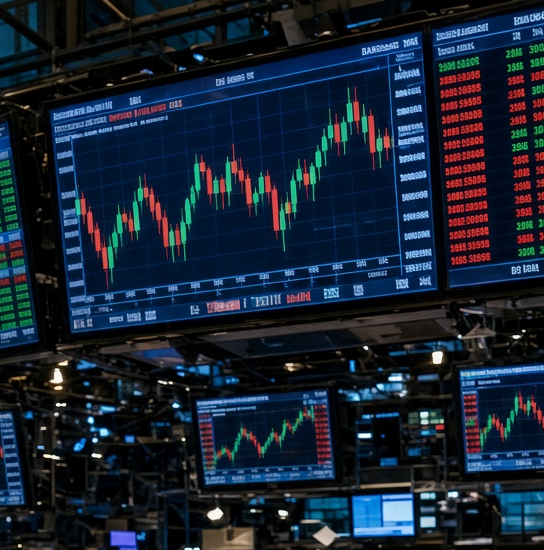
To understand the difference, it helps to start with the broader concept. A stock market is an umbrella term that encompasses every single venue, platform, and network where shares of publicly held companies are bought, sold, and issued. It is not a single physical location, nor is it owned by a single corporation or governed by one specific entity.
Think of the stock market as a massive, decentralized global marketplace—similar to how we talk about the “housing market” or the “automotive market.” The housing market isn’t a single street or a single real estate agency; it includes every home for sale, every buyer looking for a property, every real estate agent, every mortgage lender, and every legal contract across an entire country or even the globe.
Key Characteristics of the Stock Market
The stock market operates continuously across borders, time zones, and institutional boundaries. Its primary functions include:
- Capital Formation: Providing a mechanism for startup companies and established corporations to raise capital from the general public by issuing shares of ownership.
- Price Discovery: Establishing the fair market value of a company based on the continuous interplay between buyer demand and seller supply.
- Liquidity: Allowing investors to convert their shares into cash quickly and efficiently without having to hunt down a private buyer independently.
- Economic Barometer: Reflecting the overall health, confidence, and expectations of the broader economy through major indexes like the S&P 500, Dow Jones Industrial Average, and Nasdaq Composite.
Crucially, the stock market includes both the primary market—where companies issue brand-new shares to the public for the very first time through an Initial Public Offering (IPO)—and the secondary market, where existing shares are traded back and forth among everyday investors, hedge funds, and institutions.
What is a Stock Exchange? The Specific Trading Venue
If the stock market is the entire bustling retail industry of a country, a stock exchange is a specific department store within that industry. A stock exchange is a regulated, organized physical location or electronic platform where buyers and sellers come together to trade stocks, bonds, and other financial instruments.
Unlike the abstract concept of a stock market, a stock exchange is a concrete business entity with a distinct corporate structure, strict membership rules, operating hours, and listing requirements. Famous examples include the New York Stock Exchange (NYSE), the Nasdaq, the London Stock Exchange (LSE), and the Tokyo Stock Exchange (TSE).
The Role and Function of an Exchange
An exchange acts as the centralized referee and facilitator of trades. When a broker executes an order to buy a share of stock for you, that transaction is routed through a specific stock exchange. The exchange ensures transparency, enforces compliance with government financial regulations, and guarantees that counterparties fulfill their financial obligations.
To have its shares traded on a particular exchange, a corporation must meet rigorous listing standards. These standards typically include minimum financial thresholds, requirements for corporate governance, regular public financial disclosures, and adherence to strict ethical codes. If a company fails to maintain these standards, the exchange has the authority to delist its shares, protecting investors from fraudulent or insolvent enterprises.
Key Differences Between a Stock Market and a Stock Exchange
To solidify your understanding, let us examine the core structural and operational differences side by side. While they are deeply interconnected, their functions and scopes are entirely distinct.
| Feature | Stock Market | Stock Exchange |
|---|---|---|
| Definition | The broad, decentralized economic ecosystem where all stock trading takes place globally. | A specific, regulated marketplace or platform where buyers and sellers execute trades. |
| Scope | Macro-level concept including all exchanges, over-the-counter (OTC) markets, and direct transactions. | Micro-level corporate entity (e.g., NYSE, Nasdaq) operating within the market. |
| Physical/Digital Presence | Abstract concept; has no single headquarters, governing board, or ringing bell. | Tangible business entity with a headquarters, digital servers, management, and compliance officers. |
| Regulation | Regulated by national government agencies (e.g., the SEC in the United States) and macro laws. | Regulated both by government agencies and its own internal bylaws and listing requirements. |
| Analogy | The global automotive industry (all cars, manufacturers, and buyers combined). | A specific authorized dealership showroom where transactions occur. |
The Anatomy of Modern Trading: How They Work Together
In practice, the stock market and stock exchanges work in seamless harmony. When an investor wants to purchase a stock, they do not walk up to a stock market headquarters; instead, they open a brokerage account on their smartphone or computer.
When you place an order to buy shares of a corporation, your brokerage firm routes your order to the appropriate stock exchange where that company is listed. For example, if you buy shares of Coca-Cola, your order is executed on the New York Stock Exchange. If you buy shares of Apple, your order is typically executed on the Nasdaq stock exchange.
Once the trade is matched and executed on the exchange, it becomes part of the vast global data stream that constitutes the broader stock market. Price movements from individual exchanges are aggregated to calculate market indexes, evaluate investor sentiment, and drive retirement accounts worldwide.
Over-the-Counter (OTC) Markets: Trading Beyond the Major Exchanges
To fully appreciate why a stock exchange is only a subset of the stock market, it is essential to look at Over-the-Counter (OTC) trading. Not every company is large enough or meets the strict capitalization requirements to be listed on major stock exchanges like the NYSE or Nasdaq.
Smaller companies, foreign stocks, and penny stocks often trade on OTC networks. In an OTC market, trading is decentralized and conducted directly between two parties via dealer networks rather than through a centralized exchange floor or matching engine. Because OTC markets are part of the broader stock market but operate outside traditional exchanges, they illustrate clearly that the stock market extends far beyond individual exchanges.
Why This Distinction Matters for Everyday Investors

For beginner investors, understanding this distinction provides several practical advantages:
- Informed Decision-Making: Knowing where a stock is listed helps you understand its liquidity, volatility, and regulatory oversight. Major exchanges offer higher transparency compared to OTC markets.
- Reduced Confusion: When financial news commentators discuss “market volatility” versus “exchange downtime,” you will understand the precise scale of the event being described.
- Better Portfolio Diversification: Recognizing that different exchanges list different types of companies helps you diversify your investments across various sectors, geographies, and risk profiles.
Mastering the Basics of Financial Literacy
The world of finance can feel overwhelming at first glance, but nearly every complex financial instrument is built upon simple, logical foundations. By separating the broad concept of the stock market from the specific operational venues known as stock exchanges, you have taken a vital step toward financial mastery.
Remember that the stock market is the entire global arena of corporate ownership and capital exchange, while a stock exchange is the organized marketplace where those transactions safely take place. Armed with this knowledge, you are better equipped to analyze financial news, evaluate investment opportunities, and build a secure financial future with confidence.