What Is a Centralized Stock Exchange?

When you first start exploring the world of investing, financial terminology can feel like a completely different language. Terms like “bull markets,” “liquidity,” and “market capitalization” are thrown around constantly. Among these foundational concepts, one term stands out as the bedrock of modern finance: the centralized stock exchange.
If you have ever wondered where stocks like Apple, Microsoft, or Amazon are actually bought and sold, you are looking right at the concept of a centralized exchange. But what does “centralized” really mean, how does it function behind the scenes, and why does it matter to everyday investors?
This comprehensive guide breaks down centralized stock exchanges into clear, easy-to-understand terms, helping you navigate the market with confidence while adhering to top-tier financial education standards.
Understanding the Basics: What Is a Stock Exchange?

Before diving into centralization, let’s establish what a stock exchange fundamentally is. Think of a stock exchange not as a physical corporation that sells you products, but rather as a highly organized, regulated marketplace—much like a digital farmers’ market.
At this market, buyers and sellers come together to trade shares of publicly held companies. Crucially, the exchange itself does not own the stock. Instead, it provides the secure infrastructure, rules, and matching technology needed to ensure that transactions happen smoothly, fairly, and transparently.
Famous examples of major stock exchanges include:
- The New York Stock Exchange (NYSE): The largest equities exchange in the world by market capitalization.
- Nasdaq: Known globally for listing top technology and growth companies.
- The London Stock Exchange (LSE): A historic cornerstone of European and international finance.
What Makes a Stock Exchange “Centralized”?
The word centralized means that all trading activity for a specific market is funneled through a single, unified authority or hub.
In a centralized stock exchange, there is a central order book and a governing entity that dictates how trades are processed. All buyers and sellers send their orders to this single clearinghouse and matching engine, rather than negotiating trades independently in scattered, private peer-to-peer networks.
To put it simply:
- Centralized Structure: All bids and asks meet in one official marketplace. Prices are unified, transparent, and visible to everyone in real time.
- Decentralized Alternative: In contrast, decentralized or over-the-counter (OTC) markets involve participants trading directly with one another across fragmented networks, which can lead to varying prices and less transparency.
How a Centralized Stock Exchange Works Day-to-Day
The mechanics of a centralized exchange rely on advanced technology and strict protocols to execute millions of trades per second without errors. Here is a step-by-step look at how the process works from a retail investor’s perspective:
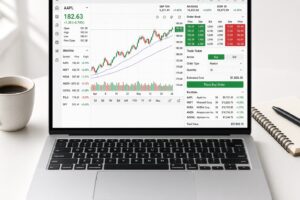
- Opening a Brokerage Account: As an individual, you cannot walk onto the floor of the NYSE or plug directly into a stock exchange server. Instead, you use a licensed online broker (such as Fidelity, Charles Schwab, or Robinhood) to access the exchange.
- Submitting an Order: When you decide to buy shares of a company, you place an order (such as a market order or limit order) through your broker.
- Order Routing: Your broker instantly routes your order to the centralized exchange’s matching engine.
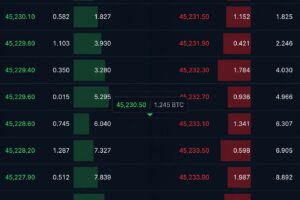
- The Order Book and Matching Engine: The exchange maintains a digital order book—a real-time ledger tracking all pending buy (bids) and sell (asks) orders. The matching engine automatically pairs buyers with sellers based on price and time priority.
- Execution and Settlement: Once a match is made, the trade is executed. Behind the scenes, clearing and settlement systems finalize the transfer of money and ownership, ensuring that both parties fulfill their obligations securely.
Key Benefits of Trading on a Centralized Stock Exchange
There are distinct advantages to why traditional and modern financial systems rely so heavily on centralized exchanges:
- High Liquidity: Because all buyers and sellers converge in one place, centralized exchanges concentrate capital. This high volume of participants makes it easy to buy or sell assets quickly without causing massive price swings.
- Transparent Price Discovery: Everyone looking at a specific stock sees the exact same current market price. This transparency prevents market manipulation and ensures fair competition.
- Regulatory Protection: Centralized exchanges operate under strict oversight from government regulatory bodies (such as the Securities and Exchange Commission—SEC—in the United States). These rules protect investors from fraud, insider trading, and corporate misconduct.
- Counterparty Reliability: When you trade on a regulated centralized exchange, you do not have to worry about whether the stranger on the other side of the trade will actually pay you. Clearinghouses act as intermediaries to guarantee the fulfillment of every trade.
Potential Drawbacks and Risks to Consider
While centralized exchanges offer safety and efficiency, they are not without limitations:
- Single Point of Failure: Because all transactions flow through a central infrastructure, technical outages or severe cyber threats can theoretically disrupt market operations, though major exchanges invest heavily in redundant systems to prevent this.
- Strict Listing Requirements: For companies wanting to go public, getting listed on a centralized exchange involves rigorous auditing, high fees, and ongoing compliance reporting.
- Operational Hours: Unlike decentralized digital markets that run 24/7, traditional centralized stock exchanges operate during specific business hours (e.g., 9:30 AM to 4:00 PM Eastern Time), limiting when everyday investors can execute trades directly.
Centralized Stock Exchanges vs. Decentralized Markets
In the modern financial landscape—particularly with the rise of digital assets and blockchain technology—the term “centralized exchange” is often compared to decentralized alternatives (DEXs).
| Feature | Centralized Stock Exchange (CEX) | Decentralized Market (DEX / OTC) |
| Control | Governed by a central institution/corporation | Managed autonomously by smart contracts or peer-to-peer networks |
| Regulation | Heavily regulated with strict compliance (e.g., SEC oversight) | Often permissionless, lacking formal institutional intermediaries |
| Liquidity | Typically very high due to institutional and retail concentration | Varies widely depending on the specific asset pool or protocol |
| User Onboarding | Requires identity verification (KYC/AML checks) | Typically requires only a self-hosted crypto wallet connection |
For traditional equities and long-term wealth building, centralized exchanges remain the gold standard due to their robust legal protections and stability.
Why Centralized Exchanges Matter for Your Financial Journey
Understanding what a centralized stock exchange is gives you the fundamental context needed to interpret financial news, evaluate market trends, and build a smart investment strategy. By acting as regulated, transparent, and highly liquid hubs, centralized exchanges bridge the gap between everyday savers and the world’s most successful corporations.
Whether you are planning to invest in blue-chip stocks, index funds, or simply trying to understand how global capital moves, the centralized exchange is the engine driving modern economic growth.