What Are Opening and Closing Auctions in Stock Exchanges?

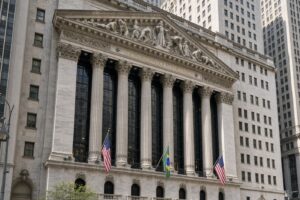
If you have ever watched the stock market, you might picture a continuous stream of flickering green and red numbers, with shares changing hands every millisecond. While continuous trading defines the bulk of the active trading day, major global stock exchanges like the New York Stock Exchange (NYSE) and Nasdaq operate much like traditional marketplaces at two very specific moments: the beginning and the end of the day.
These critical windows are known as opening and closing auctions (often referred to on electronic exchanges as “crosses”).
Understanding how these auctions work is essential for anyone looking to master market mechanics, avoid slippage, or understand why stock prices often experience sharp movements right at 9:30 AM and 4:00 PM Eastern Time. This comprehensive guide breaks down everything you need to know about opening and closing auctions in modern stock exchanges, written in clear, accessible language for beginners and seasoned investors alike.
Understanding Stock Exchange Auctions: The Foundation of Market Price Discovery
Before the digital era, stock markets relied on physical trading floors where specialists and market makers would literally shout bids and offers to find a fair price before regular trading could begin. Today, modern exchanges handle this through sophisticated electronic matching engines, but the core principle remains identical: pooling accumulated buy and sell interest to find a single, fair equilibrium price.
In finance, this process is called price discovery.
Unlike continuous trading—where a buyer is matched immediately with the best available seller on a first-come, first-served basis—an auction pauses direct execution to accumulate orders. Throughout the pre-market or late-afternoon periods, investors, institutions, and algorithmic traders submit orders specifying what they want to buy or sell.
Instead of executing these orders one by one, the exchange’s computer system (or Designated Market Maker on a physical floor) aggregates all of them. It then calculates a single clearing price where the maximum number of shares can be safely exchanged. This mechanism ensures fairness, reduces volatility, and provides deep liquidity right when the market wakes up and winds down.
What Is the Opening Auction? Setting the Tone for the Trading Day
The opening auction is the formal mechanism stock exchanges use to establish the official opening price of a security.
Overnight, the world does not stop spinning. Major geopolitical news breaks, earnings reports drop, central banks make announcements, and global macroeconomic data is released. When the stock market has been closed for 17.5 hours (or over 63 hours across a weekend), a massive backlog of accumulated information and pending orders builds up.
If all of these orders hit a continuous order book simultaneously at 9:30 AM ET without preparation, it would create absolute chaos, erratic price swings, and severe execution disadvantages for retail investors.
How the Opening Auction Process Unfolds
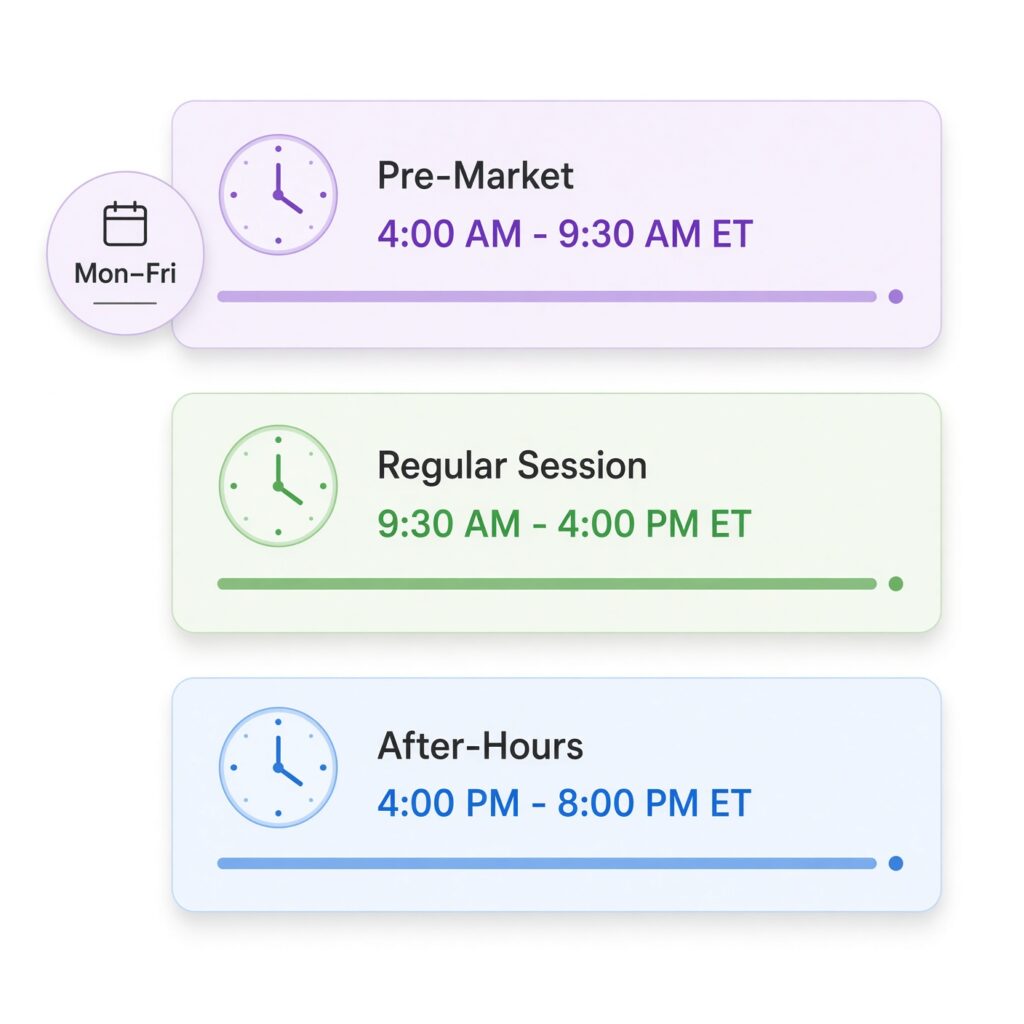
- Order Accumulation: Hours before the bell rings (as early as 6:30 AM ET on venues like the NYSE), brokers and market participants begin entering orders designated for the open.
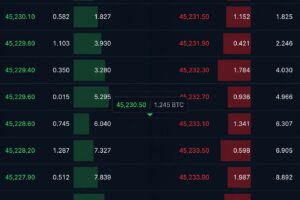
- Transparency and Imbalance Publication: As orders accumulate, the exchange continuously calculates and publishes data feeds—such as Indicative Opening Prices and Order Imbalances. An imbalance occurs when there are significantly more buyers than sellers (or vice versa).
- The Single-Price Match: At precisely 9:30:00 AM ET, the auction executes. All valid opening orders are executed at one single price. This price becomes the official opening benchmark (such as the Nasdaq Official Opening Price or NOOP).
For everyday investors, participating in the opening auction requires understanding specialized order types like Market-on-Open (MOO) or Limit-on-Open (LOO), which ensure your trade participates directly in this opening cross rather than waiting for continuous trading.
What Is the Closing Auction? The Most Important Few Minutes of the Trading Day
If the opening auction is the market’s starter’s pistol, the closing auction is the grand finale. To the uninitiated, it might seem surprising that the final minutes of the trading day attract a massive percentage of total daily volume—sometimes accounting for 10%, 20%, or even more of a stock’s entire daily turnover.
Why do institutional investors, mutual funds, and exchange-traded funds (ETFs) concentrate so much of their trading activity right before 4:00 PM ET?
The answer lies in benchmarking and tracking error minimization. Index funds (like those tracking the S&P 500) are legally and structurally obligated to match the performance of the index they follow. To achieve this without underperforming, they must buy or sell their portfolio baskets at the exact official closing price used to calculate that index.
Key Rules of the Closing Auction
- Strict Cutoff Times: To prevent manipulation and maintain order, major exchanges enforce strict deadlines. For instance, on the NYSE and Nasdaq, Market-on-Close (MOC) orders cannot be entered, modified, or canceled after 3:50 PM ET.
- The Imbalance Feed: Starting at 3:50 PM ET, exchanges broadcast real-time closing imbalance data. This tells the market whether there is an overwhelming surplus of buy or sell orders heading into the close.
- The Final Cross: At 4:00:00 PM ET, the closing cross executes. This single transaction establishes the Official Closing Price (such as the Nasdaq Official Closing Price or NOCP). This price is critical because it is used for portfolio valuations, options settlements, mutual fund Net Asset Value (NAV) calculations, and global reporting.
Key Differences Between NYSE and Nasdaq Auction Models
While both major U.S. stock exchanges achieve the same goal—finding a single clearing price at the open and close—their underlying operational models differ significantly.
| Feature | New York Stock Exchange (NYSE) | Nasdaq Stock Market |
| Execution Style | Hybrid model combining advanced algorithms with human oversight via Designated Market Makers (DMMs). | Fully electronic, automated matching engine with no human intervention. |
| Handling Complex Opens | DMMs can manually manage and extend opening windows for IPOs or major corporate news to ensure absolute price stability. | Algorithmic crossing mechanism uses strict collar thresholds (e.g., 10% or $0.50) to manage volatility automatically. |
| Closing Cutoffs | MOC/LOC order entry cutoff is 3:50 PM ET, with specific provisions for floor-broker D-orders up to 3:59:50 PM ET. | MOC/LOC order entry cutoff is strictly 3:50 PM ET, transitioning smoothly into after-hours trading. |
Understanding these structural differences helps institutional traders optimize how they route large block orders to minimize market impact.
Why Opening and Closing Auctions Matter for Everyday Retail Investors
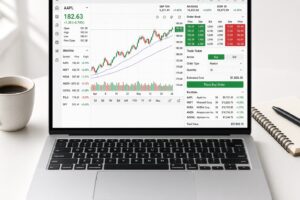
You might be wondering: If I am a retail investor trading a few shares of stock through a standard brokerage app, why should I care about exchange auctions?
There are several vital reasons why auction mechanics impact your personal portfolio:
- Avoiding Unnecessary Volatility: Prices can whip back and forth violently in the seconds immediately following the open or during the final countdown to the close. Placing unpriced market orders right at 9:30 AM can result in getting filled at a terrible price due to opening noise. Understanding auctions encourages disciplined order placement, such as using limit orders.
- Mutual Fund and ETF Efficiency: If you own index funds or retirement accounts, your money is actively participating in these auctions every single day via automatic fund rebalancing.
- Reading Market Sentiment: By keeping an eye on pre-open and late-afternoon order imbalances, astute investors can gauge institutional conviction. A massive buy imbalance right before the close often signals strong continuation pressure heading into the next session.
Best Practices and Safe Trading Strategies Around Market Open and Close
Navigating the opening and closing bells requires a calm and tactical approach, especially for retail participants looking to optimize execution quality.
- Avoid Standard Market Orders at the Open: Because price discovery is still actively resolving the overnight news cycle during the first few minutes, standard market orders can experience severe slippage. Use limit orders if you need absolute control over your execution price.
- Pay Attention to Auction Cutoffs: If you plan to use Market-on-Close (MOC) or Limit-on-Close (LOC) instructions, make sure your orders are submitted well ahead of the strict 3:50 PM ET regulatory deadlines.
- Recognize Volatility Clusters: Statistically, volatility spikes at the open and close. Day traders often target these windows for high liquidity, while long-term investors often prefer to wait 15 to 30 minutes after the opening bell rings for spreads to normalize and true price trends to emerge.
Mastering the Bookends of the Trading Day
Opening and closing auctions are the invisible anchors of global financial markets. By bridging the gap between continuous trading and periods of market closure, they provide the deep liquidity, fairness, and structural transparency required to keep multi-trillion-dollar economies running smoothly.
Whether you are tracking index funds, studying institutional order flows, or simply trying to time your personal stock purchases more effectively, understanding how the open and close auctions operate gives you a distinct edge in navigating the modern stock market.