What Is an Order Book in a Stock Exchange?

When you look at a stock trading app or financial news terminal, stock prices appear to bounce up and down in real time. Behind these fluctuations lies one of the most fundamental mechanisms in modern global finance: the order book.
Whether you are trading tech giants on the NASDAQ, index funds on the New York Stock Exchange (NYSE), or alternative assets, understanding the order book is essential. It serves as the live ledger of ongoing negotiations between buyers and sellers, revealing the true supply and demand dynamics of any given security.
This comprehensive guide breaks down what an order book is, how it operates under the hood, and how everyday market participants use it to read market sentiment, assess liquidity, and make smarter trading decisions.
Defining the Order Book: The Electronic Ledger of Modern Markets
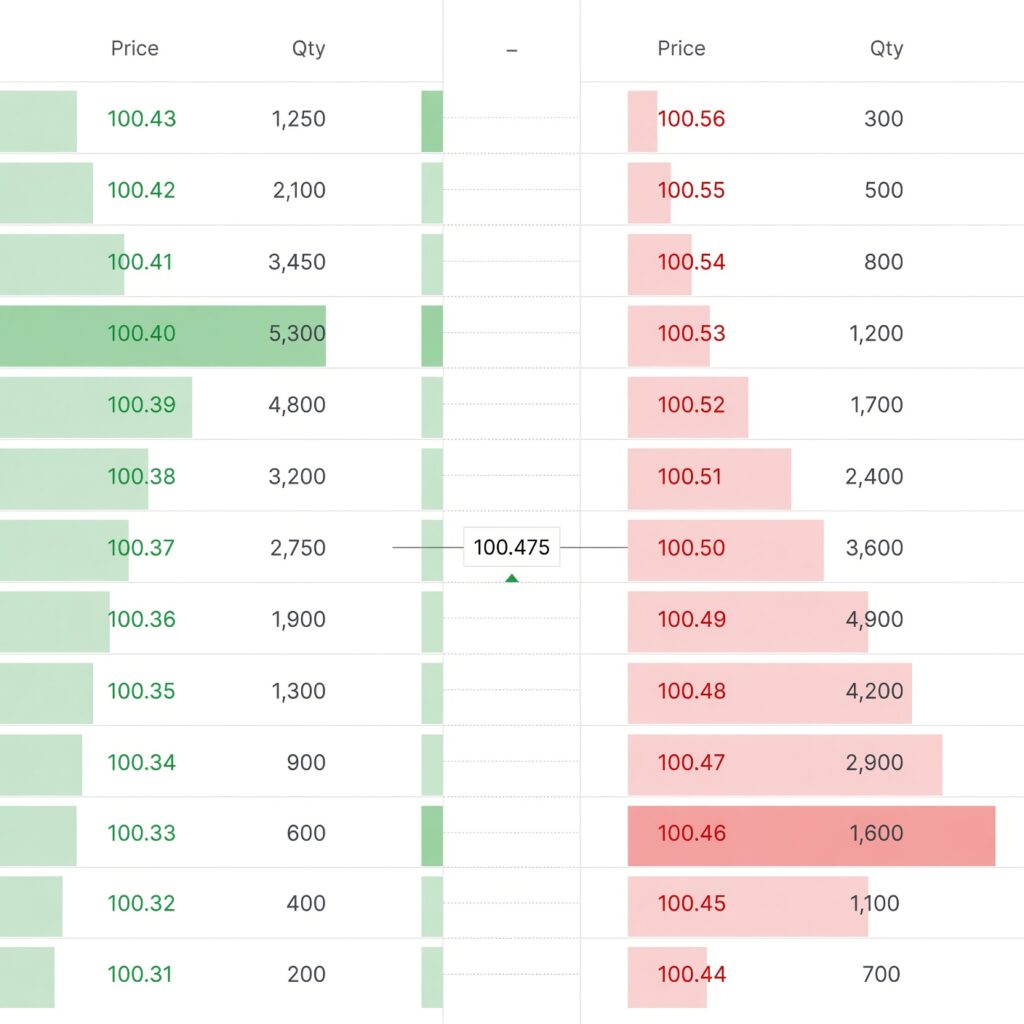
At its core, an order book is an electronic, dynamically updated list of all pending buy and sell orders for a specific financial security, organized by price levels. Instead of a traditional physical trading floor where brokers shouted bids and offers, modern stock exchanges rely on a Central Limit Order Book (CLOB).
Every trade executed on a public stock exchange starts or interacts with this ledger. It acts as a transparent matchmaking system where capital meets supply. When an investor places an order, the exchange’s software processes it against the existing records in the order book.
- The Buy Side (Bids): This section records individuals and institutions looking to purchase shares. It is sorted from the highest price someone is willing to pay down to the lowest.
- The Sell Side (Asks/Offers): This section records current owners wishing to sell their shares. It is sorted from the lowest price a seller is willing to accept up to the highest.
The entire structure functions like a continuous auction, updating split-second changes as new orders enter, execute, or cancel.
The Core Components of an Order Book: Bids, Asks, and Quantity
To read an order book fluently, you must understand its anatomy. When you open a Level 2 market data screen or a depth chart on a professional trading platform, you will typically see two primary columns or a split ledger.
Bids (The Buyers)
The bid represents the maximum price a buyer is willing to pay for a stock. Bids are sorted in descending order—meaning the highest bid sits right at the top, closest to the current market price. This top position is valuable because a seller looking for an instant exit will naturally want to match with the highest bidder.
Asks or Offers (The Sellers)
The ask (sometimes called the offer) represents the minimum price a seller is willing to accept to part ways with their shares. Asks are sorted in ascending order—meaning the lowest ask sits at the top, closest to the market price. Buyers looking to acquire shares immediately will look to match with this lowest available seller.
Price and Quantity
For every single entry on the buy and sell sides, the order book displays two critical metrics:
- Price: The specific target limit price set by the trader.
- Quantity (Size): The aggregate number of shares or contracts available at that exact price level.
If five different retail and institutional investors all place limit orders to buy 100 shares of a company at $150.00, the order book consolidates them. It will display a single line showing 500 shares waiting at the $150.00 price level.
How the Matching Engine Works Behind the Scenes
Behind every electronic stock exchange sits a powerful computer program known as the matching engine. This software evaluates incoming orders against the existing ledger instantly.
When a new order enters the exchange, the matching engine follows strict priority rules—usually price-time priority:
- Price Priority: Orders that offer a better price are executed first. A higher bid takes precedence over a lower bid; a lower ask takes precedence over a higher ask.
- Time Priority: If multiple orders sit at the exact same price level, the order that arrived first in time gets executed first.
An Example of Order Matching
Imagine a stock is currently trading around $100.00.
- Investor A submits a limit order to buy 100 shares at $99.50. Because no seller is currently willing to sell that low, the order rests on the buy side of the order book.
- Moments later, Investor B submits a market order to sell 100 shares immediately.
- The matching engine looks at the order book, finds the highest available bid (which happens to be Investor A’s $99.50 bid), and executes the transaction instantly. Both orders are removed from the open book, and a new trade print is recorded at $99.50.
Market Orders vs. Limit Orders: Their Direct Impact on the Book
Different order types interact with the order book in distinct ways, giving traders choices between execution speed and price certainty.
- Market Orders: These orders carry no price limit. They demand immediate execution at the best available price currently listed in the order book. If you place a market buy order, you consume liquidity by matching with the lowest available ask. Market orders guarantee execution speed but do not guarantee the exact final price.
- Limit Orders: These orders specify a strict boundary—a maximum price you are willing to pay as a buyer or a minimum price you are willing to accept as a seller. If the market price does not reach your limit, your order waits patiently in the order book, providing liquidity to the marketplace. They guarantee price control, but execution is never guaranteed.
- Stop Orders: These are conditional instructions that remain inactive until the stock reaches a specific “stop trigger” price, at which point they convert into market or limit orders to protect profits or limit downside risk.
Reading Market Depth and the Bid-Ask Spread
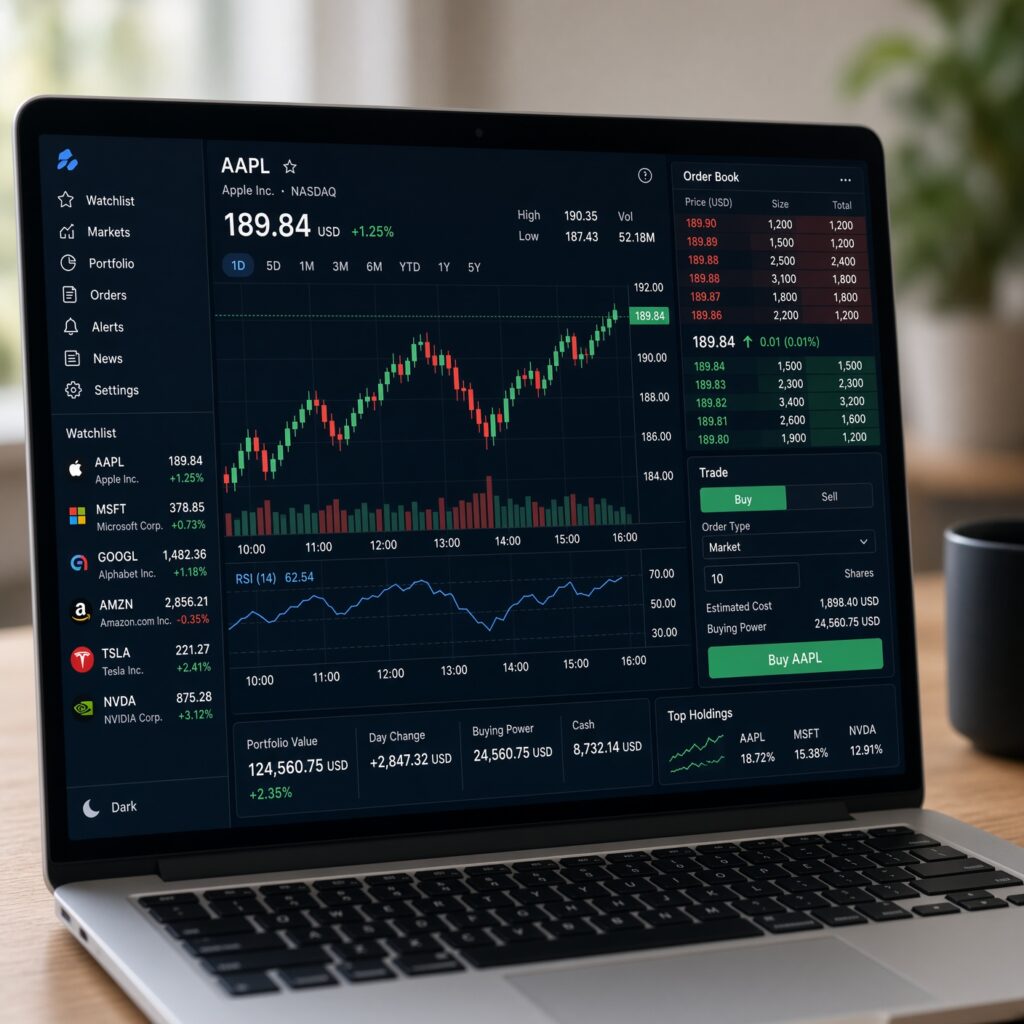
One of the most critical concepts derived directly from the order book is the bid-ask spread and market depth.
The Bid-Ask Spread
The spread is the financial gap between the highest bid (what buyers are willing to pay) and the lowest ask (what sellers demand).
- In highly liquid, heavily traded mega-cap stocks (like Apple or Microsoft), the spread can be as narrow as a single penny ($0.01).
- In thinly traded small-cap stocks or alternative assets, the spread can widen significantly, acting as an implicit transaction cost or “friction” for traders entering and exiting positions.
Market Depth
Market depth refers to the volume of pending orders stacked across multiple price levels beyond the top of the book. A deep order book means there are large quantities of buy and sell orders queued at various prices. This indicates that a trader can buy or sell a large block of shares without causing a drastic shift in the asset’s price. Conversely, a shallow order book means even a moderate trade can trigger severe price slippage.
Spotting Market Sentiment: Walls, Imbalances, and Price Action
Active traders study order books and depth charts to identify subtle shifts in market psychology before they reflect on standard price charts.
- Buy Walls and Sell Walls: When an unusually large concentration of buy orders stacks up at a specific round psychological price level (e.g., $50.00), it forms a buy wall, often acting as a strong temporary price support. Conversely, a massive cluster of sell orders creates a sell wall, acting as overhead resistance.
- Order Book Imbalance: If the total volume of buy orders heavily outweighs sell orders across the book, it signals aggressive underlying buying pressure, which often precedes upward price movement.
However, professional investors also watch out for “spoofing”—a deceptive practice where large fake orders are placed and quickly canceled to manipulate market perception. Modern exchange surveillance systems strictly monitor and penalize these manipulative tactics.
Why the Order Book Matters to Every Investor
The order book shatters the illusion that financial markets are abstract algorithms operating in a vacuum. Every tick, surge, and dip on a stock chart is the visual footprint of human capital and institutional strategy meeting at an agreed-upon intersection of supply and demand.
By learning how to interpret bids, asks, spreads, and market depth, you transition from a passive spectator to an informed participant. Whether you are executing a simple long-term index investment or analyzing short-term momentum, respecting the mechanics of the order book is a vital step toward mastering the modern stock exchange.