Fidelity vs. Vanguard: Which Account Features Are Different?

Choosing where to open your investment or brokerage account is one of the most critical decisions you will make for your financial future. When looking at the landscape of online personal finance, two absolute giants consistently rise to the top: Fidelity Investments and Vanguard. Both manage trillions of dollars in assets and serve tens of millions of everyday investors. Because they both offer standard accounts like standard taxable brokerages, Roth IRAs, Traditional IRAs, and rollover accounts, it is very easy to assume they are virtually identical.
However, looking beneath the surface reveals substantial differences in how these two financial institutions design their core account features, technology interfaces, cash management tools, and investment selections. Understanding these variances is vital for picking the platform that aligns best with your personal financial habits, trading style, and desire for hands-on management versus long-term passive holding.
Understanding the Core Philosophy: Active Trading vs. Long-Term Buy-and-Hold
Before diving into specific account features, it helps to understand the underlying philosophy of each firm, as this drives every single product decision they make.
Vanguard was founded on a revolutionary concept: putting the investor first through a unique client-owned structure where the mutual funds own the company. This cooperative mindset is built around low-cost, passive, buy-and-hold investing.Vanguard encourages individuals to set up a portfolio of broad index funds and leave it alone for decades to compound quietly.
Fidelity, on the other hand, operates as a traditional privately held financial services corporation. While Fidelity fiercely competes on low costs—frequently offering zero-fee index funds to match its rivals—its core ecosystem is built to accommodate a much wider spectrum of users. Whether you are a completely passive retirement saver, an active day trader looking for advanced charting tools, or someone who wants a holistic digital banking experience all under one roof, Fidelity provides a toolkit tailored to those goals.
Core Brokerage Account Features and Minimums
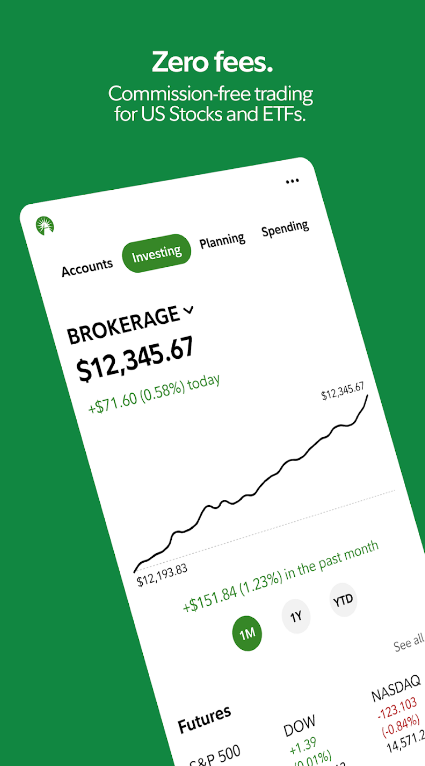
When opening a standard retail brokerage account, both platforms share a few baseline characteristics that modern investors expect. Neither firm charges annual account maintenance fees for standard brokerage accounts or individual retirement accounts (IRAs), and both have eliminated online commissions for trading standard U.S. stocks and exchange-traded funds (ETFs).
Yet, the similarities diverge when you examine minimum investment barriers and account flexibility:
- Account Opening Minimums:Both Fidelity and Vanguard feature $0 account minimums to open a standard retail brokerage account. You can get started with a nominal sum of money on either platform.
- Mutual Fund Investment Minimums: This is where accounts begin to separate. Fidelity features $0 minimums for its proprietary mutual funds, including its popular zero-expense-ratio index funds.Vanguard historically utilized tiered share classes (such as Investor Shares and Admiral Shares) that required minimum investments ranging from $1,000 to $3,000 or higher for specific mutual funds, though many modern options have transitioned primarily to ETFs or streamlined minimum requirements.
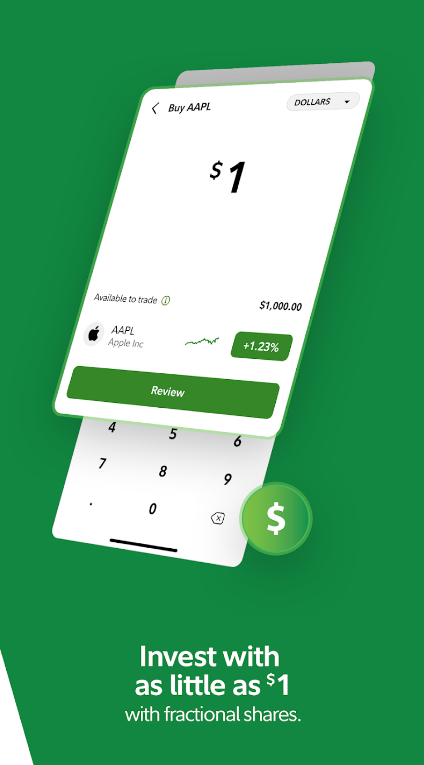
- Fractional Share Trading: Both platforms support fractional share investing, allowing everyday investors to purchase slices of high-priced individual stocks or major ETFs with small dollar amounts. However, Fidelity’s implementation across its mobile and desktop interfaces has historically felt more seamlessly integrated into everyday stock and ETF trading workflows.
Na segunda metade deste artigo detalhado, vamos explorar as diferenças cruciais em opções de gerenciamento de caixa, ferramentas de pesquisa, atendimento ao cliente e como escolher a ideal para o seu perfil.
Cash Management and Everyday Banking Features
One of the most heavily debated topics among retail investors is how well a brokerage account can double as a checking or everyday spending hub. Managing uninvested cash—often called “idle cash”—is handled quite differently across these two platforms.
Fidelity’s Approach: Full-Featured Cash Management
Fidelity offers a dedicated product known as the Fidelity Cash Management Account (CMA), alongside traditional brokerage accounts.
- Banking Functionality:The Fidelity CMA functions much like a traditional checking account.It provides check-writing capabilities, mobile check deposits, bill pay utilities, and a debit card that offers worldwide ATM fee reimbursements.
- Core Sweep Vehicles:While bank sweep options traditionally yield lower baseline interest rates, Fidelity allows savvy investors to manually or automatically direct their core cash into higher-yielding money market mutual funds (such as SPAXX or FDLXX), which then auto-liquidate when you spend or trade, balancing liquidity with competitive yields.
Vanguard’s Approach: Yield-Focused Simplicity
Vanguard approaches cash through products like the Vanguard Cash Plus Account.
- Higher Baseline Yields: Vanguard’s cash solutions often lean heavily on competitive baseline yields designed to protect your purchasing power against inflation without requiring complex maneuvering.
- Fewer Banking Bells and Whistles: Vanguard’s cash offerings historically focus strictly on saving and holding money rather than functioning as a daily transactional checking account. You will generally not find the robust check-writing features or extensive ATM fee-reimbursement networks native to Fidelity’s ecosystem. For many long-term Vanguard investors, cash is kept strictly within a settlement fund inside the brokerage account rather than a separate cash management product.
Trading Platforms, Research Tools, and Analytics
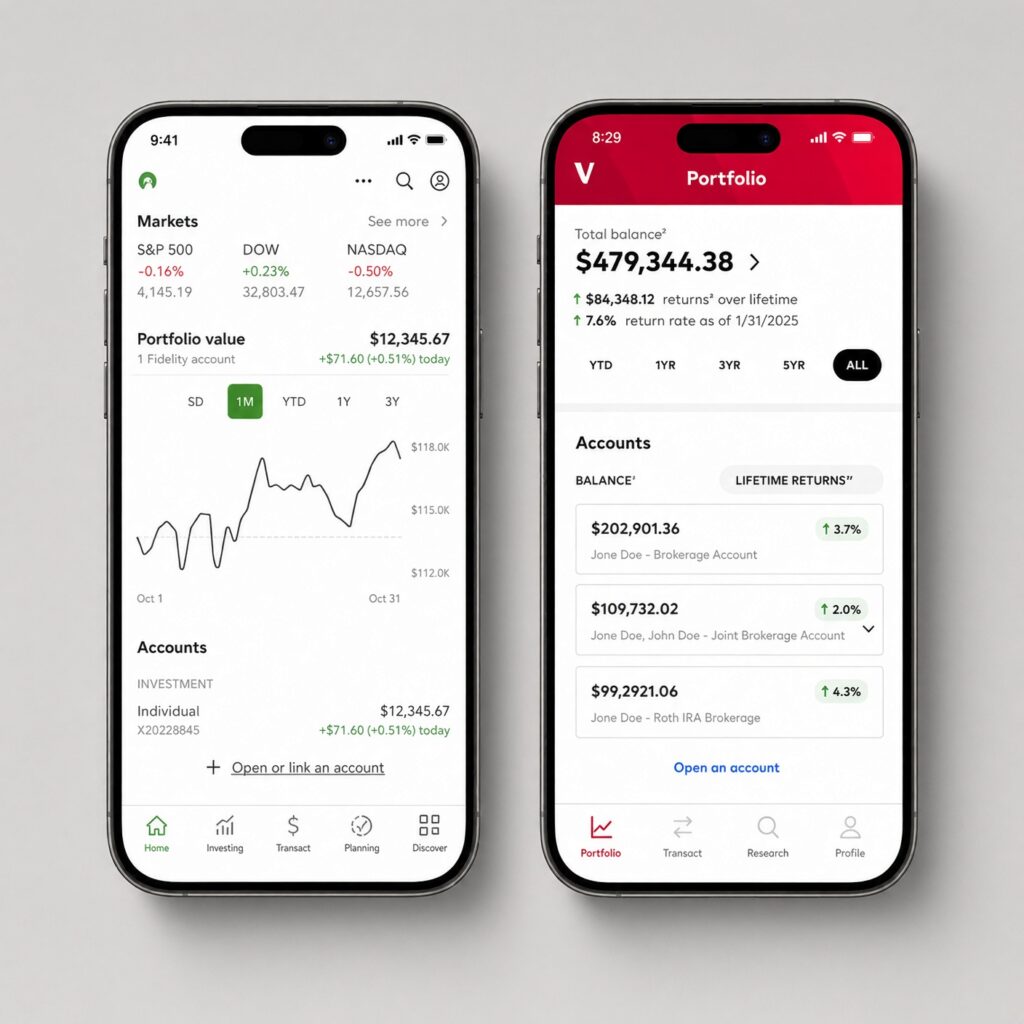
If your investment strategy involves analyzing market charts, screening thousands of global equities, or executing complex multi-leg options strategies, the choice between these two platforms becomes stark.
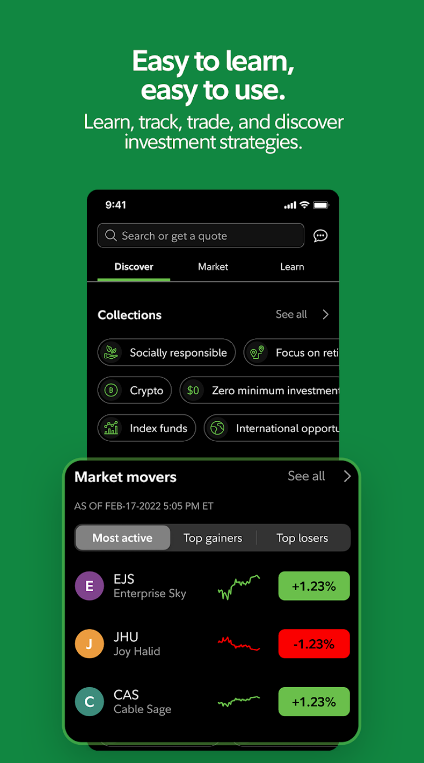
- Fidelity’s Research and Trader Tools:Fidelity provides powerful software suites tailored for active traders, such as Fidelity Trader+ Desktop (formerly known as Active Trader Pro).It offers customizable streaming charts, technical indicators, level II quotes, and deep analytical screeners. The research portal aggregates insights from third-party financial institutions, giving everyday users institutional-grade equity reports. Furthermore, Fidelity accommodates a broader range of advanced products, including options trading tiers and access to leveraged or specialized alternative funds.
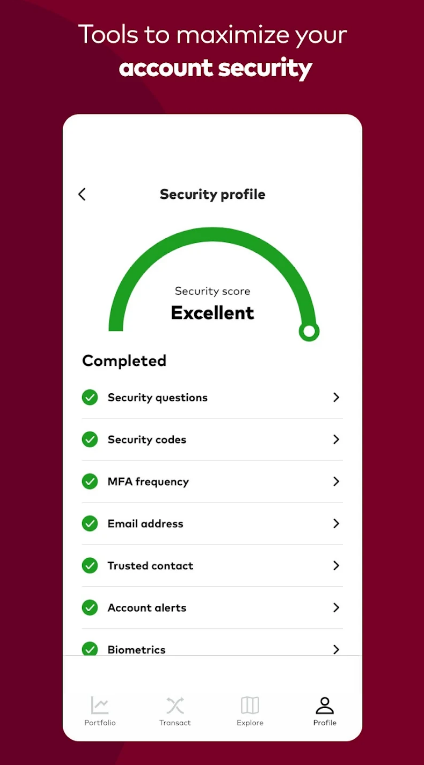
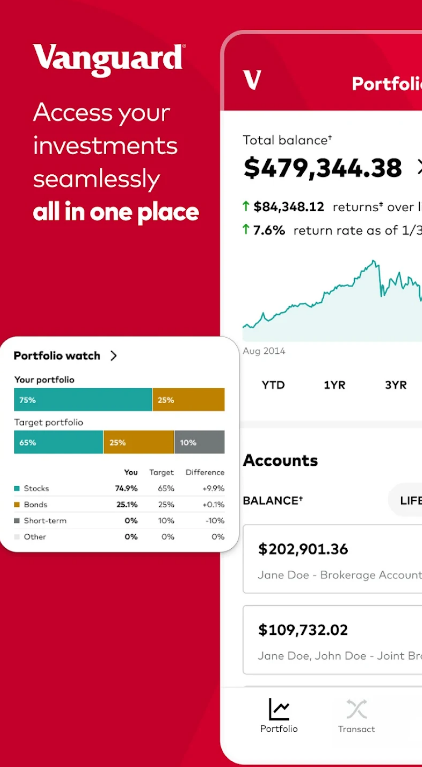
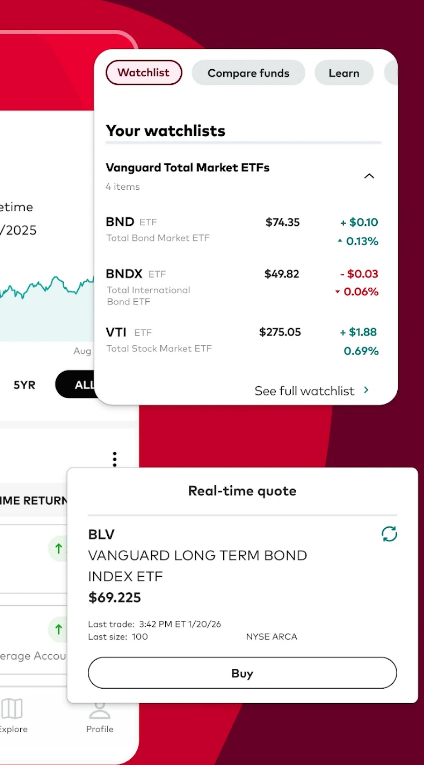
- Vanguard’s Streamlined Interface:Vanguard’s platform philosophy centers on minimalist, distraction-free long-term planning. Its website and mobile application are designed to help you buy your index funds, check your asset allocation, and log off. Vanguard does not cater to day traders or technical chart analysts; you will not find heavy-duty active trading software suites here. This intentional simplicity prevents emotional, frequent trading—which aligns perfectly with its core long-term investment philosophy, but frustrates users who want deep analytical data directly on their dashboard.
Advisory Services and Human Guidance
As your net worth grows, you may eventually look for professional guidance or comprehensive financial planning features embedded within your account ecosystem. Both firms provide robust automated and human advisor options, but their structures differ:
- Robo-Advisors: Both companies offer digital automated investing services (such as Vanguard Digital Advisor and Fidelity Go) that build and rebalance diversified portfolios automatically based on your risk tolerance and target retirement date, generally keeping management fees minimal.
- Human Financial Planners:Vanguard features structured programs like Vanguard Personal Advisor, pairing clients with dedicated Certified Financial Planner (CFP) professionals once asset thresholds are met, often highlighted by competitive, flat advisory fee structures. Fidelity matches this with broad network access to local physical branches, allowing clients to walk into a brick-and-mortar office face-to-face to discuss estate planning, wealth management, and retirement distributions with an advisor—a major advantage for investors who prefer physical human touchpoints over purely digital communication.
Which Platform Features Fit Your Financial Style?
Ultimately, deciding between Fidelity and Vanguard depends entirely on what kind of investor you see yourself becoming:
Choose Vanguard if:Your primary objective is a simple, low-cost, long-term buy-and-hold strategy centered primarily around passive index funds and broad ETFs. If you want a clean interface that discourages over-trading and keeps your focus fixed on multi-decade wealth accumulation without unnecessary distractions, Vanguard is a stellar choice.
Choose Fidelity if: You value maximum flexibility, robust cash management features that can replace a traditional bank account, powerful trading software, fractional share depth, and access to physical branch locations. If you prefer having an all-in-one financial dashboard where you can manage everyday spending, active trades, retirement accounts, and complex asset classes seamlessly, Fidelity stands out as the more versatile platform.