What Is a Brokerage Watchlist and How Do You Use It?

When you first open a brokerage account or start looking into the stock market, you are instantly hit with a massive wall of numbers, ticker symbols, charts, and financial jargon. Trying to watch every single company, exchange-traded fund (fund traded on an exchange, often called an ETF), or cryptocurrency all at once is impossible. It is a fast track to feeling overwhelmed, stressed, and paralyzed by too many choices.
This is where a brokerage watchlist comes in. Think of a watchlist as your personal financial command center or your customized radar screen. Instead of searching blindly through thousands of investment options every single day, a watchlist allows you to group specific assets together in one clean, organized dashboard. You can track their prices, monitor their daily performance, and wait for the exact right moment to make a move.
Whether you are saving for retirement, trying to grow your long-term wealth, or simply curious about how the market operates, mastering the watchlist is one of the most valuable skills you can learn. Let us dive deep into what a brokerage watchlist is, why you need one, and step-by-step strategies on how to use it like a professional investor.
What Exactly Is a Brokerage Watchlist?

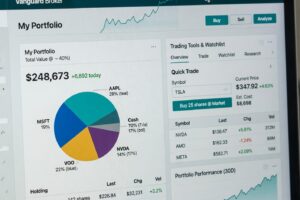
At its core, a brokerage watchlist is a customizable list of financial assets that you choose to monitor within your investment platform or trading software. When you add a stock or fund to your watchlist, you do not actually buy it. Instead, you create a dedicated virtual folder that constantly updates with real-time or near-real-time market data for those specific items.
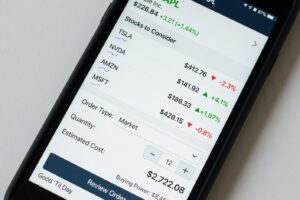
Every major modern brokerage platform—whether you use a modern mobile app or a desktop trading terminal—comes equipped with a watchlist feature. When you look at your watchlist, you typically see a clean table displaying key data points for each asset, including:
- Ticker Symbol: The unique letters used to identify a publicly traded company (such as AAPL for Apple or TSLA for Tesla).
- Company Name: The full legal or common name of the business or fund.
- Last Traded Price: The most recent price at which a share was bought or sold.
- Daily Change: How much the price has moved up or down since the market opened that day, displayed in both absolute dollar amounts and as a percentage.
- Volume: The total number of shares traded during the current trading session, giving you an idea of how active the market is for that asset.
By keeping these metrics neatly organized on a single screen, you save countless hours. You no longer have to type in individual company names every time you log into your account.
Why Every Beginner Investor Needs a Watchlist
When beginners start investing, a common mistake is chasing whatever stock is currently trending on social media or in the news. This reactive approach usually leads to buying high out of FOMO (fear of missing out) and selling low out of panic when the price drops. A watchlist helps break this emotional cycle by shifting your mindset from reactive to proactive.
1. It Eliminates Decision Fatigue
There are thousands of stocks available on major American exchanges like the New York Stock Exchange (NYSE) and the Nasdaq. Trying to evaluate them all at once is exhausting. By narrowing your focus down to a curated list of ten to twenty companies or funds, you dramatically cut down the mental energy required to monitor the market.
2. It Helps You Learn Market Behavior
Watching a stock every single day without buying it is one of the best education tools available. When you track a company over weeks and months, you start to notice how it reacts to broader economic news, earnings reports, and industry trends. You learn its normal price swings, making you much less likely to panic when normal market volatility occurs after you actually invest your hard-earned money.
3. It Installs Patience and Discipline
Investing success rarely comes from rushing into trades. It comes from waiting patiently for high-quality assets to drop to fair, attractive prices. A watchlist acts as your waiting room. It keeps your favorite companies front and center, allowing you to patiently observe them until they hit your target buy price.
How to Build Your First Watchlist from Scratch
Building a watchlist is simple, but doing it effectively requires a structured approach. You should not just throw random company names into a list. Instead, build your watchlist with intention and strategy.
Step 1: Define Your Investment Goals
Before adding a single ticker symbol, ask yourself what you want to achieve. Are you looking for steady, long-term dividend-paying stocks to build passive income? Are you hunting for fast-growing technology companies? Or are you looking for broad market index funds that require very little maintenance? Your goals will dictate what goes into your watchlist.
Step 2: Start with Broad Market Benchmarks
Every good watchlist should start with the overall market barometers. These give you instant context on whether the broader economy is having a good day or a bad day. Include symbols like:
- SPY or VOO (Track the S&P 500, representing 500 of the largest U.S. companies)
- QQQ (Tracks the Nasdaq-100, heavily weighted toward technology and innovation)
- DIA (Tracks the Dow Jones Industrial Average, featuring 30 massive blue-chip corporations)
Step 3: Add Core Companies You Know and Use
Begin by adding companies whose business models you already understand. If you use their products or services every single day, you have a natural head start in understanding how they make money. Think about the phone in your hand, the streaming service you watch at night, the grocery store you visit every weekend, or the software you use at your job.
Step 4: Include Diversified Exchange-Traded Funds (ETFs)
If picking individual stocks feels too risky or complicated, use your watchlist to track thematic or sector-specific ETFs. For example, you might track a healthcare ETF, a real estate investment trust (REIT) index, or a global clean energy fund. This allows you to monitor entire industries rather than betting on the success or failure of just one individual business.
Advanced Categorization: Organizing Watchlists Like a Professional
As you gain experience, a single long list of fifty random stocks will become messy and difficult to manage. Professional investors and wealth managers never rely on just one unorganized list. Instead, they organize their monitors into distinct categories.
Most brokerage platforms allow you to create multiple custom watchlists. Here is how you should structure yours to maximize efficiency:
The “Core Holdings” Watchlist
This list contains the companies and funds you already own in your portfolio. Even though you have purchased them, you still need to keep a close eye on their ongoing performance, upcoming quarterly earnings release dates, and major corporate announcements.
The “Blue-Chip & Dividend” Watchlist
This folder is dedicated to massive, stable, cash-flowing corporations with long track histories of surviving economic downturns and paying reliable dividends. These are your foundational, lower-risk candidates for long-term wealth building.
The “Growth & Innovation” Watchlist
Here is where you put high-potential, faster-growing companies—often found in technology, biotechnology, green energy, or artificial intelligence. These stocks typically experience higher price volatility, meaning they swing up and down much more dramatically than blue-chip giants.
The “Wishlist” (Target Buy Prices)
This is arguably the most important watchlist you will ever create. This is a collection of exceptional companies that you want to own, but whose current market prices you consider too high. You keep them here waiting for a market correction or a temporary dip so you can buy them at a discount.
Key Metrics and Indicators to Monitor Inside Your Watchlist

A watchlist is much more than just a price tracker. Most advanced brokerage platforms let you customize the columns of your watchlists to display crucial financial metrics. If you want to move beyond a beginner mindset, make sure you understand and track these essential data points:
- Market Capitalization (Market Cap): This tells you the total dollar market value of a company’s outstanding shares. Companies are generally broken down into Mega-Cap ($200B+), Large-Cap ($10B-$200B), Mid-Cap ($2B-$10B), and Small-Cap (under $2B). Larger companies tend to be more stable, while smaller companies offer higher growth potential alongside higher risk.
- Price-to-Earnings Ratio (P/E Ratio): One of the most widely used valuation metrics in finance. It compares a company’s share price to its per-share earnings. A high P/E ratio can mean investors expect explosive growth in the future, or it can mean the stock is dangerously overpriced.
- Dividend Yield: Expressed as a percentage, this shows how much a company pays out in dividends each year relative to its current stock price. This is crucial if your primary investment strategy focuses on generating passive income.
- 52-Week High and Low: This shows the highest and lowest prices at which a particular stock has traded over the past 365 days. Seeing where a stock currently sits relative to its 52-week range gives you immediate context on whether it is currently having a strong run or sitting near a major discount.
Developing a Daily Watchlist Routine
A watchlist is only useful if you actually look at it and take meaningful action. However, staring at stock prices all day long is counterproductive and leads to severe emotional stress. Successful investors treat their watchlist review like a scheduled, disciplined business habit rather than a video game.
The Pre-Market Scan (Morning Routine)
Before the major U.S. stock exchanges open at 9:30 AM Eastern Time, professional traders open their watchlists to check pre-market activity. They look at futures markets, global economic data releases, and overnight news. If a company on their watchlist reported earnings at 8:00 AM, they check how the pre-market price is reacting so they are not caught by surprise when the opening bell rings.
The End-of-Day Review (Evening Routine)
Once the market closes at 4:00 PM Eastern Time, take ten minutes to review how your watchlist performed during the session. Did certain sectors rally while others dropped? Did any of the companies on your “Wishlist” drop close to your target buy price? Jot down notes or mental reminders for the next trading day.
Common Watchlist Mistakes to Avoid
Even though watchlists are straightforward, beginners often fall into common psychological and structural traps. Keep these pitfalls in mind so you can avoid them:
- Overcrowding the List: Adding hundreds of stocks to a single watchlist defeats the entire purpose of organization. Keep your lists lean—ideally between 10 and 20 items per folder. If you want to track something new, remove something old that you are no longer interested in.
- Chasing Moving Targets: Seeing a stock shoot up 20% in a single day often triggers FOMO, causing beginners to frantically add it to their watchlist and buy immediately at the absolute peak. Remember that strong watchlists help you wait for value, not chase hype.
- Ignoring Macroeconomic Factors: A fantastic company with incredible financials can still see its stock price drop if the overall economy enters a recession or if interest rates rise rapidly. Always keep broad market indexes on your watchlist to understand the tide lifting or lowering all boats.
Putting It All Together: Your Next Steps
A brokerage watchlist is your personal filter for the complex financial universe. It moves you away from emotional, impulsive trading and guides you toward a calm, calculated, and strategic approach to building wealth. By organizing your favorite assets, tracking key valuation metrics, and patiently waiting for the right entry points, you take full control of your financial journey.
Take some time today to log into your brokerage account, clean up any messy default lists, and build your first customized watchlists. Group your assets by sector, goal, or target price, and watch how much clearer and more manageable investing becomes.