Robinhood vs. Webull: What Are the Main Differences for Investors?

Choosing the right online brokerage platform is one of the most important decisions you will make as an investor. In the modern financial landscape, discount brokerages have revolutionized how everyday people buy and sell assets. Two names consistently dominate the conversation for retail investors: Robinhood and Webull.
At first glance, both platforms look remarkably similar.They offer commission-free trading on stocks, exchange-traded funds (ETFs), and options, and both feature sleek, app-driven interfaces that put the stock market directly into the palms of your hands. However, beneath this shared exterior lies a distinct divergence in design philosophy, target audience, and analytical capability.
Understanding these differences is crucial for anyone looking to optimize their portfolio management, minimize trading costs, and select an environment that aligns with their personal investment style. Whether you are placing your very first trade or looking for advanced technical charting tools, this comprehensive guide breaks down everything you need to know about Robinhood and Webull.
Understanding the Core Philosophy: Simplicity Versus Depth

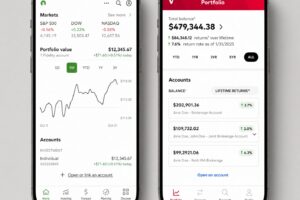
The fundamental difference between Robinhood and Webull begins with who they were built for. Robinhood pioneered the mobile-first, commission-free brokerage movement with a clear mission: to democratize finance for all. Its entire design language is centered around minimalism, removing friction, and making investing as approachable as possible for complete beginners. When you open the Robinhood app, you are greeted with clean lines, straightforward charts, and an uncluttered dashboard that avoids overwhelming the user.
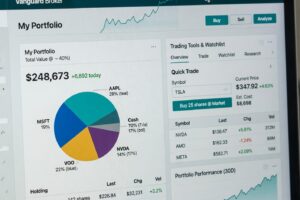
Webull, on the other hand, was engineered with the active trader and intermediate investor in mind.While its mobile application is still fully digital and user-friendly, it packs a significant amount of data onto the screen. Webull does not shy away from complex financial metrics, technical indicators, and customizable layouts. It assumes you either already know how to read advanced market data or are eager to learn by diving straight into the deep end.
This philosophical split influences every single feature these platforms offer, from how orders are executed to the type of educational content they prioritize. Recognizing where you fall on the spectrum—from casual saver to active technical trader—is the first step in deciding which platform deserves your capital.
Account Types and Retirement Perks: IRAs and Matching Contributions
When evaluating a brokerage for long-term wealth building, account flexibility and retirement incentives play a massive role. For many years, mobile-first brokerages lagged behind traditional giants like Fidelity or Charles Schwab when it came to retirement accounts. Today, both Robinhood and Webull offer Individual Retirement Accounts (IRAs), including Traditional and Roth options, but they execute them with different value propositions.
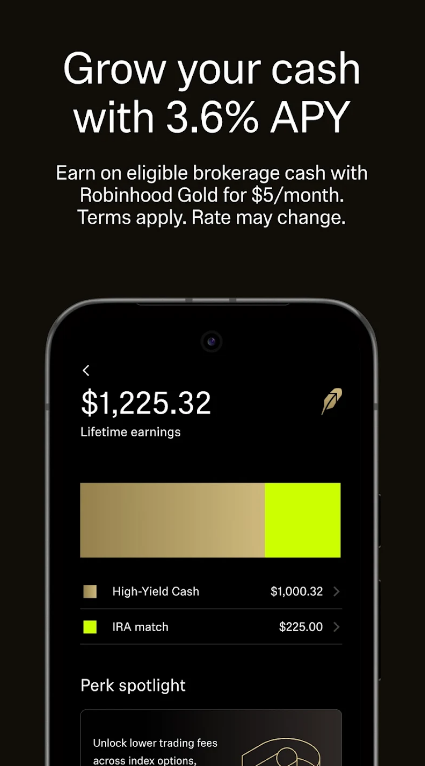
Robinhood has leaned heavily into long-term retention by introducing aggressive retirement incentives, including IRA matching contributions on eligible transfers and new contributions. This feature effectively gives your retirement savings an immediate boost, mirroring the employer-sponsored 401(k) matches that many workers rely on. Furthermore, Robinhood’s interface makes setting up automatic recurring investments into stocks, ETFs, and crypto extremely seamless, encouraging a disciplined, “set-it-and-forget-it” dollar-cost averaging strategy.
Webull also offers robust IRA options with matching programs, making it a viable home for retirement funds as well. However, Webull tends to appeal more to self-directed investors who want to manage their retirement portfolios with the same advanced technical tools they use for active swing trading.
Trading Tools and Charting Capabilities: Robinhood Legend vs. Webull Desktop
If your investment strategy relies on technical analysis, chart patterns, and real-time market depth, the gap between Robinhood and Webull widens considerably.
For a long time, Robinhood’s charting tools were notoriously basic, offering little more than simple line charts and basic historical price movements.To combat criticisms that it was unsuited for serious traders, Robinhood introduced features like Robinhood Legend, a browser-based active trader platform designed to offer cleaner layouts and advanced charting studies. It provides a smooth experience for users who want to analyze price action without visual clutter.
Webull, however, has long set the gold standard for free charting in the discount brokerage space. Webull offers a fully downloadable desktop platform alongside its web trader and mobile apps.It features dozens of built-in technical indicators, customizable drawing tools, candlestick charts, Level 2 market data (Nasdaq TotalView options), short-selling data, and an extensive economic calendar. If you want to analyze market depth, study order flow, and execute trades based on complex technical setups, Webull’s native ecosystem provides significantly more firepower out of the box.
Available Asset Classes: Stocks, Options, Crypto, Bonds, and Forex
While both platforms cover the essentials—U.S. stocks, exchange-traded funds (ETFs), and options—their extended asset lineups feature notable differences that may sway your decision.
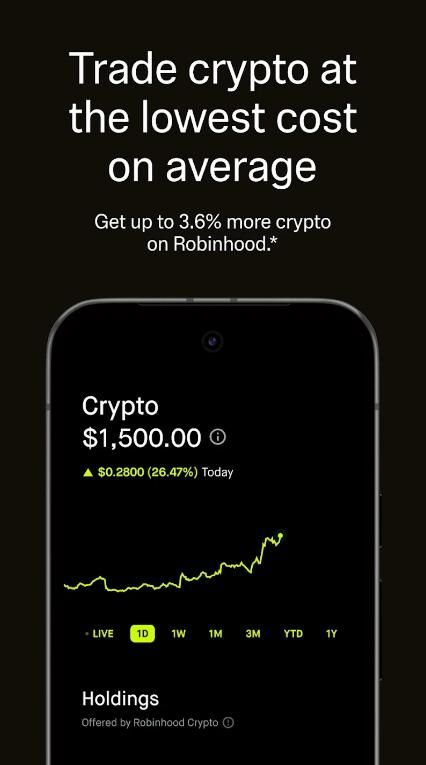
- Cryptocurrency:Both platforms support cryptocurrency trading, but the user experience varies.Robinhood integrates crypto trading directly into its main application, allowing you to manage your equities and digital coins under a single roof.Webull previously housed crypto internally but shifted cryptocurrency execution to a dedicated partner platform (Webull Pay), separating digital assets from your primary brokerage account.Moreover, Webull typically supports a broader catalog of individual cryptocurrencies compared to Robinhood.
- Bonds and Fixed Income:For investors seeking diversification outside of equities, Webull offers access to individual bonds, including U.S. Treasuries and corporate bonds, complete with a dedicated bond screener.Robinhood traditionally focuses on equities and crypto, leaving fixed-income seekers with fewer native options for direct bond investing.
- Forex and Global Markets: Webull also provides access to foreign exchange (forex) trading in supported jurisdictions and a wider selection of global market products, making it a more comprehensive “all-in-one” tent for multi-asset class traders.
Fee Structures, Margin Rates, and Cash Management Costs

While both brokerages proudly advertise commission-free trading for standard stock and ETF transactions, “free” does not mean operating costs are entirely nonexistent. Savvy investors must look closely at ancillary fees, uninvested cash yields, and margin borrowing rates.
Margin trading allows investors to borrow money from the brokerage to purchase additional securities. Robinhood’s margin program, often bundled with its paid subscription tier (Robinhood Gold), features competitive starting rates that scale efficiently for larger account balances. Webull also offers margin accounts, but its standard interest rates are structured differently and can prove more costly depending on market conditions and the size of your borrowed balance.
Cash management is another vital battleground. Both platforms allow uninvested cash to earn interest through sweep programs, but unlocking the highest yields often requires subscribing to premium tiers or maintaining specific account configurations. Furthermore, if you ever decide to transfer your portfolio away to another financial institution, both brokers charge outgoing transfer fees, though the exact dollar amounts vary and should be reviewed in their current fee schedules.
Educational Resources and Paper Trading for Beginners
Learning how to navigate the stock market safely is just as important as choosing where to deposit your funds. Both platforms recognize this and provide robust educational resources, but they approach the learning curve from opposite directions.
Robinhood excels at written, highly readable financial education. Through its in-app “Snacks” newsletter style, bite-sized articles, and clear definitions, it breaks down complex financial concepts into digestible, jargon-free lessons.It is designed for learners who prefer reading clear explanations and building foundational knowledge before putting real money at risk.
Webull takes a more practical, “learning by doing” approach.Its standout educational feature is paper trading.Paper trading provides you with a simulated account loaded with virtual cash, allowing you to test out trading strategies, experiment with options, and get comfortable with the platform’s complex interface without risking a single dollar of your hard-earned capital. For hands-on learners who want to test theories in real-time market conditions, Webull’s paper trading simulator is an invaluable asset.
Customer Support and Account Security Standards
When dealing with online brokerages, security and customer service availability are paramount. Both Robinhood and Webull are heavily regulated financial institutions operating within the United States. They are registered with the Securities and Exchange Commission (SEC), members of the Financial Industry Regulatory Authority (FINRA), and protected by the Securities Investor Protection Corporation (SIPC), which insures customer securities up to $500,000 against brokerage failure.
In terms of account security, both platforms utilize industry-standard protections, including two-factor authentication (2FA), biometric login support (Face ID or fingerprint recognition), and advanced encryption protocols to secure your personal and financial data.
When it comes to customer support, both companies have historically relied heavily on digital-first assistance, including in-app help centers, ticketing systems, and chat support. Over the years, both brokerages have expanded their live customer service accessibility to help users resolve urgent account issues, funding delays, or transfer questions more efficiently, though response times can fluctuate during periods of extreme market volatility.
Which Platform Should You Choose?
Deciding between Robinhood and Webull ultimately boils down to your individual experience level, trading goals, and preference for user interface design.
Choose Robinhood if:
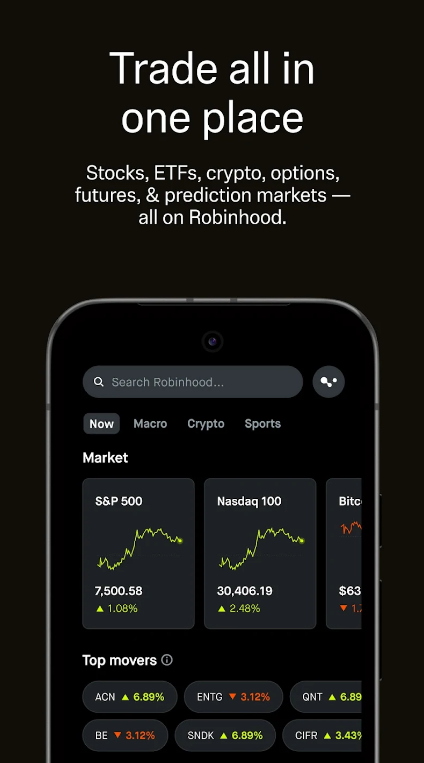
- You are a beginner or casual investor who values a clean, minimalist, and distraction-free interface.
- You want to set up automated recurring investments for long-term wealth building with minimal friction.
- You are interested in taking advantage of IRA matching contributions and straightforward retirement planning.
- You want an all-in-one mobile app where basic stock, ETF, options, and cryptocurrency trading live together seamlessly.
Choose Webull if:
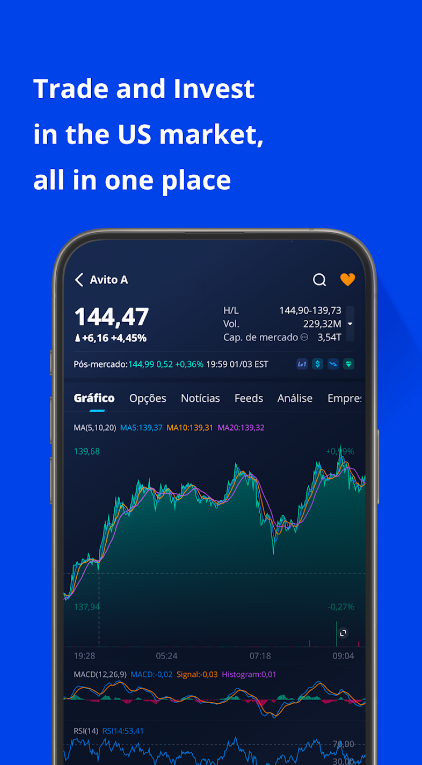
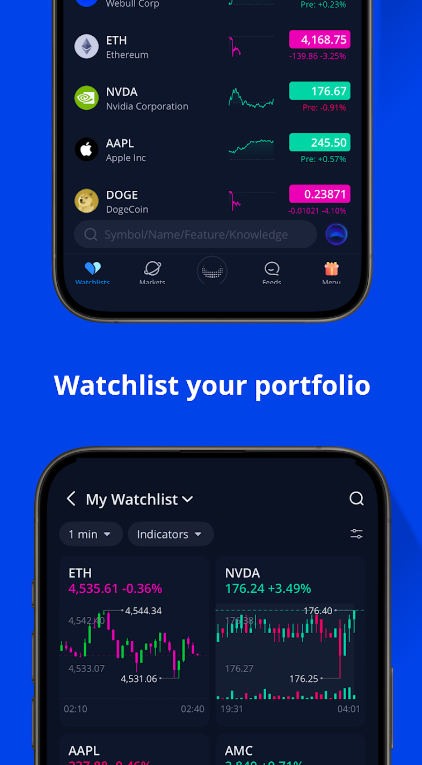
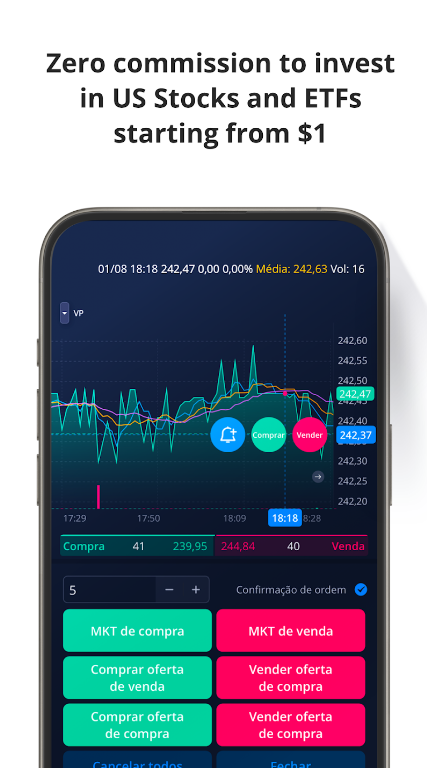
- You are an intermediate or active trader who relies on technical analysis, customizable candlestick charts, and deep market indicators.
- You want access to a powerful desktop trading platform alongside your mobile app.
- You want to practice strategies risk-free using a built-in paper trading simulator.
- You require access to a broader asset selection, such as individual bonds, Treasury securities, and forex markets.
By carefully weighing these core differences against your own financial strategy, you can select the platform that will best support your journey toward financial independence.