Warren Buffett’s Recommended Books: What Should You Read First?

If you ask most billionaires what their secret weapon is, you might expect them to talk about exclusive insider networks, proprietary algorithms, or relentless hustle. Ask Warren Buffett, and he will point to a stack of books. Throughout his decades leading Berkshire Hathaway, the legendary investor has famously spent up to five or six hours every single day reading annual reports, newspapers, biographies, and classic business literature.
Early in his career, Buffett was once asked how someone could prepare for a career in investing. He pointed to a stack of thick financial manuals and told the room to read 500 pages every day. “That’s how knowledge works,” he explained. “It builds up, like compound interest. All of you can do it, but I guarantee not many of you will do it.”
While reading hundreds of pages a day is unrealistic for most people juggling full-time jobs and family responsibilities, reading the right books is entirely within reach. Over the years, Buffett has recommended dozens of titles in his annual shareholder letters, interviews, and public appearances. However, staring at a list of fifty dense finance books can feel overwhelming—especially if you are just starting to build your financial literacy. Knowing where to start makes all the difference between abandoning a book on page thirty and having an “aha” moment that reshapes how you handle money for the rest of your life.
Why Warren Buffett’s Reading List Is Different From Typical Finance Advice
Walk into any bookstore today, and the personal finance section is packed with promises of overnight wealth, day-trading shortcuts, and trend-chasing strategies. Warren Buffett’s recommended reading list stands in sharp contrast to modern financial hype. Rather than focusing on quick wins or technical chart patterns, his favorite books center on timeless human psychology, business durability, ethical leadership, and emotional discipline.
Buffett does not read to predict what the stock market will do next week. Instead, he reads to understand how real businesses create lasting value and why smart people occasionally make terrible financial decisions. For everyday readers, this approach is deeply reassuring. You do not need a Wall Street background or an advanced math degree to benefit from the books on his shelf. Many of his top picks are engaging narratives, historical stories, and practical guides on communication and decision-making that apply just as much to your career and daily life as they do to your investment portfolio.
The Ultimate Starting Point: What Book Should You Read First?
If you are picking up just one book from Warren Buffett’s recommendations to read first, your choice comes down to your current comfort level with business and investing topics. While one specific title stands above all others as the foundation of Buffett’s entire philosophy, another serves as a much gentler, story-driven doorway into how the business world actually works.
Option 1: The Intelligent Investor by Benjamin Graham (Best for Investing Fundamentals)
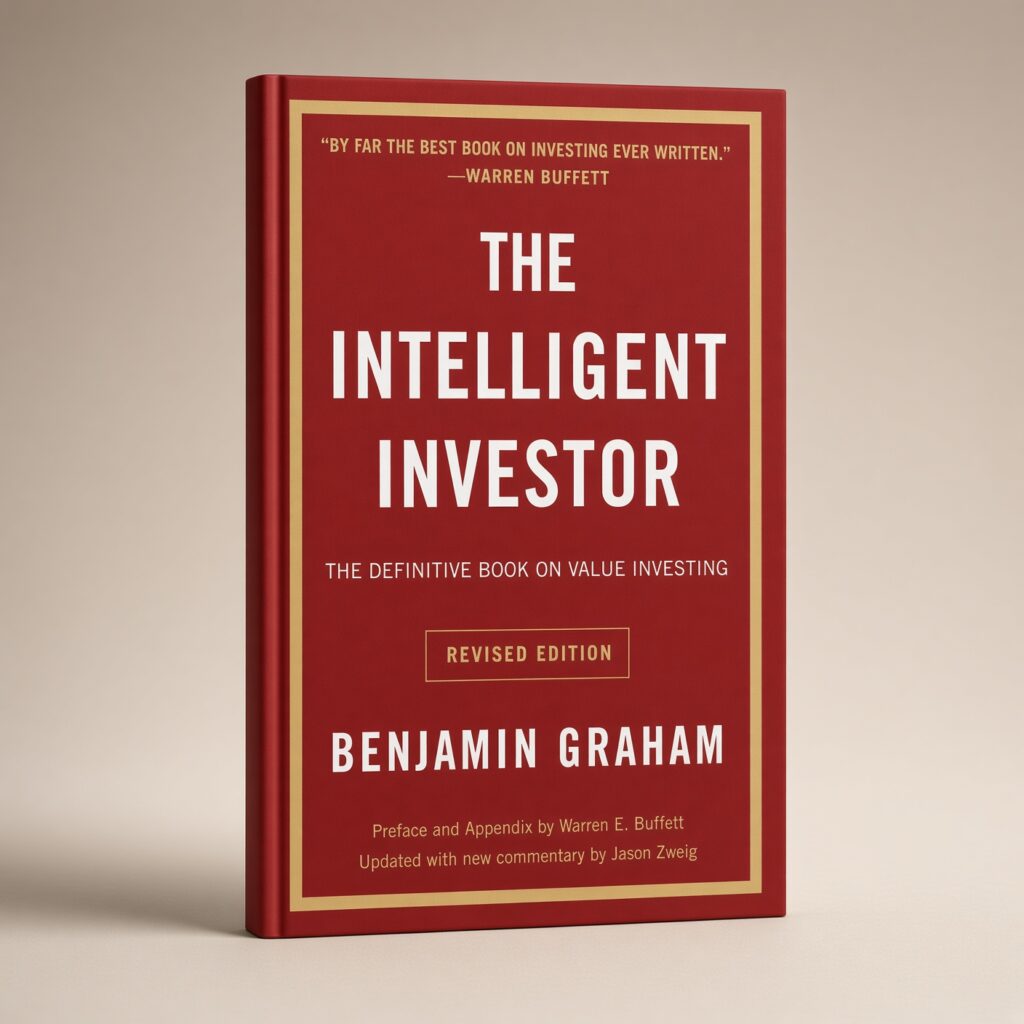
When Warren Buffett was nineteen years old, he picked up a copy of The Intelligent Investor by Benjamin Graham, a Columbia University professor who would soon become his mentor and lifelong friend. Buffett has stated repeatedly that reading this book was one of the luckiest moments of his life, calling it by far the best book on investing ever written.
First published in 1949, The Intelligent Investor introduced the concept of “value investing” to everyday people. Rather than treating stocks like lottery tickets or flashing tickers on a screen, Graham taught that buying a share of stock means becoming a part-owner of a real business. The book introduces two unforgettable ideas that every beginner should grasp:
- Mr. Market: Graham asks you to imagine having a business partner named Mr. Market who shows up every day offering to buy your share of the business or sell you his. Some days Mr. Market is wildly optimistic and demands an absurdly high price; other days he is terrified and offers to sell for pennies on the dollar. The lesson? Mr. Market is there to serve you, not to guide you. You should never let daily market mood swings dictate your self-worth or your financial decisions.
- Margin of Safety: This is the golden rule of protecting yourself from bad luck and miscalculation. Just as an engineer builds a bridge capable of holding 30,000 pounds even if only 10,000-pound trucks will cross it, an intelligent investor only buys an asset when its price is significantly below its true underlying value. That gap gives you a cushion when things inevitably go wrong.
A Quick Tip for Beginners: The Intelligent Investor can feel dense in a few spots, particularly when it discusses mid-20th-century railroad bonds. Buffett himself advises beginners to pay closest attention to Chapter 8 (which covers investor fluctuations and Mr. Market) and Chapter 20 (which explains the Margin of Safety). If you pick up the revised edition with commentary by financial journalist Jason Zweig, each classic chapter is followed by a modern, plain-English breakdown that makes the concepts effortless to digest.
Option 2: Business Adventures by John Brooks (Best for Storytelling and Beginners)
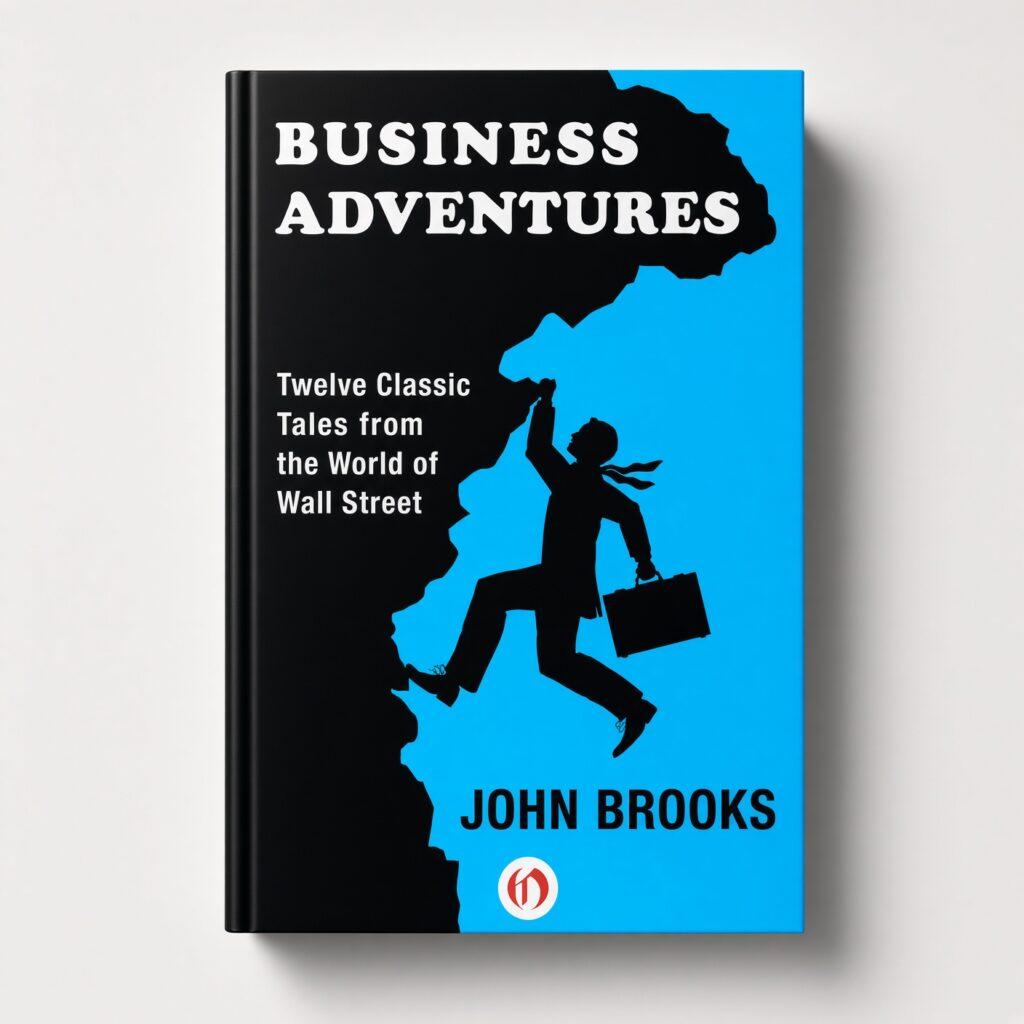
If traditional investing books sound intimidating, start with Business Adventures: Twelve Classic Tales from the World of Wall Street by John Brooks. Back in 1991, when Microsoft co-founder Bill Gates first met Warren Buffett, Gates asked him to recommend his single favorite business book. Without hesitating, Buffett replied, “It’s Business Adventures, by John Brooks,” and mailed Gates his own personal copy.
Originally published as a series of articles in The New Yorker during the 1950s and 1960s, this book reads like great investigative journalism rather than a dry textbook. Brooks chronicles twelve dramatic moments in corporate history—including the catastrophic launch of Ford’s Edsel automobile, the rise of Xerox, the 1962 flash crash, and major insider-trading scandals. Even though the stories take place decades ago, the human traits behind them—corporate ego, poor communication, groupthink, and resistance to change—remain identical today. It is an entertaining, page-turning introduction to how businesses succeed and fail.
Best Warren Buffett Book Recommendations by Goal and Experience Level
Once you finish your first book, the best way to keep momentum is to choose your next read based on what you want to learn. Below is a clear breakdown of Buffett’s top recommendations organized by topic, difficulty, and what each book will teach you.
| Book Title & Author | Primary Focus | Difficulty Level | Why Warren Buffett Recommends It |
|---|---|---|---|
| The Intelligent Investor by Benjamin Graham | Value Investing & Mindset | Intermediate | Establishes the core intellectual framework and emotional discipline required to invest safely over decades. |
| Business Adventures by John Brooks | Business History & Leadership | Beginner-Friendly | Illustrates timeless human behavior and corporate decision-making through gripping real-world stories. |
| The Little Book of Common Sense Investing by John C. Bogle | Index Funds & Everyday Wealth | Beginner-Friendly | Explains clearly why low-cost index funds beat high-fee active trading for the vast majority of individual investors. |
| How to Win Friends and Influence People by Dale Carnegie | Communication & Relationships | Beginner-Friendly | Buffett credits this book and Carnegie’s course with overcoming his fear of public speaking and shaping his people skills. |
| Common Stocks and Uncommon Profits by Philip A. Fisher | Evaluating Great Companies | Intermediate | Taught Buffett how to look beyond cheap numbers and evaluate company management, innovation, and long-term growth. |
| Poor Charlie’s Almanack edited by Peter D. Kaufman | Mental Models & Rational Thinking | Intermediate | Captures the multidisciplinary wisdom of Buffett’s late business partner, Charlie Munger, on avoiding costly life mistakes. |
| The Essays of Warren Buffett arranged by Lawrence A. Cunningham | Corporate Governance & Investing | Intermediate | Organizes Buffett’s clearest shareholder letters by theme, serving as a masterclass in business evaluation in his own words. |
| Shoe Dog by Phil Knight | Entrepreneurship & Resilience | Beginner-Friendly | Buffett praised Nike founder Phil Knight’s memoir as the best book he read the year it came out for its raw honesty. |
Must-Read Books for Complete Beginners With Zero Finance Background
If balance sheets and stock valuation ratios make your eyes glaze over, you do not need to force yourself through heavy financial texts right away. Several of Buffett’s most cherished books require zero prior knowledge of Wall Street and offer immediate value to anyone looking to improve their finances or career.
The Little Book of Common Sense Investing by John C. Bogle
In his 2014 shareholder letter, Buffett specifically recommended The Little Book of Common Sense Investing, written by Vanguard founder John C. Bogle. Even though Buffett became one of the richest people in history by picking individual stocks, he has consistently advised everyday people not to try picking stocks themselves. Instead, he recommends putting money regularly into a low-cost S&P 500 index fund.
Bogle’s short, readable book explains the simple math behind why this works. When Wall Street brokers, hedge funds, and active traders charge high fees to buy and sell constantly, those fees eat away at your compound returns. Bogle shows how owning a broad slice of American business at minimal cost allows regular savers to keep their fair share of market growth without spending hours researching companies.
How to Win Friends and Influence People by Dale Carnegie
You will not find a single university diploma hanging on the wall of Warren Buffett’s office in Omaha, Nebraska. Instead, the only certificate displayed is the one he earned for completing Dale Carnegie’s public speaking and human relations course at age twenty-one. As a young man, Buffett was terrified of speaking in front of groups—he would literally feel sick before giving a presentation.
Dale Carnegie’s classic 1936 book, How to Win Friends and Influence People, helped transform Buffett into one of the most persuasive communicators in modern business. The book’s principles are straightforward: listen genuinely to others, remember people’s names, admit when you are wrong quickly, and frame ideas around what matters to the other person. Whether you are negotiating a salary, leading a team, or building trust with clients, this book pays dividends for life.
Shoe Dog: A Memoir by the Creator of Nike by Phil Knight
When Buffett named Phil Knight’s memoir Shoe Dog his favorite read of the year, many readers were surprised to see a footwear entrepreneur’s autobiography at the top of a value investor’s list. Yet Shoe Dog captures the messy, stressful, and deeply human reality of building a lasting enterprise from scratch.
Knight recounts how he borrowed fifty dollars from his father in 1962 to import running shoes from Japan, operating out of the trunk of his green Plymouth Valiant while constantly teetering on the edge of running out of cash. For anyone interested in entrepreneurship, grit, and what happens behind the scenes before a brand becomes a household name, this book reads like a novel.
Intermediate Reads to Deepen Your Business and Investing Mindset
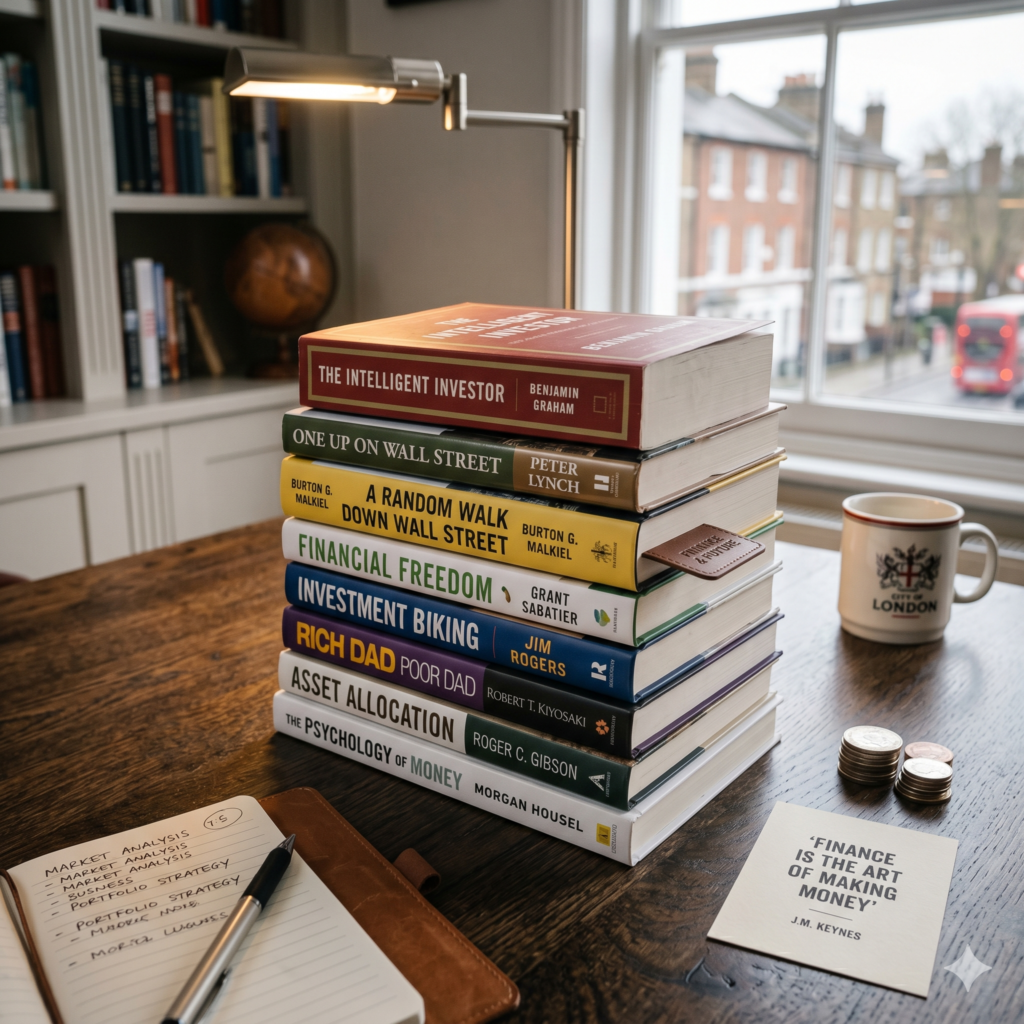
Once you grasp the fundamentals of saving, index investing, and basic business history, you can move on to the books that shaped how Warren Buffett analyzes companies and thinks through complex problems.
Common Stocks and Uncommon Profits by Philip A. Fisher
Early in his career, Buffett focused almost entirely on buying “cigar butt” stocks—struggling, cheap companies that had just one last puff of value left in them. That changed largely because of his partnership with Charlie Munger and the influence of Philip Fisher’s 1958 classic, Common Stocks and Uncommon Profits.
Fisher taught that buying a wonderful company at a fair price is far better than buying a mediocre company at a cheap price. He introduced the “scuttlebutt” method of research: talking to a company’s customers, suppliers, competitors, and employees to understand its true reputation and leadership quality before looking at financial spreadsheets.
Poor Charlie’s Almanack: The Wit and Wisdom of Charles T. Munger
No guide to Warren Buffett’s reading habits is complete without his late partner of nearly sixty years, Charlie Munger. Buffett famously remarked that scholars had long debated whether Charlie was the reincarnation of Benjamin Franklin. Poor Charlie’s Almanack is a rich collection of Munger’s speeches, essays, and mental models.
Munger championed “worldly wisdom”—the idea that you cannot solve real-world problems by looking through the narrow lens of a single subject. Instead, you should learn the big ideas from psychology, biology, history, physics, and economics, and combine them into a latticework of mental models. One of his most practical tools is inversion: instead of asking how to guarantee success, ask what will guarantee failure, and strictly avoid those behaviors.
The Outsiders: Eight Unconventional CEOs by William N. Thorndike
In his 2012 letter to shareholders, Buffett praised The Outsiders as an extraordinary study of CEOs who excelled at capital allocation. Most executives focus heavily on day-to-day operations or chasing press attention, yet they rarely receive formal training in how to deploy their company’s excess cash—whether to reinvest in the business, buy back shares, pay dividends, or acquire competitors.
Thorndike profiles eight low-profile leaders—including Katharine Graham of The Washington Post Company and Tom Murphy of Capital Cities Broadcasting—who quietly outperformed both their industry peers and Jack Welch’s General Electric by thinking like rational investors rather than empire-builders.
The Essays of Warren Buffett: Lessons for Corporate America
If you want to learn directly from Buffett without sifting through sixty years of annual PDFs, legal scholar Lawrence Cunningham organized Buffett’s finest shareholder letters by topic into one cohesive volume. Covered topics include corporate governance, accounting, mergers, valuation, and common investor mistakes. Buffett writes with folksy humor and crystal-clear analogies, making complex financial concepts accessible to anyone willing to read carefully.
A Step-by-Step 5-Book Reading Roadmap for Everyday Readers
If you want a structured plan rather than guessing what to pick up next, follow this five-step sequence. Each book builds naturally on the previous one, taking you from foundational mindset to confident business literacy:
- Start with The Little Book of Common Sense Investing by John C. Bogle: Learn how the stock market builds wealth over time, why fees matter, and how to set up a simple, stress-free investing foundation.
- Move to How to Win Friends and Influence People by Dale Carnegie: Strengthen the communication and relationship habits that increase your earning power and leadership effectiveness in any career.
- Read Business Adventures by John Brooks: Enjoy twelve entertaining stories that reveal how human nature, corporate culture, and leadership shape real companies.
- Tackle The Intelligent Investor by Benjamin Graham: Focus on Chapters 8 and 20 alongside Jason Zweig’s commentary to master emotional discipline, Mr. Market, and the Margin of Safety.
- Finish with The Essays of Warren Buffett: Bring all those lessons together by reading Buffett’s own explanations of how great businesses operate and compound value over decades.
How to Read Like Warren Buffett Without Quitting Your Day Job
You do not need five spare hours a day to adopt Warren Buffett’s reading habits. What matters most is consistency, curiosity, and retention. Here are four practical habits that make reading dense nonfiction sustainable for busy adults:
- Follow the 50-Page Rule: Life is too short to slog through a book that does not resonate with you. Give a book fifty pages to capture your interest or deliver useful insights. If it feels like a chore after fifty pages, set it aside without guilt and move on to another title on your list.
- Read With a Pen in Hand: Buffett treats reading as an active conversation rather than passive entertainment. Underline key sentences, jot quick reactions in the margins, and summarize the main takeaway at the end of each chapter in two or three sentences. Writing ideas in your own words locks them into long-term memory.
- Pair Contrasting Perspectives: Notice how Buffett reads both Benjamin Graham (who focused on buying cheap assets) and Philip Fisher (who focused on buying high-growth quality companies). Reading authors with different viewpoints trains your brain to think independently rather than blindly following one guru.
- Replace Twenty Minutes of Scrolling: Reading just twenty-five pages a day—roughly twenty to thirty minutes before bed or with your morning coffee—adds up to more than 9,000 pages a year. That equals roughly twenty-five to thirty full books annually, placing you well ahead of the curve in financial and business literacy.
Frequently Asked Questions About Warren Buffett’s Book Recommendations
What is Warren Buffett’s all-time favorite book?
Buffett frequently names two books at the top of his list depending on the context. For investing strategy, he unequivocally ranks The Intelligent Investor by Benjamin Graham as the best book ever written. For general business storytelling, he named Business Adventures by John Brooks as his favorite business book when asked by Bill Gates.
Should a complete beginner start with Security Analysis?
No. Although Security Analysis by Benjamin Graham and David Dodd (1934) profoundly shaped Buffett’s early career, it is a massive, technical textbook written primarily for professional financial analysts. Beginners will get far more value—and enjoyment—starting with The Little Book of Common Sense Investing, Business Adventures, or the Jason Zweig edition of The Intelligent Investor.
Does Warren Buffett read fiction or only business books?
While Buffett spends most of his reading hours on business journalism, biographies, history, and political non-fiction, he also enjoys classic American humor and storytelling, including works by Mark Twain. His core advice is simple: read broadly about human nature, history, and how the world works, because every discipline connects back to better decision-making.
How many books does Warren Buffett read per week?
Buffett estimates that he spends roughly 80 percent of his working day reading. While much of that time goes toward daily newspapers (such as The Wall Street Journal, Financial Times, and The New York Times) and corporate annual reports, he regularly reads several books each month across history, biography, economics, and business.
Building a smarter relationship with money and business does not happen overnight—it compounds quietly, one chapter at a time. Pick the single book on this list that matches where you are right now, read ten pages tonight, and let curiosity carry you forward.