
The Big Short: What the Book Teaches About the 2008 Financial Crisis

When Michael Lewis published The Big Short: Inside the Doomsday Machine in 2008, few expected a non-fiction book about complex financial derivatives like collateralized debt obligations (CDOs) and credit default swaps (CDS) to become a massive bestseller. Yet, Lewis managed to do the seemingly impossible: he turned a devastating global economic collapse into a riveting, character-driven narrative that reads like a high-stakes thriller.
For readers, book lovers, and casual learners alike, The Big Short is more than just a historical account of the 2008 financial crisis. It is a masterclass in curiosity, critical thinking, and the dangers of groupthink. Whether you are building a reading list for personal finance or simply exploring how modern economies work, understanding what this book teaches us can fundamentally change how you view the financial world.
What is The Big Short About? (A Layperson’s Overview)
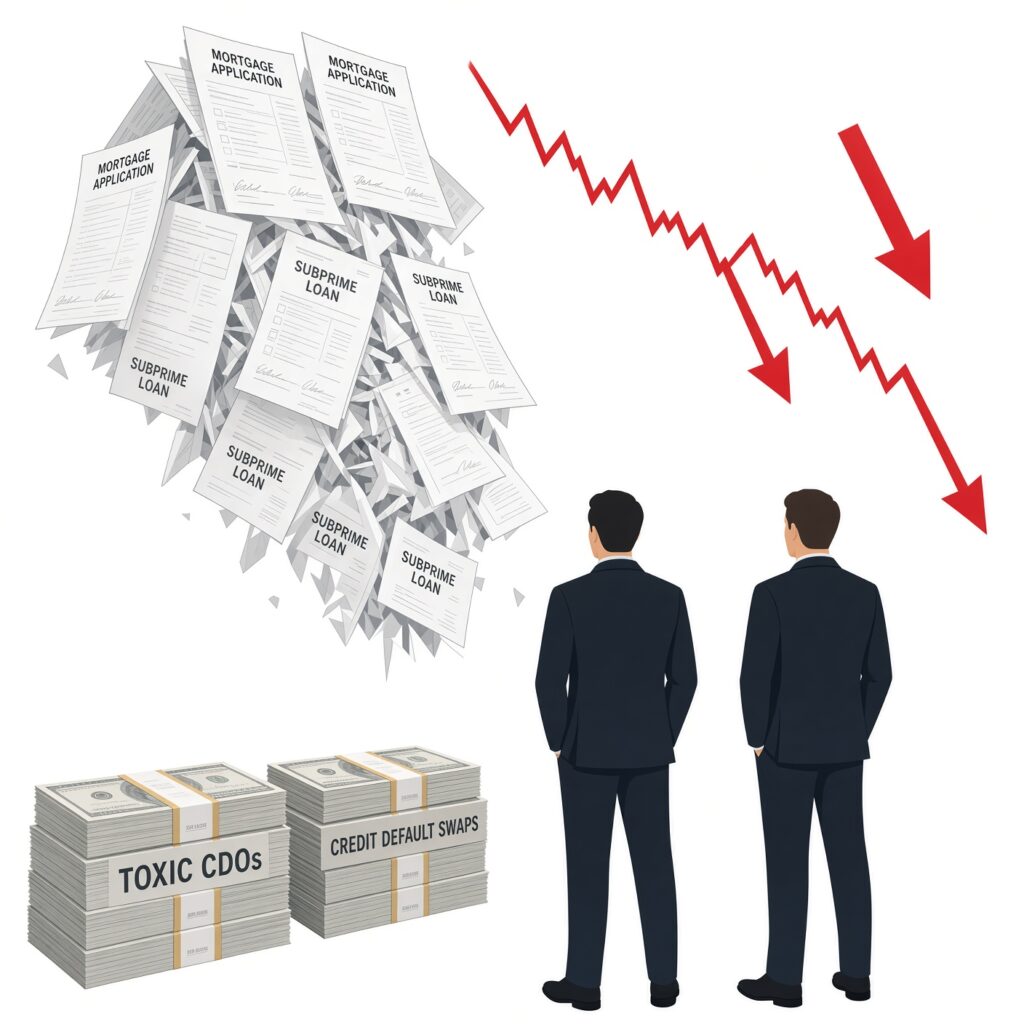
To appreciate the book, it helps to understand its core premise without getting bogged down in Wall Street jargon. At its heart, The Big Short follows a small, eccentric group of investors, hedge fund managers, and outsiders who noticed something the rest of the world missed: the United States housing market was built on a giant house of cards.
During the mid-2000s, American banks were handing out mortgages to almost anyone—often called “subprime mortgages” or “NINJA loans” (No Income, No Job, or Assets). These risky loans were then bundled together into complex financial products and sold globally. Rating agencies—the independent companies supposed to judge the safety of these investments—gave them top-tier “AAA” ratings, convincing the world they were completely safe.
While Wall Street executives and mainstream economists celebrated an apparently booming economy, the protagonists of The Big Short did something revolutionary: they actually looked at the underlying data. They discovered that millions of ordinary borrowers would inevitably default on their loans.
Even more radically, they figured out a way to bet against the entire U.S. housing market by purchasing insurance products called credit default swaps. When the housing market finally collapsed in 2007 and 2008, triggering the worst financial crisis since the Great Depression, these few outsiders made billions—while the global economy reeled.
Key Lesson 1: The Dangers of Institutional Groupthink and “Blind Trust”
One of the most profound takeaways from The Big Short is how easily smart people fall victim to institutional groupthink. Before the crash, Wall Street executives, government regulators, and credit rating agencies shared a comforting assumption: real estate prices in the United States never drop nationwide.
Because everyone believed this, no one bothered to check if it was actually true. When the main characters tried to warn people that the emperor had no clothes, they were laughed out of boardrooms, ignored, or called crazy.
Why This Matters for Readers and Everyday Consumers:
- Question the Consensus: Just because “everyone is doing it” or “experts agree” doesn’t mean a system is sound. Blindly trusting authority figures without examining underlying fundamentals is a recipe for disaster.
- The Power of Independent Research: The heroes of the book didn’t have special insider access; they simply read the raw data, visited housing developments in Florida and California, and talked to ordinary mortgage brokers. True clarity often comes from doing your own primary research rather than accepting polished corporate narratives.
Key Lesson 2: How Complexity is Used to Hide Risk
In the book, Michael Lewis demonstrates how Wall Street weaponized complexity. Financial engineers created obscure, multi-layered financial instruments (such as CDO-squareds) that were intentionally designed to be incomprehensible to normal regulators and investors.
Why? Because when something is too complicated to understand, people tend to trust the person selling it. Complexity creates a smoke screen behind which immense risks can hide.
Lessons in Financial Literacy:
- Simplicity is Safety: If an investment, loan, or financial product is too complex to explain in simple terms, it is usually designed to benefit the seller more than the buyer.
- Demystifying Jargon: The financial industry loves technical terms to keep outsiders at bay. Learning basic financial literacy strips away the intimidation factor and empowers you to make smarter decisions about your own money, savings, and investments.
Key Lesson 3: Incentives Drive Human Behavior
A recurring theme throughout The Big Short is Charlie Munger’s famous adage: “Show me the incentive, and I’ll show you the outcome.”
Why did rating agencies give AAA safety ratings to toxic, garbage-tier mortgages? Because the banks paying for the ratings could simply take their business to a competing rating agency if they didn’t like the grade. Why did Wall Street brokers push risky loans? Because they earned massive commissions upfront, regardless of whether the borrower defaulted three years later.
Everyone in the financial ecosystem was responding rationally to the perverse incentives placed in front of them, even as their collective actions drove the global financial system toward a cliff.
Applying This Lesson to Everyday Life:
- Look at the System, Not Just the People: When evaluating businesses, news sources, or financial advisors, always ask: What are they incentivized to make me believe or do?
- Aligning Long-Term Goals: Whether managing personal investments or evaluating career choices, recognizing how incentives shape behavior helps you avoid traps where short-term rewards encourage long-term destruction.
Key Lesson 4: The Psychology of Timing and Market Irrationality
One of the most dramatic elements of The Big Short is the psychological torture experienced by the investors who bet against the housing market. They were right about the fundamentals, but the market remained irrational longer than they expected. As prices continued to rise, they lost millions of dollars month after month, facing immense pressure from their own investors to quit.
This teaches a crucial lesson about economic reality versus market perception: markets can remain irrational much longer than you can remain solvent.
Key Takeaways for Long-Term Planning:
- Patience and Conviction: Being right is only half the battle; timing and emotional resilience are equally important.
- Managing Risk: Even when you are confident in your thesis, unexpected variables can cause short-term pain. Structuring your finances or portfolio to withstand volatility is vital for survival.
Expanding the Horizon: Why The Big Short Remains Essential Reading Today
Nearly two decades after the 2008 financial crisis, why should contemporary readers still pick up The Big Short?
As financial markets evolve—with new digital assets, complex lending models, and algorithmic trading—human psychology remains entirely unchanged. Greed, overconfidence, reliance on black-box models, and the belief that “this time is different” continue to bubble up in every economic cycle.
Reading Michael Lewis’s masterwork provides an intellectual armor. It trains the mind to look past flashy marketing, demand transparency, question consensus, and respect the warning signs when debt and speculation outpace underlying economic reality.
Takeaways for Your Personal Reading List
The Big Short: What the Book Teaches About the 2008 Financial Crisis is far more than a chronicle of past economic failure; it is an enduring guide to critical thinking in a complex world. By demystifying how systemic risks build up behind closed doors, Michael Lewis empowers everyday readers to become more observant, skeptical, and financially literate participants in modern society.
If you are curating your reading list or looking for a book that combines education with unputdownable storytelling, The Big Short deserves a permanent place on your bookshelf.