5 Most Common Cryptocurrency Storage Mistakes and How to Avoid Them

The world of digital assets offers unprecedented financial sovereignty, but with that freedom comes absolute personal responsibility. Unlike traditional banking systems where a forgotten password triggers a simple customer service call, the decentralized nature of cryptocurrency means that you are your own bank. When security failures happen, they are usually permanent.
Whether you are holding Bitcoin as a long-term store of value, accumulating Ethereum for decentralized finance applications, or exploring emerging altcoins, how you store your digital wealth matters just as much as what you buy. Unfortunately, the learning curve is steep, and millions of dollars in cryptocurrency are lost every year simply due to preventable storage mistakes.
1. Relying Exclusively on Exchange Wallets for Long-Term Holdings

The most pervasive and dangerous mistake cryptocurrency holders make is leaving substantial amounts of digital assets on centralized trading platforms for extended periods. While exchanges are essential entry points for buying and selling, they are fundamentally designed for liquidity and trading, not as secure vaults.
The Centralized Risk Paradigm
When you keep your cryptocurrency on an exchange, you do not actually possess your private keys. Instead, the exchange holds the keys on your behalf, and you hold a balance in an internal database. This introduces a massive counterparty risk.
Historically, the crypto landscape is littered with collapsed exchanges, sudden bankruptcies, regulatory crackdowns, and sophisticated cyberattacks. If an exchange freezes withdrawals, declares bankruptcy, or suffers a catastrophic security breach, your funds can become completely inaccessible or vanish entirely. The golden rule of crypto security is summarized by a famous community adage: “Not your keys, not your coins.”
Best Practices for Exchange Usage
- Minimize Balances: Only keep funds on an exchange that you actively intend to trade in the immediate future.
- Withdraw to Self-Custody: Once your purchases settle, transfer your assets to a wallet where you exclusively control the private keys.
- Enable Advanced Authentication: If you must keep funds on an exchange temporarily, enforce multi-factor authentication using authenticator apps rather than SMS, which is vulnerable to SIM-swapping attacks.
2. Mishandling Seed Phrases: The Single Point of Failure
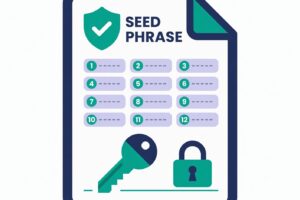
Your wallet’s seed phrase—usually a sequence of 12 to 24 random English words—is the ultimate master key to your digital assets. It generates every public and private key in your wallet. Despite its critical importance, users routinely mishandle seed phrases in ways that guarantee eventual disaster.
The Perils of Digital Storage
One of the most catastrophic errors is saving a digital copy of a seed phrase. Taking a screenshot on your smartphone, saving the words in a notes application, typing them into a cloud document, or emailing them to yourself creates an immediate digital footprint.
Malicious software, compromised cloud accounts, and clipboard-hijacking malware routinely scan devices for seed phrases. Once your seed phrase is digitized, it is permanently exposed to online threats, destroying the security benefits of using a secure hardware wallet.
Physical Security and Redundancy
- Analog Is Mandatory: Your seed phrase should only exist in the physical world. Write it down on high-quality paper using archival ink, or better yet, stamp it onto stainless steel plates to protect against fire and water damage.
- Zero Digital Copies: Never photograph, type, or store your recovery phrase on any internet-connected device.
- Secure Physical Locations: Store your backup seed phrase in a secure, fireproof location, such as a home safe or a bank safety deposit box. Consider splitting the phrase across multiple secure locations using advanced cryptographic splitting techniques if holding high-value portfolios.
3. Falling Prey to Phishing Scams and Counterfeit Applications
As user interfaces have improved, interacting with blockchain applications has become easier, but this accessibility has also opened the door for sophisticated social engineering and phishing attacks. Attackers exploit trust and urgency to trick users into revealing sensitive information.
The Illusion of Authenticity
Phishing takes many forms in the cryptocurrency ecosystem. Users frequently fall victim to malicious search engine advertisements that direct them to lookalike websites of popular wallet providers, decentralized exchanges, or staking platforms. Once on these fraudulent sites, users download malicious software or enter their seed phrases to “sync” their wallets, instantly handing over control of their funds.
Similarly, rogue browser extensions masquerading as legitimate wallet applications regularly infiltrate official extension stores. Once installed, these fake extensions silently record every keystroke and siphon funds the moment a transaction is signed.
Defensive Verification Strategies
- Bookmark Official Sources: Always navigate to wallet providers and financial applications via verified, trusted bookmarks rather than clicking sponsored search engine links.
- Verify Application Publishers: Before downloading any wallet or financial tool, double-check developer credentials, review counts, and community verification signals across official social channels.
- Never Share Master Credentials: Legitimate customer support representatives, developers, and platform administrators will never ask for your seed phrase or private keys under any circumstance. Anyone asking for this information is an attacker.
4. Neglecting Regular Firmware Updates and Hardware Maintenance
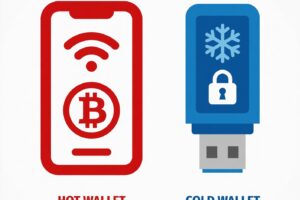
For serious cryptocurrency investors, hardware wallets are the gold standard of security. By keeping private keys completely isolated from internet-connected devices, hardware wallets protect assets even if the host computer or smartphone is heavily infected with malware. However, hardware security is not a “set-and-forget” mechanism.
The Danger of Outdated Infrastructure
Hardware wallet manufacturers continuously patch vulnerabilities, improve cryptographic implementations, and upgrade firmware to combat evolving attack vectors. Neglecting these updates or failing to maintain proper device hygiene can leave your hardware vulnerable to physical extraction attacks or software exploits.
Conversely, users also fall prey to dangerous update scams. Attackers frequently send phishing emails or direct messages claiming a critical security update is required, linking to malicious websites designed to overwrite legitimate firmware with compromised software.
Secure Maintenance Protocols
- Official Channels Only: Always initiate firmware updates directly through the manufacturer’s official desktop or mobile application interface, never through links provided in emails, social media, or search ads.
- Verify Device Integrity: When purchasing a hardware wallet, buy directly from the manufacturer or authorized resellers. Never purchase second-hand hardware wallets, as they can be tampered with physically to extract seed phrases.
- Test Recovery Procedures: Periodically test your backup seed phrase by wiping a secondary or test device and restoring your wallet from the backup. This ensures that your physical record is accurate and legible before an emergency occurs.
5. Overlooking Operational Security (OpSec) and Public Exposure

Cryptocurrency transactions occur on transparent, immutable public ledgers. Every transfer, balance, and interaction is permanently etched onto the blockchain for anyone to analyze. A common and dangerous mistake is neglecting operational security, effectively linking your pseudonymous wallet addresses to your real-world identity.
The Risks of Public Disclosure
Sharing your crypto portfolio size, posting screenshots of trading profits on public forums, or discussing your holdings openly on social media makes you an immediate target. High-profile crypto holders face targeted phishing campaigns, SIM-swapping attacks, extortion, and in extreme cases, physical threats and home invasions.
Furthermore, reusing addresses across multiple transactions allows advanced blockchain analysis firms and malicious actors to map your entire financial history, spending habits, and net worth.
Implementing Robust OpSec
- Maintain Financial Anonymity: Never associate your real name, home address, or personal email address directly with your primary blockchain addresses.
- Address Hygiene: Generate a fresh receiving address for every incoming transaction to prevent casual observers from tracking your complete portfolio history.
- Practice Digital Privacy: Use secure, encrypted communication channels, enforce strict password management practices, utilize virtual private networks (VPNs) when accessing financial accounts, and never discuss your asset holdings in public or unsecured digital spaces.
The Evolution of Self-Sovereign Wealth Management
Securing your cryptocurrency requires a shift in mindset. You are no longer relying on institutional safeguards, customer support hotlines, or automated fraud detection systems. The security of your digital wealth rests entirely on your daily habits, technical diligence, and proactive risk management.
By avoiding these five critical storage mistakes—relying on exchanges, mishandling seed phrases, falling for phishing traps, neglecting device maintenance, and ignoring operational security—you dramatically reduce your vulnerability profile. Take the time to audit your storage practices today, implement multi-layered physical and digital security measures, and ensure that your journey into decentralized finance remains safe, secure, and fully under your control.