Discover the most common scams in the cryptocurrency market

The rapid expansion of the decentralized finance and digital asset ecosystem has revolutionized modern economics. Decentralized currencies offer unprecedented financial autonomy, global accessibility, and innovative investment avenues. However, this decentralized nature and pseudonymous architecture also attract malicious actors. Because transactions on distributed ledgers are typically irreversible and lack centralized customer service intervention, digital currencies have become prime targets for sophisticated cybercriminals.
Navigating this ecosystem safely requires more than basic technical knowledge; it demands continuous vigilance, psychological awareness, and robust operational security protocols. Bad actors constantly evolve their tactics, shifting from crude online impersonations to highly orchestrated multi-phase campaigns. Whether you hold your funds on self-custodial wallets, centralized exchanges, or participate in decentralized finance yield farming, understanding how threat actors operate is your strongest defense.
The Psychology Behind Digital Asset Fraud: Social Engineering Tactics

Before exploring specific fraudulent schemes, it is vital to understand the primary vector utilized by modern cybercriminals: human psychology. While technical exploits such as smart contract vulnerabilities do occur, the vast majority of digital asset thefts rely heavily on social engineering.
Scammers exploit fundamental human emotions, including greed, fear, urgency, excitement, and trust. By manipulating these emotional triggers, malicious actors bypass rational critical thinking, convincing victims to voluntarily surrender their private keys, seed phrases, or transfer funds directly to fraudulent addresses. Recognizing these psychological manipulations is the first step toward building an impenetrable personal security posture.
- Urgency and Scarcity: Fraudsters frequently manufacture artificial time constraints. They claim an investment opportunity, a token airdrop, or a critical security update will expire within minutes, preventing victims from performing adequate due diligence.
- Authority Bias: Attackers routinely impersonate prominent industry figures, customer support representatives from major exchanges, regulatory officials, or legal authorities to demand immediate compliance.
- The “Too Good to Be True” Illusion: Promising guaranteed, risk-free returns on investment is the oldest trick in finance. In the digital currency sector, these promises are often wrapped in complex technological jargon to appear legitimate.
1. Phishing Campaigns and Malicious Websites
Phishing remains one of the most pervasive threats in the digital currency landscape. Attackers deploy deceptive emails, fraudulent text messages, fake social media advertisements, and lookalike web domains designed to mimic legitimate exchanges, wallet providers, block explorers, or decentralized applications.
When an unsuspecting user visits a malicious replica website and attempts to log in or connect their wallet, the attackers instantly capture their login credentials, account passwords, or seed phrases. In more advanced scenarios, malicious browser extensions or compromised decentralized application front-ends inject malicious code that alters copy-pasted destination wallet addresses or forces users to approve unauthorized smart contract spend limits.
Proactive Defense Strategies Against Phishing
- Bookmark Official Domains: Never click on search engine advertisements or promotional links to access your digital wallets or exchange accounts. Always use manually entered, verified bookmarks.
- Verify URL Authenticity: Check domain spellings meticulously. Attackers frequently use subtle typosquatting techniques, such as replacing letters with similar-looking characters (homograph attacks).
- Utilize Hardware Security Keys: Implement physical hardware tokens and FIDO2-compliant security keys for multi-factor authentication across all platforms that support them.
2. Rug Pulls and Exit Scams in Decentralized Finance
The explosive growth of decentralized finance and permissionless token creation platforms has lowered the barrier to entry for launching new digital assets. Unfortunately, this openness has enabled widespread abuse through “rug pulls.”
A rug pull typically occurs when developers build hype around a new digital token or decentralized protocol, encourage retail participants to provide liquidity (often pairing the new token with established assets like Ethereum or stablecoins), and then abruptly drain the liquidity pools. The creators vanish with the valuable underlying assets, leaving investors holding completely worthless tokens that cannot be sold on automated market makers.
Identifying Potential Rug Pull Indicators
- Anonymous Development Teams: Projects where the core founders have zero verifiable professional background, pseudonymous identities, or lack public cryptographic proof of identity carry exponentially higher risks.
- Locked Versus Unlocked Liquidity: Legitimate projects lock their liquidity pool tokens using verified time-lock smart contracts. If liquidity tokens are unlocked, developers can withdraw them instantly.
- Extreme Token Concentration: Reviewing on-chain distribution is vital. If a tiny fraction of wallet addresses control the vast majority of the token supply, those holders can manipulate prices or dump tokens simultaneously.
3. Fake Customer Support Impersonation and Social Media Scams
Navigating complex decentralized ecosystems often prompts users to seek technical assistance. When individuals experience transaction failures, lost funds, or platform errors, they frequently turn to public forums, community channels, or social media networks for help.
Cybercriminals actively monitor these channels, deploying automated bots and fake profiles posing as official customer support agents. These imposters reach out proactively, directing victims to fake support portals, requesting remote desktop access, or demanding the submission of private recovery seed phrases under the guise of “wallet synchronization” or “account verification.”
- The Golden Rule of Custody: No legitimate support representative, exchange employee, or blockchain developer will ever ask for your private keys, seed phrases, password, or remote access to your device.
- Direct Verification: Always initiate support inquiries exclusively through official in-app help menus or verified domain support tickets, ignoring direct messages on social media entirely.
4. Giveaway Scams and Deepfake Video Fraud
Among the most visible scams across social media platforms are fraudulent promotional events. Attackers hack verified social media accounts or create convincing duplicate profiles mimicking prominent technology entrepreneurs, industry leaders, or major digital asset projects.
These accounts broadcast live streams or promotional posts claiming that a well-known entity is doubling or tripling any digital currency sent to a specific address. Utilizing artificial intelligence, scammers increasingly employ sophisticated video deepfakes to broadcast convincing live footage of real individuals endorsing these fraudulent schemes.
- Nothing is Free: Understand that no legitimate enterprise or prominent personality will ever request upfront deposits of digital assets in exchange for larger randomized payouts.
- Cross-Verify Channels: Check official communication channels, verified organizational announcements, and independent news sources to confirm whether a promotional campaign is authentic.
5. Investment Schemes, Ponzi Structures, and High-Yield Platforms
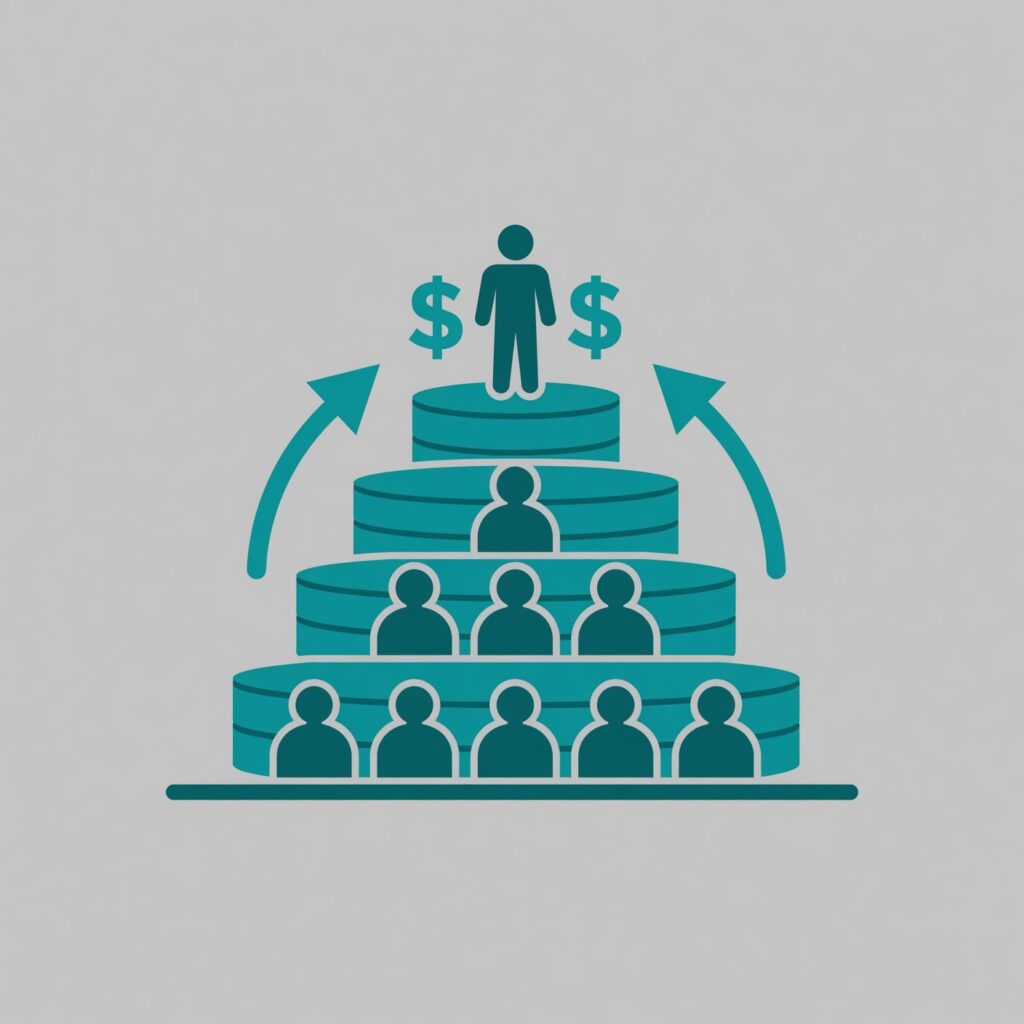
Traditional financial fraud has seamlessly transitioned into the digital currency arena. High-yield investment programs, cloud mining scams, and sophisticated Ponzi structures promise astronomical, compounding daily returns with zero financial risk.
These platforms often utilize professional graphic design, simulated trading dashboards showing steady gains, and multi-level marketing referral structures to incentivize existing participants to recruit new victims. In the early stages, these platforms may process withdrawal requests smoothly using newly incoming capital from recent participants. However, once recruitment slows or the operators decide to exit, the platform shuts down permanently, freezing all user balances.
- Assess Sustainability: Evaluate the underlying economic engine generating the yields. If a platform offers returns that significantly outpace historical market averages without a clear, transparent, and verifiable revenue model, it is almost certainly unsustainable.
- Retain Direct Control: Avoid depositing funds into centralized cloud mining or trading platforms unless they are regulated, fully audited, and transparent regarding their operational mechanics.
6. Romance Scams and “Pig Butchering” Operations
A particularly insidious and psychologically damaging form of digital asset fraud is known colloquially as “pig butchering” (Sha Zhu Pan). Originating internationally, these operations involve long-term manipulation where scammers build romantic or deep platonic relationships with victims over weeks or months through dating applications or professional networking sites.
Once trust is firmly established, the scammer introduces the victim to a proprietary, fraudulent digital asset investment platform or trading application. They demonstrate initial small profits and encourage larger deposits. The metaphor of “pig butchering” refers to fattening the animal before slaughter; the criminals encourage victims to invest their life savings, borrow money, and liquidate retirement accounts before abruptly cutting off all communication and locking the fraudulent platform.
- Maintain Healthy Skepticism Online: Exercise extreme caution when individuals you have never met in person begin discussing financial investments, digital currencies, or trading platforms.
- Verify Platform Legality: Conduct independent regulatory checks and search company registries before transferring funds to unfamiliar trading interfaces recommended by online acquaintances.
7. Malicious Smart Contracts, Token Approvals, and Permit Exploits
Participating in decentralized applications requires interacting directly with smart contracts through self-custodial wallets. When interacting with a new protocol, users are frequently prompted to sign transaction requests, token approvals, or permit signatures.
A poorly audited or intentionally malicious smart contract can request unlimited spending allowances for your tokens. If you approve an unrestricted allowance, the malicious contract can sweep those specific tokens out of your wallet at any time, even long after your initial interaction.
Securing Your Wallet Against Smart Contract Threats
- Revokes Unused Permissions: Regularly audit your wallet’s active token approvals using trusted on-chain revocation tools and revoke permissions for protocols you no longer use.
- Custom Spending Caps: Whenever interacting with unfamiliar applications, manually adjust default unlimited token spending limits down to the exact amount required for the immediate transaction.
- Hardware Wallet Integration: Pair your browser-based wallet with a physical hardware device to ensure every smart contract interaction requires physical button confirmation.
8. Malicious Browser Extensions and Compromised Software
Beyond web-based phishing, cybercriminals target the physical devices users rely upon for daily computing. Malicious actors frequently distribute trojanized software, pirated applications, or fake browser extensions via official app stores and search engine promotions.
Once installed, these rogue extensions can monitor clipboard contents to swap out cryptocurrency destination addresses during copy-paste operations, log keystrokes, capture screenshots of input fields, or silently extract browser session data and local storage credentials.
- Minimize Extensions: Keep the number of browser extensions installed on your primary financial workstation to an absolute bare minimum.
- Source Verification: Only download software, utilities, and browser extensions directly from official, developer-verified repositories and official project websites.
9. SIM Swapping and Mobile Carrier Vulnerabilities
Mobile phone numbers are frequently used as secondary factors for account authentication, password resets, and exchange access. In a SIM swapping attack, malicious actors manipulate mobile telecommunication customer service representatives through social engineering, bribery, or insider threats to transfer a victim’s mobile phone number to a SIM card controlled by the attacker.
Once the attacker controls your phone number, they can bypass SMS-based multi-factor authentication, intercept password reset links, and gain complete control over your email accounts, social profiles, and centralized exchange portfolios.
- Eliminate SMS Two-Factor Authentication: Disable SMS-based verification across all financial and email accounts immediately.
- Implement App-Based TOTP and Hardware Keys: Utilize time-based one-time password applications or physical security keys for all sensitive logins.
- Carrier PIN Protection: Contact your mobile network operator and request the addition of a secondary verbal password, PIN, or strict port-freeze restriction on your account.
10. Malware, Clipboard Hijackers, and Ransomware
Advanced endpoint malware poses a persistent threat to digital asset self-custody. Trojans designed specifically to target financial assets can lie dormant on compromised computers until they detect strings resembling public cryptocurrency addresses.
Upon detection, these clipboard hijackers instantly replace the copied destination address with an address controlled by the attacker. If a user pastes an address and fails to meticulously verify the initial and final characters before confirming a transfer, funds are routed directly to the attacker with no possibility of recovery.
- Dedicated Hardware Security: Consider utilizing a dedicated, clean computer environment exclusively for financial transactions and asset management, avoiding gaming, torrenting, or casual web browsing on that machine.
- Meticulous Address Verification: Always verify at least the first four and last four characters of any destination address before executing transactions, and conduct small test transactions for large transfers.
Comprehensive Security Framework for Asset Protection
Mitigating risk in the digital asset landscape requires adopting a proactive, multi-layered security methodology. Security is not a single product or a one-time configuration; it is an ongoing practice of mindfulness, operational discipline, and technical hygiene.
+-----------------------------------------------------------------+
|                   MULTILAYERED SECURITY MODEL                   |
+-----------------------------------------------------------------+
|  Layer 1: Self-Custody & Hardware Infrastructure                |
|           (Air-gapped hardware wallets, secure seed backup)     |
+-----------------------------------------------------------------+
|  Layer 2: Advanced Authentication Protocols                     |
|           (FIDO2 keys, TOTP apps, zero SMS verification)       |
+-----------------------------------------------------------------+
|  Layer 3: Operational Hygiene & Network Defense                 |
|           (Dedicated clean devices, anti-phishing bookmarks)   |
+-----------------------------------------------------------------+
|  Layer 4: Continuous On-Chain Auditing                          |
|           (Regular token approval revocation, smart contract check)|
+-----------------------------------------------------------------+
Implementing Cold Storage and Seed Phrase Security
- Offline Seed Generation: Generate your cryptographic seed phrases entirely offline using trusted hardware devices. Never store seed phrases digitally on cloud storage, photographs, notes applications, or email drafts.
- Physical Redundancy: Store physical backups of your recovery seed on durable, fireproof stainless steel plates rather than paper, and keep them in secure, geographically separated locations.
Continuous Education and Community Vigilance
The threat landscape evolves in parallel with technological innovation. Maintaining awareness of emerging attack vectors, participating in security-focused community discussions, and treating every unexpected financial opportunity with profound skepticism are the hallmarks of a secure participant in the digital economy.
By implementing these rigorous operational security protocols, maintaining strict emotional discipline, and refusing to succumb to urgency or artificial scarcity, you can safely navigate the decentralized ecosystem and protect your hard-earned digital assets from malicious exploitation.