What Are Decentralized Finance (DeFi)?

The modern financial system is built on layers of intermediaries. When you send money, apply for a loan, or trade assets, you rely on banks, brokers, clearinghouses, and payment processors. These institutions act as gatekeepers, charging fees, enforcing geographic restrictions, and controlling access to global liquidity.
Enter Decentralized Finance, commonly known as DeFi. DeFi is a paradigm shift that aims to reconstruct the traditional financial architecture using public blockchains—primarily Ethereum. By replacing centralized middlemen with transparent, self-executing software known as smart contracts, DeFi creates an open, permissionless, and global financial ecosystem accessible to anyone with an internet connection.
Understanding the mechanics, ecosystem, risks, and long-term potential of DeFi is essential for anyone navigating the modern digital economy. This guide breaks down everything you need to know about Decentralized Finance, moving from foundational concepts to advanced structural layers.
The Core Philosophy of Decentralized Finance
Traditional finance operates on centralized infrastructure. A bank holds your funds, a stock exchange matches your trades, and a government-backed central bank dictates monetary policy. While this system has powered global commerce for centuries, it suffers from structural inefficiencies:
- Counterparty Risk: You must trust that financial institutions will remain solvent and act in your best interest.
- Geographic Exclusion: Over 1.4 billion adults globally remain unbanked or underbanked due to lack of traditional identification or infrastructure.
- Operational Friction: Cross-border transactions can take days and incur exorbitant fees due to multi-tiered banking networks.
- Limited Transparency: Financial ledgers are proprietary, opaque, and prone to hidden systemic vulnerabilities.
DeFi addresses these challenges by embracing decentralization, immutability, and transparency. In a DeFi ecosystem, code is law. Transactions are validated by distributed consensus mechanisms, meaning no single entity can alter the rules, freeze accounts, or censor transactions.
How Smart Contracts Power the DeFi Ecosystem
At the technological heart of DeFi are smart contracts. First conceptualized by computer scientist Nick Szabo in the 1990s, smart contracts are self-executing programs stored on a blockchain that run when predetermined conditions are met.
In a traditional loan agreement, a human loan officer evaluates your credit score, verifies your collateral, and manually disburses funds. In a DeFi lending protocol, this process is automated:
- A borrower deposits crypto assets into a smart contract as collateral.
- The smart contract calculates the maximum allowable borrow limit based on real-time market prices.
- Funds are instantaneously disbursed to the borrower’s wallet.
- If the value of the collateral drops below a specific liquidation threshold, the smart contract automatically liquidates the collateral to repay the debt, protecting the protocol from insolvency.
No human intervention, paperwork, or credit checks are required. The execution is deterministic, transparent, and immutable.
Key Pillars of the DeFi Ecosystem
The DeFi landscape has evolved from a niche experiment into a multi-billion-dollar economy comprising several specialized sectors.
Decentralized Exchanges (DEXs)
Unlike centralized exchanges (CEXs) that rely on order books and custody user funds, Decentralized Exchanges allow peer-to-peer trading directly from digital wallets. Most modern DEXs utilize the Automated Market Maker (AMM) model pioneered by protocols like Uniswap. Instead of matching buyers and sellers, AMMs use liquidity pools—crowdsourced pools of tokens locked in smart contracts—allowing users to trade tokens algorithmically at any time.
Lending and Borrowing Protocols
Platforms such as Aave and Compound allow users to earn interest on idle cryptocurrency deposits or borrow assets against collateral. Lenders supply assets to a liquidity pool and receive interest-bearing tokens in return, while borrowers draw liquidity by locking up over-collateralized digital assets. Interest rates are dynamically adjusted in real-time based on supply and demand algorithms.
Yield Farming and Liquidity Mining
Yield farming involves users strategically moving their crypto assets across various DeFi protocols to maximize returns. Liquidity providers deposit assets into pools to facilitate trading and, in return, earn transaction fees alongside governance tokens distributed by the protocol as an incentive. This mechanism bootstraps liquidity for new networks but introduces complex risk dynamics.
Decentralized Stablecoins
Cryptocurrency volatility poses a major challenge for everyday financial transactions. Stablecoins solve this by pegging their value to fiat currencies like the US dollar. While centralized stablecoins are backed by physical reserves held in bank accounts, decentralized stablecoins (such as MakerDAO’s DAI) maintain their peg through over-collateralized crypto portfolios and algorithmic stability mechanisms.
The Infrastructure Layer: Blockchains and Layer 2 Networks
DeFi applications do not exist in a vacuum; they run on underlying blockchain networks that provide security, consensus, and data availability.
Ethereum: The Pioneer of Programmable Money
Ethereum introduced the Ethereum Virtual Machine (EVM), making it the first blockchain to support Turing-complete smart contracts. The vast majority of DeFi total value locked (TVL) originated on Ethereum. However, high demand often leads to network congestion and expensive transaction fees (gas fees), pricing out smaller retail participants.
Alternative Layer 1 Blockchains
To combat scalability bottlenecks, alternative Layer 1 blockchains like Solana, Avalanche, and Binance Smart Chain emerged. These networks utilize alternative consensus mechanisms—such as Proof of History or delegated Proof of Stake—to achieve high transaction throughput and minimal fees, attracting vibrant DeFi developer and user communities.
Layer 2 Scaling Solutions
Rather than building new blockchains from scratch, Layer 2 scaling solutions (such as Arbitrum, Optimism, and Polygon) process transactions off the main Ethereum chain and bundle them together before settling them back on Ethereum. This approach combines the unmatched security of Ethereum with the speed and low cost required for mainstream financial applications.
Advantages of Decentralized Financial Architecture
The rapid growth of DeFi is driven by several structural advantages over legacy financial systems:
- Global Accessibility: Anyone with a smartphone and an internet connection can access financial services, regardless of geographic location or socioeconomic status.
- Interoperability: DeFi protocols are often referred to as “money legos.” Because they are built on open-source code, developers can seamlessly combine different protocols to create entirely new financial products and services.
- Transparency: Every transaction, smart contract interaction, and liquidity pool balance is recorded publicly on the blockchain, allowing anyone to audit the system in real time.
- Self-Custody: Users retain complete control over their private keys and digital assets at all times, eliminating the risk of institutional mismanagement or exchange bankruptcies.
- Speed and Efficiency: Settlement times in DeFi are dictated by blockchain block times rather than business hours, enabling instantaneous global transfers and continuous 24/7/365 market operations.
Risks, Challenges, and Security Considerations

While DeFi offers unprecedented freedom and economic opportunity, it is not without significant risks. Operating outside traditional regulatory frameworks places the burden of security entirely on the user.
Smart Contract Vulnerabilities
Because DeFi protocols are written in code, they are susceptible to software bugs and logic flaws. If a hacker discovers a vulnerability in a smart contract, they can drain millions of dollars in seconds. Unlike traditional banking accounts, stolen cryptocurrency transactions on public blockchains are irreversible.
Impermanent Loss
Liquidity providers on automated market makers face a risk known as impermanent loss. This occurs when the price ratio of deposited tokens changes significantly compared to when they were deposited, resulting in a lower total value upon withdrawal than simply holding the tokens in a wallet.
Economic and Liquidity Risks
Many DeFi protocols rely on complex economic incentives and tokenomics. Sudden market crashes can trigger cascading liquidations, systemic bad debt, and severe liquidity crunches across interconnected protocols.
Regulatory Uncertainty and Compliance
Governments and regulatory bodies worldwide are closely examining the DeFi sector. Issues surrounding anti-money laundering (AML) compliance, know-your-customer (KYC) protocols, and tax reporting remain ambiguous, introducing regulatory friction for institutional adoption.
Real-World Use Cases and Institutional Adoption
As the technology matures, DeFi is expanding far beyond speculative trading and enthusiast circles into practical, real-world applications.
Cross-Border Remittances
Traditional remittance corridors charge high fees and take days to settle international transfers. DeFi enables instant, peer-to-peer cross-border payments at a fraction of the cost, transforming how migrant workers support families abroad.
Real-World Asset (RWA) Tokenization
One of the most rapidly growing trends in modern finance is the tokenization of real-world assets. Traditional financial instruments—such as US Treasury bonds, real estate, private equity, and commodities—are being brought on-chain as digital tokens. This allows traditional assets to benefit from the speed, liquidity, and fractional ownership enabled by blockchain infrastructure.
Institutional Decentralized Finance
Major global financial institutions are exploring permissioned DeFi environments. By utilizing decentralized architectures with built-in compliance checks, institutions can streamline trade finance, asset management, and derivatives clearing while maintaining regulatory oversight.
Security Best Practices for Navigating DeFi
For individuals interacting with decentralized applications, practicing robust cybersecurity hygiene is paramount. Safeguarding digital assets requires understanding fundamental security principles:
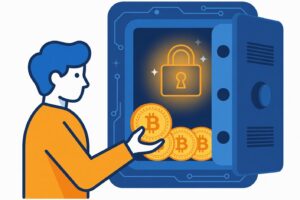
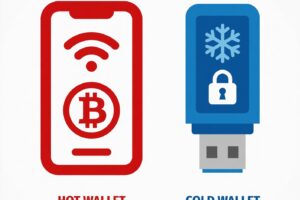
- Use Non-Custodial Wallets: Store digital assets in secure hardware wallets rather than leaving funds on centralized exchanges or vulnerable web interfaces.
- Verify Smart Contract Audits: Prioritize protocols that have undergone rigorous, independent security audits by reputable cybersecurity firms.
- Exercise Caution with Yields: Approach protocols promising unusually high or unsustainable Annual Percentage Yields (APY) with skepticism, as they often indicate high-risk or unsustainable economic models.
- Protect Private Keys: Never share your seed phrase or private keys with anyone. Legitimate protocols, developers, or support staff will never ask for your recovery credentials.
- Double-Check URLs: Beware of phishing websites designed to mimic popular DeFi platforms and steal wallet credentials.
The Future Trajectory of Decentralized Finance
Decentralized Finance represents a fundamental reimagining of how humanity handles value, credit, and commerce. By removing intermediaries and establishing an open, programmable financial layer, DeFi creates a more efficient and inclusive global economy.
While challenges remain—ranging from regulatory hurdles and user experience barriers to smart contract security—the foundational momentum of the movement is undeniable. As technological scalability improves through Layer 2 networks and institutional integration deepens via real-world asset tokenization, DeFi is steadily transitioning from a fringe technological experiment into the underlying operating system of global finance.
Whether DeFi completely replaces legacy systems or merges with traditional banking to create a hybrid financial ecosystem, its impact on the future of money is permanent. The ongoing evolution of this space promises a financial world defined by openness, autonomy, and universal access.