What Time Does the US Stock Market Open and Close?

Navigating the world of stock investing requires precision, and timing is everything. Whether you are buying your very first shares or looking to refine your active trading strategy, understanding the exact operating hours of the major United States stock exchanges is essential.
The U.S. financial markets are the largest and most liquid in the world, drawing millions of participants daily. However, unlike cryptocurrencies or certain foreign exchange markets that operate around the clock, traditional stock exchanges maintain strict daily schedules.
Knowing when the market opens, when it closes, and what happens during extended trading sessions can protect you from unnecessary volatility and help you capitalize on key market movements. Below is a comprehensive breakdown of everything you need to know about U.S. stock market hours, holidays, time zones, and smart trading habits.
What Are the Regular Trading Hours for the NYSE and Nasdaq?

The core trading hours for the primary U.S. stock exchanges—the New York Stock Exchange (NYSE) and the Nasdaq—run from 9:30 a.m. to 4:00 p.m. Eastern Time (ET), Monday through Friday.
During this 6.5-hour window, standard investors, institutional funds, and market makers buy and sell shares of publicly traded companies like Apple, Microsoft, Amazon, and Tesla.
- Opening Bell: The official trading day kicks off sharply at 9:30 a.m. ET. This opening is preceded by an “opening auction” process where institutional orders accumulated overnight are matched, often resulting in high volatility and heavy trading volume right out of the gate.
- Closing Bell: The core trading session wraps up at 4:00 p.m. ET. Similar to the open, the final minutes leading up to 4:00 p.m.—known as the closing auction period—frequently experience a surge in volume as funds rebalance their portfolios for the day.
It is important to note that regular trading sessions do not occur on weekends (Saturdays and Sundays) or designated federal and market holidays.
Understanding US Stock Market Hours Across Different Time Zones
Because the United States spans multiple time zones, the local clock time of the market opening and closing depends entirely on where you are located within the country. The standard baseline is always Eastern Time (ET).
If you live outside of the Eastern time zone, you must adjust your schedule accordingly to catch the opening bell live:
- Eastern Time (ET): 9:30 a.m. – 4:00 p.m.
- Central Time (CT): 8:30 a.m. – 3:00 p.m.
- Mountain Time (MT): 7:30 a.m. – 2:00 p.m.
- Pacific Time (PT): 6:30 a.m. – 1:00 p.m.
- Alaska Time (AKT): 5:30 a.m. – 12:00 p.m.
- Hawaii-Aleutian Time (HST): 3:30 a.m. – 10:00 a.m. (Note: Hawaii does not observe Daylight Saving Time, which shifts the alignment relative to ET part of the year).
For investors tracking the market from the West Coast, trading begins bright and early at 6:30 a.m. local time, meaning morning financial news and economic data releases are often digested before breakfast.
What Is Pre-Market and After-Hours Trading?
Many beginner investors assume that trading completely stops at 4:00 p.m. and stays dormant until the next morning. However, modern electronic brokerages offer access to extended-hours trading, which bridges the gap between days.
Extended-hours trading is split into two distinct periods:
1. Pre-Market Trading (4:00 a.m. to 9:30 a.m. ET)
Before the official opening bell rings, pre-market trading allows early birds to react to overnight economic data, global news events, or corporate earnings reports released before the market opens.
- While some brokerages allow participation starting at 4:00 a.m. ET, others restrict client access until 7:00 a.m. ET.
- Liquidity is generally lower during these early hours, meaning bid-ask spreads can be wider.
2. After-Hours Trading (4:00 p.m. to 8:00 p.m. ET)
Immediately following the closing bell, the after-hours session begins. This window is heavily utilized when major companies release their quarterly earnings reports right after 4:00 p.m. Stock prices can experience sharp, sudden spikes or drops during this period based on whether earnings beat or miss Wall Street expectations.
Risks of Extended-Hours Trading
While extended sessions offer flexibility, they carry distinct risks that everyday investors should understand:
- Lower Liquidity: Fewer buyers and sellers are participating, making it harder to execute large orders without moving the price.
- Higher Volatility: Prices can fluctuate wildly on smaller volumes.
- Order Type Restrictions: Most brokerages require you to use limit orders rather than market orders during extended hours to protect you from executing trades at unexpected prices.
Stock Market Holidays: When Are the NYSE and Nasdaq Closed?
The U.S. stock exchanges observe several federal and traditional holidays throughout the year. On these days, regular trading is completely suspended, and orders placed will not execute until the next active business session.
Standard holidays when the NYSE and Nasdaq are fully closed include:
- New Year’s Day (January 1st)
- Martin Luther King, Jr. Day (Third Monday in January)
- Presidents’ Day (Third Monday in February)
- Good Friday (The Friday before Easter Sunday)
- Memorial Day (Last Monday in May)
- Juneteenth National Independence Day (June 19th)
- Independence Day (July 4th)
- Labor Day (First Monday in September)
- Thanksgiving Day (Fourth Thursday in November)
- Christmas Day (December 25th)
Note: If a major holiday falls on a weekend, the exchanges typically observe the closure on the closest weekday (either the preceding Friday or the following Monday).
Stock Market Half-Days and Early Closures
In addition to full-day closures, the U.S. stock market observes half-days on a few specific dates each year. On these occasions, regular trading wraps up early at 1:00 p.m. Eastern Time (ET) (with extended-hours closing early as well).
The standard early-closure dates include:
- The Day After Thanksgiving (Black Friday): Markets close at 1:00 p.m. ET.
- Christmas Eve (December 24th): If Christmas Eve falls on a weekday, trading closes at 1:00 p.m. ET. (If it lands on a weekend, alternative closure rules apply to adjacent weekdays).
- The Day Before Independence Day (July 3rd): If July 3rd lands on a weekday when open, markets may observe an early 1:00 p.m. ET close.
Checking the exchange calendar ahead of holiday weeks ensures you are never caught off guard by an unexpected early shutdown.
What Are the Best Times of Day to Trade Stocks?
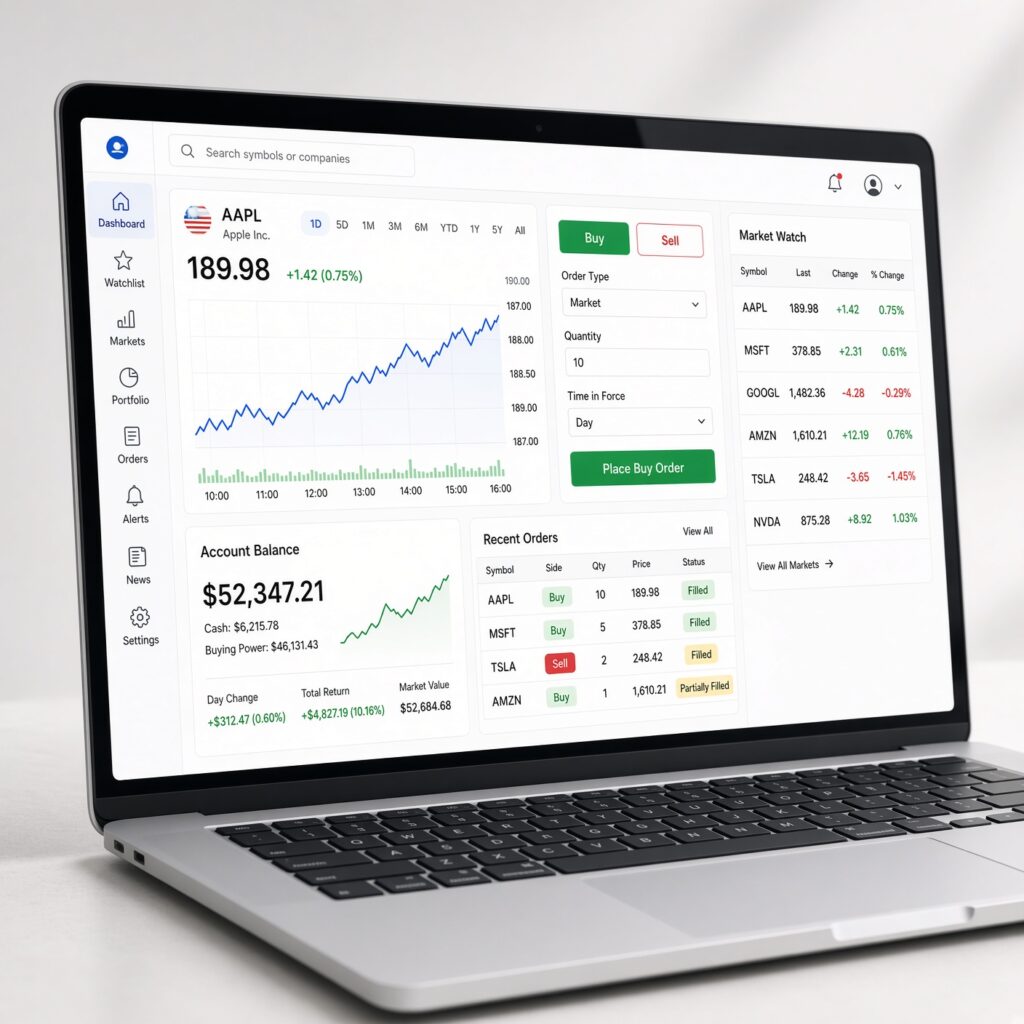
While the market is open for 6.5 hours every weekday, trading activity is not distributed evenly across that timeframe. Understanding market rhythms can help you find optimal pricing and liquidity:
- The Opening Hour (9:30 a.m. – 10:30 a.m. ET): This is typically the most volatile and active period of the entire day. Overnight news, economic reports, and pent-up institutional orders flood the market. Experienced day traders love this window for fast-moving opportunities, but beginners should exercise caution due to rapid price swings.
- The Midday Lull (11:30 a.m. – 2:00 p.m. ET): Volume tends to dry up significantly during the middle of the day as Wall Street traders take lunch breaks and market momentum stabilizes. Price movements can become sideways and sluggish.
- The Closing Hour (3:00 p.m. – 4:00 p.m. ET): Volatility picks up again as the closing bell approaches. Institutional investors finalize their daily positions, and index funds execute large programmatic trades. The final 30 minutes often set the definitive tone for the trading day.
Other Financial Markets: How Do They Differ?
It is easy to confuse stock market schedules with other asset classes that operate under entirely different rules:
- Bond Market: Fixed-income markets (U.S. Treasuries and corporate bonds) generally trade from 8:00 a.m. to 5:00 p.m. ET and close earlier on select pre-holiday dates.
- Commodities and Futures: Many futures contracts (such as oil, gold, and agricultural products) trade nearly 24 hours a day, spanning six days a week beginning on Sunday evenings.
- Cryptocurrency: Unlike traditional equities, crypto assets trade continuously—24 hours a day, 7 days a week, 365 days a year—with no opening or closing bells.
Summary: Key Takeaways for Smart Investing
Mastering market hours is a foundational step toward becoming a disciplined, confident investor. To recap the core essentials:
- The standard U.S. stock market hours are Monday through Friday, from 9:30 a.m. to 4:00 p.m. Eastern Time.
- Extended trading sessions (pre-market from 4:00 a.m. to 9:30 a.m. ET and after-hours from 4:00 p.m. to 8:00 p.m. ET) offer extra flexibility but carry higher volatility risks.
- Markets close entirely on weekends and major federal holidays, with occasional 1:00 p.m. ET early closures around holidays like Thanksgiving and Christmas.
By aligning your trading strategy with the proper schedule, you can ensure your orders execute smoothly, avoid low-liquidity traps, and make the most of every trading session.