How to Build a Cryptocurrency Portfolio for Beginners

Entering the world of digital assets can feel overwhelming for anyone starting out. With thousands of digital coins, constant price fluctuations, and endless market news, knowing where to begin is often the hardest part. However, learning how to build a cryptocurrency portfolio for beginners does not require a background in high-level finance or computer science. With a clear strategy, proper risk management, and a basic understanding of market fundamentals, anyone can construct a balanced digital asset allocation designed for long-term growth.
A well-structured portfolio acts as a safety net against severe market volatility while positioning your investments to benefit from technological innovation. Rather than trying to guess short-term price movements or chasing social media hype, successful crypto investors rely on systematic asset allocation, disciplined diversification, and secure storage practices. This guide breaks down the core concepts step by step so you can build and manage your first crypto portfolio with confidence.
Understanding Crypto Asset Classes and Strategic Allocation
To construct a resilient cryptocurrency portfolio, you must first understand that digital assets are not all the same. Cryptocurrencies serve different purposes, carry distinct risk profiles, and react differently to market conditions. Grouping assets into distinct categories allows you to control your exposure and avoid taking on unnecessary risk.
Instead of randomly picking individual coins, experienced investors group digital assets into logical tiers based on market capitalization, track record, and underlying utility. Here is how the primary cryptocurrency asset classes break down for beginner investors:
- Core Assets (Large-Cap): Bitcoin (BTC) and Ethereum (ETH) represent the foundation of the digital asset economy. Bitcoin functions primarily as a decentralized store of value (often referred to as digital gold), while Ethereum serves as the leading smart contract network for decentralized applications. These two assets carry the highest liquidity, the longest track records, and lower volatility relative to smaller tokens.
- Utility and Layer-1/Layer-2 Networks (Mid-Cap): Projects like Solana, Polygon, Arbitrum, and Cardano power specialized blockchain ecosystems, scaling solutions, or enterprise infrastructure. They carry higher growth potential than large-cap coins but come with increased price volatility.
- Decentralized Finance (DeFi) & Web3 Infrastructure: Tokens tied to decentralized exchanges, lending platforms, data oracles, and storage networks (such as Chainlink or Uniswap) allow investors to target specific technological sectors.
- Stablecoins: Digital currencies pegged to traditional fiat currencies, such as USD Coin (USDC) or Tether (USDT). Stablecoins retain a fixed value of $1.00, providing necessary liquidity for buying market dips or protecting profits without leaving the blockchain ecosystem.
- High-Risk & Speculative Tokens (Small-Cap / Memecoins): Newly launched tokens, micro-cap projects, or meme-inspired coins. While these assets can occasionally generate rapid gains, they carry severe risks of illiquidity and total capital loss.
Proven Portfolio Models for Every Risk Tolerance
Every investor approaches the market with different goals, financial obligations, and emotional tolerances for market swings. Choosing an asset allocation model that aligns with your individual risk tolerance ensures you stay disciplined during market drawdowns.
The core-satellite strategy is one of the most effective frameworks for beginner investors. Under this approach, the bulk of your capital (the core) is held in established low-risk assets, while a smaller portion (the satellites) is allocated toward higher-growth opportunities. Below are three standard portfolio allocation models designed for different risk profiles:
| Portfolio Model | Conservative (Low Risk) | Balanced (Moderate Risk) | Aggressive (High Risk) |
|---|---|---|---|
| Core (BTC & ETH) | 70% – 80% | 50% – 60% | 30% – 40% |
| Mid-Cap / Utility Tokens | 10% – 15% | 20% – 30% | 30% – 40% |
| Stablecoins (Cash Reserve) | 10% | 10% | 5% – 10% |
| Speculative / High-Growth | 0% – 5% | 5% – 10% | 15% – 20% |
For most beginners, starting with a conservative or balanced model provides an ideal middle ground. Anchoring your portfolio with a heavy allocation to Bitcoin and Ethereum protects your overall capital, while a modest exposure to mid-caps gives you upside participation in emerging technological trends.
Risk Management Essentials and Capital Allocation Rules
The single most important rule in digital asset investing is capital preservation. Because cryptocurrency markets operate 24 hours a day without trading halts or circuit breakers, prices experience significantly sharper volatility than traditional stock indices. Implementing strict risk controls before buying your first asset is essential for long-term success.
1. Keep Total Exposure Reasonable
Financial planners generally suggest keeping overall cryptocurrency exposure to a modest percentage of your net worth—typically between 1% and 5% of total investable assets for beginner investors. This ensures that even in a severe market downturn, your daily personal finances and long-term security remain entirely intact. Never invest emergency funds, rent money, or capital required for short-term living expenses.
2. Avoid Over-Diversification
While diversification is critical, holding dozens of different coins creates administrative headaches and dilutes performance. Beginners often make the mistake of buying tiny amounts of 20 or 30 trending tokens. Tracking continuous updates, security risks, and governance changes across that many projects is nearly impossible for an individual investor. Holding 4 to 8 well-researched assets usually offers optimal diversification without overwhelming management requirements.
3. Beware of Leverage and Derivatives
Futures contracts, margin trading, and leveraged products carry extreme risk for beginners. High leverage allows a small adverse price move to wipe out your entire balance instantly. Beginners should stick strictly to spot trading—purchasing and owning the underlying digital assets outright without borrowing funds.
Step-by-Step Implementation and Buying Strategies

Once you have decided on your allocation strategy, the next phase is executing purchases safely and efficiently. Attempting to “time the market” by waiting for the absolute lowest price often leads to emotional decision-making, buying during hype spikes, or missing out completely during recovery phases.
Dollar-Cost Averaging (DCA)
Dollar-Cost Averaging is a proven investment strategy where you invest a fixed dollar amount into chosen assets at regular intervals—such as weekly, bi-weekly, or monthly—regardless of current market prices.
For example, instead of investing a lump sum of $1,200 all at once, a DCA strategy would involve purchasing $100 worth of assets on the first day of every month for a year. When prices are high, your fixed purchase buys fewer tokens; when prices decline, your dollar amount automatically buys more tokens. This smooths out your average cost basis over time and removes emotional stress from daily price fluctuations.
Choosing a Reputable Exchange
Executing your strategy requires selecting a trustworthy cryptocurrency exchange. Look for platforms that prioritize security transparency, comply with regional financial regulations, offer robust two-factor authentication (2FA), and maintain deep liquidity for seamless execution. Top tier exchanges generally feature competitive transaction fees, user-friendly mobile apps, and clear documentation on security practices.
Securing Your Assets with Proper Wallet Hygiene
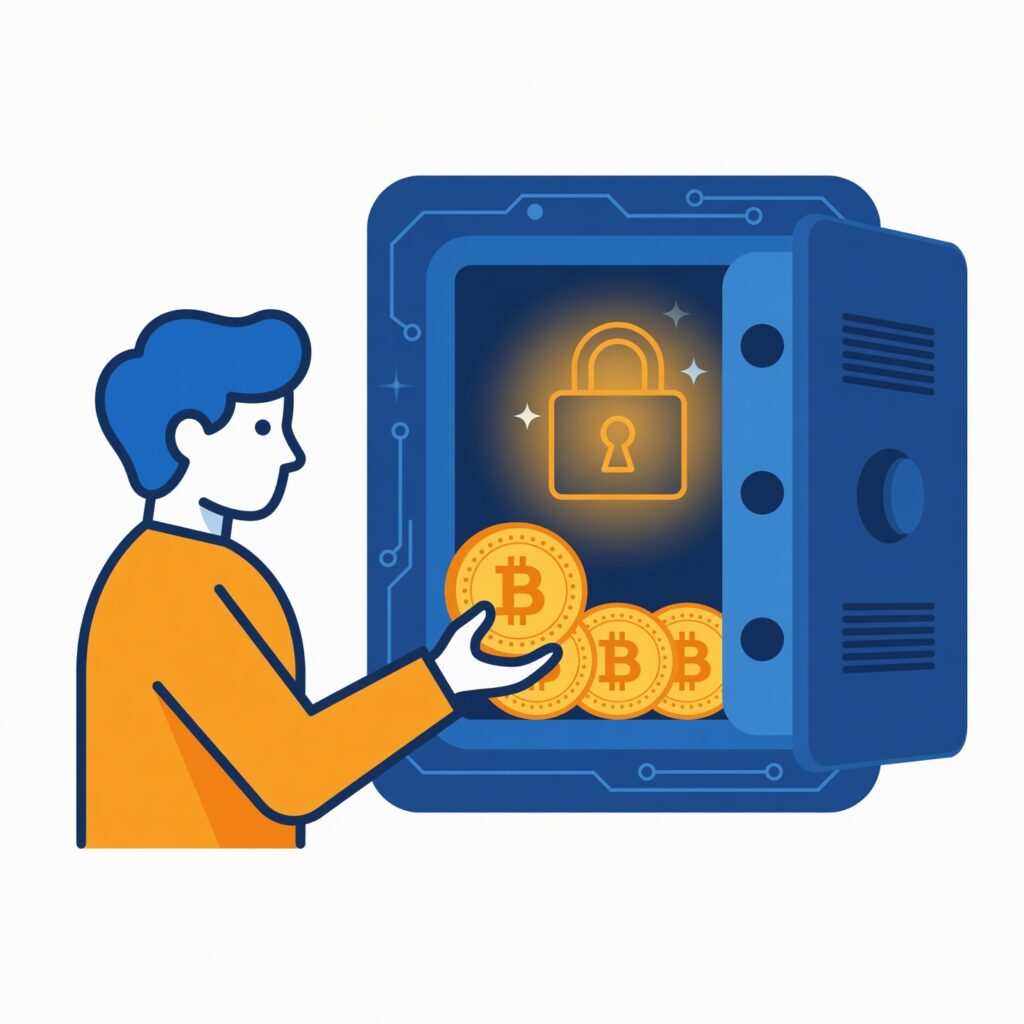
Building a successful portfolio involves not only choosing the right assets, but also keeping those assets safe from security threats. Unlike traditional banks, blockchain transactions are permanent and irreversible. Taking control of your security is a foundational requirement for any crypto investor.
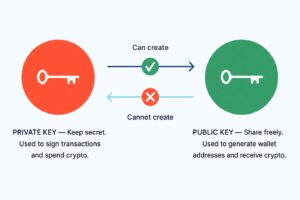
Crypto wallets do not store physical coins; instead, they store the private keys required to authorize transactions on the blockchain. Storage solutions fall into two main categories:
- Custodial / Hot Wallets (Connected to the Internet): These include web-based exchange accounts and software applications on phones or desktop computers. They offer convenient access for active trading but remain vulnerable to online hacking attempts, malware, or exchange insolvencies if left unmanaged.
- Non-Custodial / Cold Storage (Offline Hardware Wallets): Specialized physical devices (resembling USB drives) that store private keys completely offline, isolated from internet connectivity. Hardware wallets are universally recognized as the gold standard for long-term asset security.
A practical rule of thumb is to keep funds intended for regular rebalancing on a secure exchange platform, while transferring long-term investments (“HODL” positions) to a non-custodial hardware wallet. Always store backup seed phrases on physical paper or metal in secure locations—never save seed phrases digitally in cloud storage, emails, or phone screenshot folders.
Portfolio Maintenance: Rebalancing and Performance Tracking
Building your crypto portfolio is not a one-time event. Over time, price changes cause asset ratios to shift away from your original plan. For instance, if an altcoin experiences a massive bull rally, it might grow to represent 40% of your total portfolio, exposing you to far more risk than originally intended.
Rebalancing is the process of periodically adjusting your portfolio back to your target allocations. This is typically done in two ways:
- Calendar-Based Rebalancing: Schedule periodic reviews—such as every quarter or six months—to sell small portions of overperforming assets and redistribute the proceeds into underweighted holdings or stablecoins.
- Threshold-Based Rebalancing: Rebalance whenever an asset class drifts beyond a predefined percentage (e.g., if a mid-cap allocation strays more than 5% or 10% away from its target weighting).
Rebalancing systematically forces you to take profits during market euphoric peaks and buy quality assets when prices are depressed, creating a disciplined, rule-based approach to long-term wealth building.
Building a beginner cryptocurrency portfolio is a strategic process rooted in balance, risk management, and long-term consistency. By establishing clear allocation targets, utilizing dollar-cost averaging, adhering to secure wallet safety practices, and maintaining disciplined rebalancing routines, you can confidently navigate digital asset markets while protecting your financial capital.