What Is Bitcoin Halving and Why Does It Matter?

If you have ever explored the world of cryptocurrency, you have almost certainly heard the phrase “Bitcoin Halving” tossed around. Analysts discuss it on financial news networks, social media traders count down the days until it occurs, and crypto enthusiasts celebrate it like a global holiday.
But what exactly is the Bitcoin Halving, why was it built into the code, and why does it send ripples through the entire financial market every four years?
In this beginner-friendly guide, we will break down everything you need to know about Bitcoin Halving in plain, simple English. Whether you are a total beginner making your first steps into crypto or a curious reader looking to understand how digital assets work, this article will explain the mechanics, history, economic principles, and future implications of this fundamental event.
What Is Bitcoin Halving? A Simple Explanation for Beginners
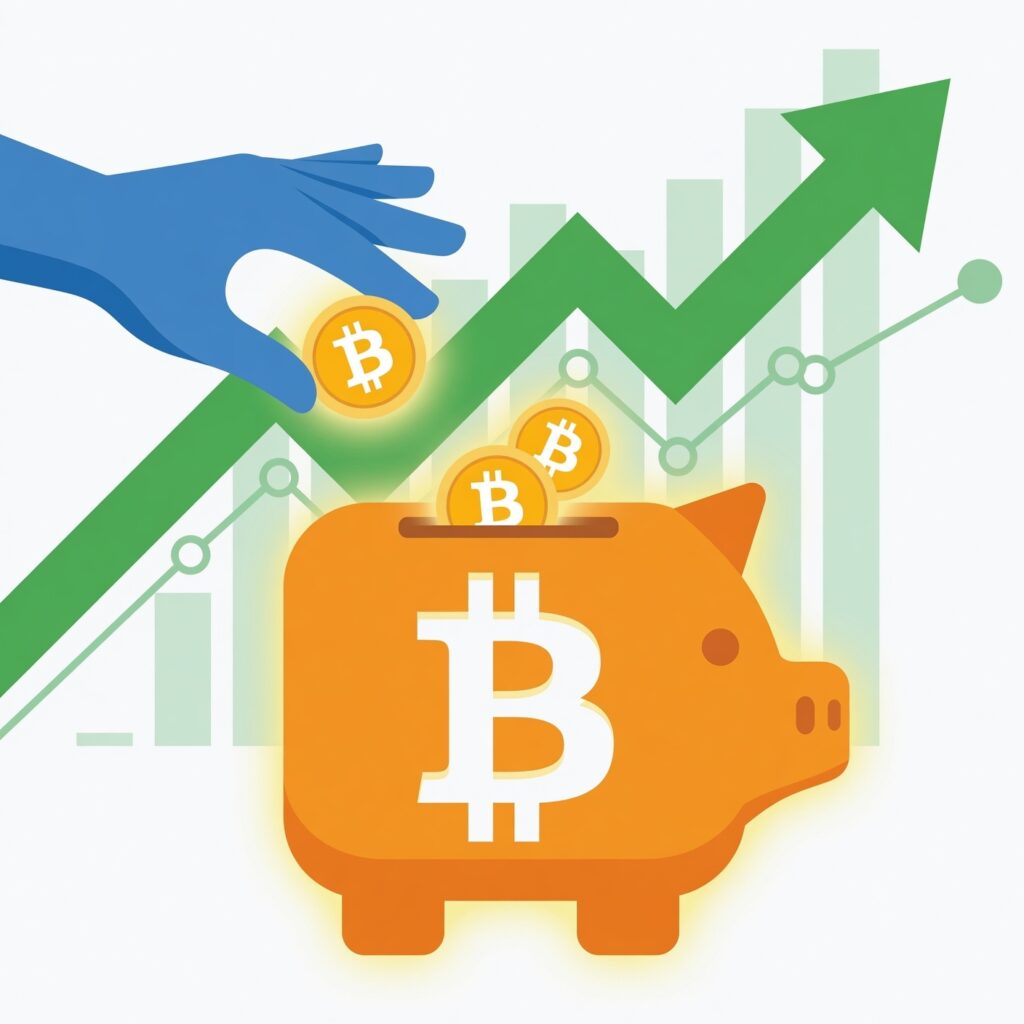
At its simplest level, Bitcoin Halving (sometimes referred to as “the halvening”) is a pre-programmed event in the Bitcoin code that cuts the rate at which new Bitcoins are created by exactly 50%.
To understand how this works, it helps to know how new Bitcoins come into existence:
- Proof-of-Work Mining: Unlike traditional currencies printed by central banks, Bitcoin relies on a global network of specialized computers called miners.
- Block Processing: These miners solve complex mathematical puzzles to secure transaction data into digital packages known as blocks.
- Block Rewards: When a miner successfully solves a puzzle and adds a block to the public blockchain, the Bitcoin protocol automatically rewards them with newly minted Bitcoin. This reward is known as the block subsidy or block reward.
The Halving is the exact moment when that block reward is permanently reduced by half.
How Often Does the Halving Happen?
The halving event is not based on a set calendar date. Instead, it is hardcoded to execute automatically every 210,000 blocks mined on the network. Because the Bitcoin network is designed to mine a new block roughly every 10 minutes, 210,000 blocks take approximately four years to process.
| Bitcoin Halving Event | Date Executed | Old Block Reward | New Block Reward |
|---|---|---|---|
| Genesis Launch | January 3, 2009 | N/A | 50 BTC |
| 1st Halving | November 28, 2012 | 50 BTC | 25 BTC |
| 2nd Halving | July 9, 2016 | 25 BTC | 12.5 BTC |
| 3rd Halving | May 11, 2020 | 12.5 BTC | 6.25 BTC |
| 4th Halving | April 19/20, 2024 | 6.25 BTC | 3.125 BTC |
| 5th Halving (Estimated) | ~April 2028 | 3.125 BTC | 1.5625 BTC |
How Does Bitcoin Halving Work Under the Hood?
To truly appreciate the genius of the Bitcoin network, we must look at the vision of its anonymous creator, Satoshi Nakamoto. When Nakamoto published the Bitcoin Whitepaper in 2008 and launched the network in early 2009, they created a monetary system fundamentally different from conventional fiat currencies like the U.S. Dollar or the Euro.
+-----------------------------------------------------------------------+
|                       THE BITCOIN HALVING CYCLE                       |
+-----------------------------------------------------------------------+
|                                                                       |
|   1. Miners validate transactions & solve cryptographic puzzles.       |
|                                 │                                     |
|                                 ▼                                     |
|   2. Every 210,000 blocks (~4 years), block rewards drop by 50%.      |
|                                 │                                     |
|                                 ▼                                     |
|   3. New Bitcoin issuance rate decreases (Supply Shock).              |
|                                 │                                     |
|                                 ▼                                     |
|   4. If market demand stays constant or grows, scarcity drives value. |
|                                                                       |
+-----------------------------------------------------------------------+
The 21 Million Hard Cap
Traditional government currencies are inflationary by design. Central banks can print more paper money or issue digital credit at will, increasing the total money supply. While this can stimulate economies during crises, it can also dilute purchasing power over time, leading to consumer inflation.
Bitcoin was engineered with an absolute, unchangeable ceiling: only 21 million Bitcoins will ever exist.
The halving mechanism ensures that these 21 million coins are distributed gradually over a long period rather than all at once. By systematically cutting the issuance rate in half every four years, Bitcoin’s rate of inflation continuously trends downward.
Predictable Monetary Policy vs. Centralized Discretion
Unlike corporate stocks or government currencies where leadership decisions can suddenly alter market supply, Bitcoin’s monetary policy is entirely governed by code.
- No board of directors can vote to increase the supply.
- No central bank policy can print additional Bitcoins.
- No algorithm tweak can override the halving schedule without destroying the network consensus.
This predictable, mathematical scarcity makes Bitcoin a unique financial instrument—often referred to by economists as digital property or “Digital Gold.”
Why Does Bitcoin Halving Matter to the Market and Investors?
Why does a technical change in computer code trigger billions of dollars in trading activity worldwide? The answer lies in basic economic theory, market psychology, and historical performance trends.
1. The Law of Supply and Demand
At its core, economics is driven by the relationship between supply and demand:
- If supply increases faster than demand, prices generally decline.
- If demand increases while supply remains fixed, prices generally rise.
- If supply growth slows down significantly while demand stays stable or grows, upwards price pressure is naturally created.
When a halving takes place, the daily supply of new Bitcoins coming into the market from miners is cut in half. This creates what economists call a “supply shock.” Even if market demand for Bitcoin stays exactly the same as the day before the halving, fewer new coins are available for purchase, which historically drives market repricing over time.
+-----------------------------------------------------------------------+
|                    SUPPLY & DEMAND MECHANICS                          |
+-----------------------------------------------------------------------+
|                                                                       |
|      BEFORE HALVING:                      AFTER HALVING:              |
|   Daily Issuance: High                 Daily Issuance: Low (-50%)     |
|   Market Demand:  Normal               Market Demand:  Normal / High  |
|   ----------------------               --------------------------     |
|   Result: Balanced Market              Result: Potential Upward       |
|                                                Price Pressure         |
|                                                                       |
+-----------------------------------------------------------------------+
2. Historical Post-Halving Bull Runs
While past performance is never a guarantee of future results, looking at history helps explain why the market pays such close attention to halving cycles:
- 2012 Halving: Bitcoin was trading at around $12 at the time of the event. Within 12 to 18 months, Bitcoin skyrocketed past $1,000.
- 2016 Halving: Bitcoin was priced near $650 during the event. By late 2017, it reached an all-time high of nearly $20,000.
- 2020 Halving: Bitcoin hovered around $8,500 during the May 2020 halving. By November 2021, it surpassed $67,000.
- 2024 Halving: The market experienced unprecedented dynamics, setting new all-time highs even prior to the halving event due to institutional spot ETF inflows.
Historically, the full price impact of a halving is not instantaneous. It usually takes 12 to 18 months post-halving for the reduced supply to fully filter through the broader crypto economy.
How Does the Halving Affect Bitcoin Miners?
While investors often look forward to halvings, miners face an immediate operational impact.
When a halving occurs, a miner’s gross income from block subsidies is cut by 50% overnight, while their operational expenses—such as electricity costs, facility hardware, overhead, and cooling infrastructure—remain exactly the same.
Example: If a mining company was generating 100 BTC per month before the halving, they immediately drop to receiving only 50 BTC per month for performing the exact same amount of computing work.
+-----------------------------------------------------------------------+
|                     MINER ECONOMIC EQUATION                           |
+-----------------------------------------------------------------------+
|                                                                       |
|   TOTAL REVENUE = (Block Subsidies + Transaction Fees) * BTC Price    |
|                                                                       |
|   POST-HALVING CHALLENGE:                                             |
|   Block Subsidies instantly drop 50%. To stay profitable, miners must: |
|    • Benefit from a higher Bitcoin price                             |
|    • Collect higher network transaction fees                           |
|    • Upgrade to more energy-efficient hardware                        |
|                                                                       |
+-----------------------------------------------------------------------+
The Survival of Efficient Operators
To remain profitable after a halving, miners must adapt through a few potential avenues:
- Higher BTC Market Price: If the value of Bitcoin increases post-halving, the reduced block subsidy can still equal or exceed the dollar value of their previous rewards.
- Upgraded Hardware: Miners continually upgrade to newer, more energy-efficient ASIC (Application-Specific Integrated Circuit) devices that compute more hashes per watt of electricity used.
- Transaction Fees: Miners earn revenue from both block rewards and transaction fees paid by network users. As transaction volume grows, fees make up a larger percentage of total miner earnings.
Inefficient mining operations using outdated hardware or expensive electricity may be forced to shut down their machines post-halving. This dynamic tends to push mining toward clean, low-cost energy sources like hydroelectric, geothermal, and stranded natural gas.
The Bitcoin Halving Timeline: Past, Present, and Future
Understanding the historical progression gives us valuable perspective on where Bitcoin stands today and where it is heading.
2009          2012          2016          2020          2024          2028          2140
  |-------------|-------------|-------------|-------------|-------------|-- ... --|
50 BTC        25 BTC       12.5 BTC      6.25 BTC     3.125 BTC    1.5625 BTC      0 BTC
Genesis       1st Cut       2nd Cut       3rd Cut       4th Cut       5th Cut     Final Coin
November 2012: The First Halving
- Block Height: 210,000
- Reward Reduction: 50 BTC to 25 BTC
- Network Context: Bitcoin was still relatively unknown outside of cryptography forums and niche digital communities. The entire market cap was modest, and GPU hardware was still common for mining.
July 2016: The Second Halving
- Block Height: 420,000
- Reward Reduction: 25 BTC to 12.5 BTC
- Network Context: Professional industrial ASIC mining facilities had emerged. Cryptocurrency exchanges expanded globally, making digital assets accessible to mainstream retail users.
May 2020: The Third Halving
- Block Height: 630,000
- Reward Reduction: 12.5 BTC to 6.25 BTC
- Network Context: Occurring against the backdrop of unprecedented global macroeconomic shifts, institutional hedge funds, public corporations, and traditional financial firms began adopting Bitcoin as a hedge against inflation.
April 2024: The Fourth Halving
- Block Height: 840,000
- Reward Reduction: 6.25 BTC to 3.125 BTC
- Network Context: Marked the era of institutional spot Bitcoin ETFs (Exchange-Traded Funds) approved in major global financial markets, integrating Bitcoin directly into traditional retirement accounts and brokerage portfolios.
What Happens When All 21 Million Bitcoins Are Mined?
Because of the halving schedule, over 93% of all Bitcoins that will ever exist have already been mined. The remaining supply will be issued in smaller and smaller increments over the next century.
Around the year 2140, block 6,930,000 will be processed, and the final fractional satoshi of Bitcoin will be mined.
Once all 21 million coins are in circulation:
- No new Bitcoins will ever be created.
- Miners will no longer receive block subsidies.
- Network security will be funded 100% by transaction fees paid by users who send value across the network.
Common Misconceptions About Bitcoin Halving
Because Bitcoin involves computer code, economics, and trading markets, several common myths circulate during halving cycles. Clearing up these misconceptions is essential for beginners.
+--------------------------------------------------------------------------------+
|                        MYTH vs. REALITY QUICK GUIDE                            |
+--------------------------------------------------------------------------------+
|                                                                                |
|  MYTH 1: "My existing wallet balance will be cut in half."                     |
|  REALITY: False! Only the rate of NEW supply created is halved.                |
|                                                                                |
|  MYTH 2: "Bitcoin price automatically doubles the day of the halving."        |
|  REALITY: False! Price is determined by free market forces and liquidity.       |
|                                                                                |
|  MYTH 3: "Mining will stop completely once halvings make rewards smaller."     |
|  REALITY: False! Transaction fees continue to incentivize miners forever.       |
|                                                                                |
+--------------------------------------------------------------------------------+
Myth 1: “My personal Bitcoin balance will cut in half.”
Reality: The halving only applies to the reward given to miners for processing new blocks. Your personal account balance, wallet holdings, or exchange holdings remain completely unaffected. If you own 0.5 BTC before the halving, you will own 0.5 BTC after the halving.
Myth 2: “Bitcoin’s price is guaranteed to soar instantly.”
Reality: Markets are complex ecosystems driven by global liquidity, regulatory news, interest rates, investor sentiment, and trading positioning. While halvings create a structural reduction in supply growth, price action is never guaranteed on any specific day or timeframe.
Myth 3: “Miners will quit and the network will crash.”
Reality: The Bitcoin network features a built-in safety valve called Difficulty Adjustment. Every 2,016 blocks (roughly two weeks), the network automatically recalibrates how difficult the mathematical puzzles are. If miners drop off, difficulty decreases, making it easier and cheaper for remaining miners to process blocks and earn rewards.
How to Prepare as a Crypto Beginner

If you are following halving cycles and exploring the broader cryptocurrency market, practicing strong security and economic discipline is crucial. Here are key best practices for navigating digital assets:
1. Prioritize Secure Storage
If you hold digital assets, self-custodial hardware wallets (often called “cold storage”) offer higher security than leaving assets on third-party web exchanges. Hardware wallets keep your private keys offline, protecting your funds from remote cyber threats.
2. Practice Risk Management
Cryptocurrency markets are known for high volatility. Never invest money you cannot afford to lose, and avoid using high-leverage trading strategies. Many long-term participants utilize Dollar-Cost Averaging (DCA)—purchasing a fixed, modest dollar amount on a regular schedule—to smooth out short-term price swings over time.
3. Rely on Primary Educational Sources
Always verify market information through reputable news outlets, blockchain explorers, open-source code documentation, and verified research tools. Be cautious of unsolicited social media investment schemes promising guaranteed returns.
The Engineering Behind Bitcoin’s Scarcity
The Bitcoin Halving is far more than a market catalyst—it is a masterclass in monetary design. By combining cryptographic security, decentralized consensus, and automated economic scarcity, Satoshi Nakamoto built a global payment protocol that operates reliably without central authority or intervention.
As each halving passes, the rate of new Bitcoin entering the market slows down, reinforcing its position as a unique, mathematically scarce asset in the modern digital age. Understanding the halving empowers you to look past temporary market noise and appreciate the long-term mechanics driving the cryptocurrency ecosystem.