What Happens When All Bitcoins Have Been Mined?

Bitcoin has fundamentally changed the way the world thinks about money, decentralization, and digital scarcity. Unlike traditional fiat currencies issued by central banks—which can be printed in unlimited quantities—Bitcoin operates on a strict mathematical cap. There will only ever be 21 million Bitcoins created.
This hard cap is hardcoded directly into the Bitcoin protocol. However, it naturally raises a critical question that intrigues investors, technology enthusiasts, and newcomers alike: What happens when all Bitcoins have been mined?
What will happen to the network once the final coin is created? How will miners make money if there are no new Bitcoins left to generate? Will the network remain secure, or will transaction fees skyrocket? In this detailed guide, we will break down the mechanics of Bitcoin supply, explore the transition to a fee-based economy, and examine what the crypto landscape will look like over the next century.
Understanding the 21 Million Limit and How Bitcoin Mining Works
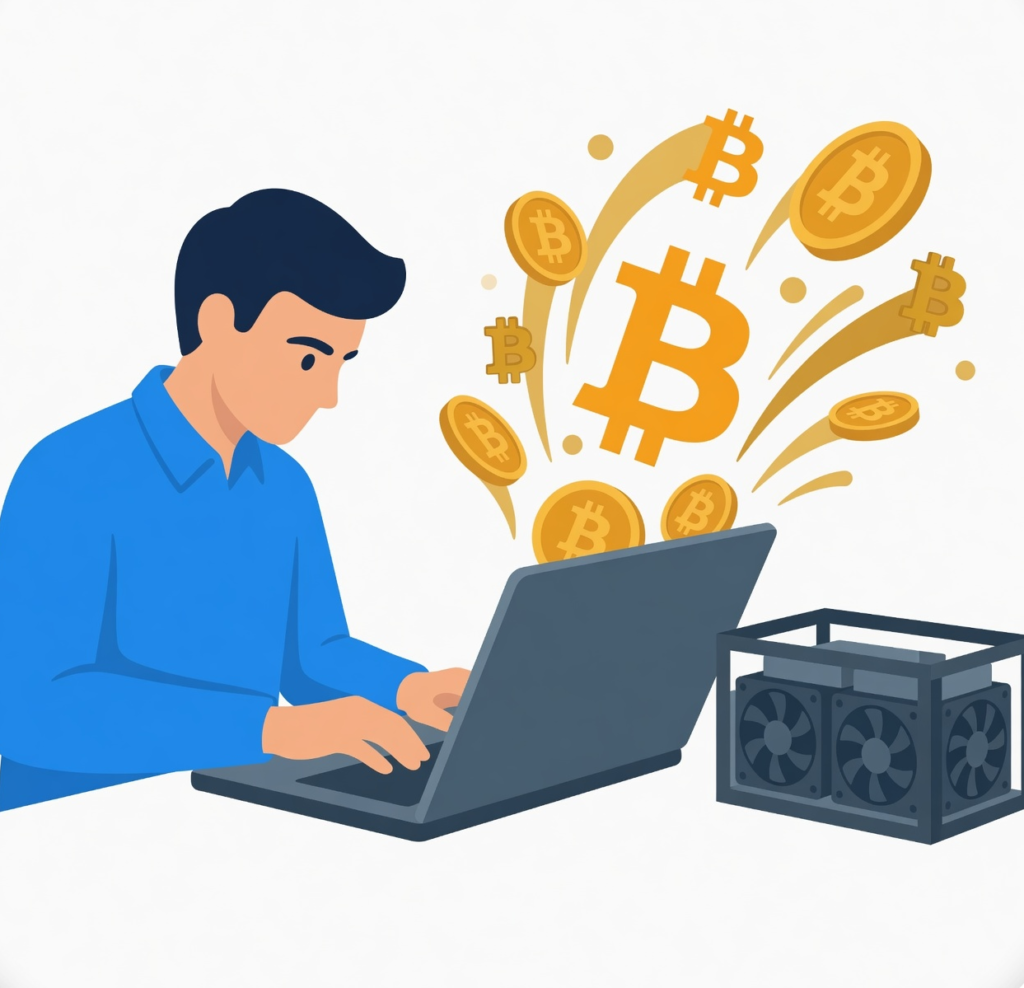
To understand what happens when all Bitcoins are mined, we first need to understand how new Bitcoins enter circulation today. Bitcoin relies on a consensus mechanism called Proof of Work (PoW). Under this system, specialized computers known as miners compete to solve complex mathematical puzzles.
When a miner successfully solves a puzzle, they gain the right to verify a new “block” of transactions and add it to the public blockchain ledger. In exchange for their computational work and energy usage, miners receive two distinct types of financial compensation:
- Block Rewards: Newly minted Bitcoins created by the protocol for every valid block added to the chain.
- Transaction Fees: Small fees paid by users who want their transactions processed and included in the block.
When Bitcoin launched in 2009, the block reward was 50 BTC per block. However, Bitcoin creator Satoshi Nakamoto designed a built-in mechanism to control inflation and gradually slow down the supply of new coins over time. This mechanism is known as the Bitcoin Halving.
What Is the Bitcoin Halving Schedule?
Every 210,000 blocks—which takes approximately four years—the reward given to miners for adding a new block is cut in half. This halving event reduces the rate at which new Bitcoin is created until the final limit is reached.
Here is a brief look at how block rewards have decreased over time:
- 2009: 50.0 BTC per block
- 2012: 25.0 BTC per block
- 2016: 12.5 BTC per block
- 2020: 6.25 BTC per block
- 2024: 3.125 BTC per block
Because of this geometric reduction, over 93% of all Bitcoins have already been mined. However, because the supply curve flattens so dramatically, the remaining Bitcoins will take more than a century to mine completely. Experts estimate that the final fraction of a Bitcoin will be mined around the year 2140.
The Transition from Block Rewards to Transaction Fees
When the 21 millionth Bitcoin is mined, the block reward will permanently drop to zero. No new Bitcoins will ever be created again. However, this does not mean that mining will stop or that the network will shut down.
Instead, the economic engine driving Bitcoin will undergo a permanent shift. Miners will no longer rely on new coin issuance for income. Instead, 100% of their revenue will come from transaction fees paid by individuals and businesses sending funds across the network.
Satoshi Nakamoto anticipated this transition from the very beginning. In the original Bitcoin whitepaper, Nakamoto noted that once a predetermined number of coins enter circulation, the incentive can transition entirely to transaction fees, allowing the network to remain completely self-sustaining.
How Transaction Fees Will Keep the Network Alive
For transaction fees to sufficiently compensate miners after 2140, two main factors must align:
- Higher Transaction Volume: Millions of daily transactions generated globally by individuals, corporations, and layer-2 solutions.
- Increased Bitcoin Valuation: If Bitcoin continues to gain global adoption as a store of value, even small fractional transaction fees paid in satoshis (the smallest unit of Bitcoin) could hold substantial purchasing power.
Miners will continue verifying transactions, organizing them into blocks, and securing the network ledger just as they do today. The only difference is that the compensation pool will consist exclusively of user fees rather than newly created coins.
Will Bitcoin Mining Remain Profitable After 2140?
One of the biggest concerns surrounding the final Bitcoin release is whether mining will remain profitable. If mining becomes unprofitable, miners might turn off their hardware. A drop in active miners could make the network less decentralized and more vulnerable to cyberattacks.
While this concern is valid, several market forces and technological innovations are expected to balance miner profitability over time.
1. Dynamic Difficulty Adjustments
Bitcoin features an automatic self-correcting feature known as the difficulty adjustment. Every 2,016 blocks (roughly every two weeks), the network evaluates how quickly blocks are being mined.
If miners leave the network because costs exceed revenue, the mining difficulty automatically decreases. This makes it easier and less expensive for the remaining miners to process blocks, restoring profitability for those who stay online. The system naturally reaches an economic equilibrium where efficient miners survive.
2. Advances in Mining Hardware and Energy Efficiency
Over the next century, computer hardware and energy capture technologies will evolve significantly. Quantum computing advancements, hyper-efficient ASIC chip designs, and access to ultra-cheap renewable energy (such as stranded natural gas, geothermal power, and solar surpluses) will dramatically lower operational expenditures for miners.
3. High-Value Block Space Demand
As global adoption grows, the space inside a Bitcoin block becomes increasingly valuable real estate. Financial institutions, central banks, and large corporations settling multi-million dollar balances will be willing to pay higher settlement fees to guarantee fast, secure inclusion in the base blockchain layer.
The Role of Layer-2 Protocols: Lightning Network and Beyond
If on-chain base layer transaction fees become expensive to sustain miner operations, how will regular users buy everyday items like coffee or groceries with Bitcoin?
The answer lies in Layer-2 scaling solutions. Layer-2 networks process transactions off the main Bitcoin blockchain, providing fast speeds and negligible costs while maintaining the security of the underlying network.
The Lightning Network
The Lightning Network allows users to open payment channels with one another and execute millions of instant microtransactions off-chain. Only when the channel is opened or closed is a final settlement transaction written to the main Bitcoin blockchain.
In a post-2140 world, the Bitcoin ecosystem is expected to operate in a dual-tier structure:
- Layer 1 (The Main Blockchain): Functions as a high-security settlement network for high-value transactions, institutional transfers, and Layer-2 channel settlements. These entities pay premium fees to miners.
- Layer 2 (Scaling Protocols): Functions as the everyday medium of exchange for retail consumer purchases, micro-payments, and high-frequency transactions.
This layered architecture ensures that miners earn sufficient fees from large settlement blocks while everyday consumers continue to enjoy fast, low-cost digital payments.
What Happens to Bitcoin Price When the Last Coin Is Mined?

While no one can predict future market movements with certainty, economic principles offer strong insights into how absolute supply caps impact value.
Traditional fiat currencies suffer from steady inflation because governments continuously print more money, diluting purchasing power over time. Bitcoin, by contrast, is absolute digital scarcity.
Scarcity and Supply Shock
When all 21 million Bitcoins are mined, the annual supply issuance rate drops to zero percent. If global demand for digital scarcity, financial sovereignty, and a borderless store of value continues to rise—or even remains stable—an absolute freeze on supply creates strong upward pressure on long-term valuation.
Furthermore, Bitcoin is naturally deflationary in another unique way: lost coins. Throughout Bitcoin’s history, millions of coins have been permanently lost due to forgotten private keys, damaged hard drives, or sending funds to dead addresses.
Once supply creation stops entirely, lost Bitcoins will never be replaced, meaning the active circulating supply will gradually decrease over time, making existing coins even rarer.
Key Security Considerations for a Post-Reward Blockchain
Network security is paramount to Bitcoin’s success. Without block rewards, security depends entirely on maintaining a high hash rate (total computing power dedicated to securing the network).
A high hash rate makes it virtually impossible for malicious actors to pull off a 51% attack—an attack where an entity controls more than half of the network’s computing power to reverse transactions or double-spend coins.
To preserve robust security in a transaction fee-only regime, the total fee value in each block must remain high enough to justify the electricity and hardware expenditure required by honest miners. If fees remain strong, security remains rock-solid.
Because block rewards decline gradually over 140 years rather than dropping off a cliff overnight, the network has plenty of time to adapt, optimize, and scale transaction fee models naturally.
Comparing Bitcoin to Traditional Monetary Systems
To truly appreciate the significance of the 21 million cap, it helps to compare Bitcoin with traditional financial systems and physical assets like gold.
| Feature | Fiat Currency (USD, EUR, etc.) | Physical Gold | Bitcoin (BTC) |
|---|---|---|---|
| Total Supply Limit | Unlimited (Subject to central bank printing) | Unknown (Limited by Earth’s crust & space mining) | Fixed at 21,000,000 BTC |
| Issuance Control | Centralized government authority | Physical mining difficulty & resource discovery | Decentralized algorithmic code |
| Divisibility | 100 cents per unit | Difficult to divide into small physical amounts | 100,000,000 satoshis per 1 BTC |
| Portability | High digitally, low physically in bulk | Low (Heavy and expensive to store/transport) | Instant global transfer via digital networks |
| Predictability | Unpredictable long-term inflation rates | ~1.5% to 2% annual supply growth | 100% predictable supply curve until 2140 |
What to Expect as We Approach 2140
The journey toward the final Bitcoin is a multi-generational process. Here is a brief recap of what to expect as the network approaches its supply limit:
- Gradual Shift: The transition from block rewards to transaction fee reliance is already happening slowly with every four-year halving.
- Miner Sustainability: Miners will increasingly rely on transaction fees, energy efficiency, and institutional settlement fees to maintain profitability.
- Layer-2 Dominance: High base-layer security will turn the main blockchain into a settlement layer, while everyday payments move to fast Layer-2 networks like Lightning.
- Absolute Scarcity: Once 21 million coins are reached, zero new Bitcoin will ever enter the market, cementing its role as a hard digital asset.
The 21 million cap is not a flaw or a ticking clock; it is Bitcoin’s core feature. By relying on open-source code, game theory, and economic incentives, Bitcoin is built to survive long after the last block reward is issued, standing as a self-sustaining financial network for generations to come.