How to Build a Cryptocurrency Portfolio With R$10,000

Entering the digital asset market with a solid pool of capital is an exciting milestone. If you have set aside $10,000 to jump into the world of decentralized finance and blockchain technology, you are standing at a unique intersection of opportunity and risk. Unlike trading with spare pocket change, managing a five-figure sum requires discipline, structure, and a clear architectural plan.
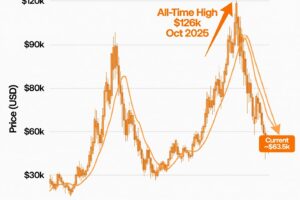
The digital asset ecosystem has evolved far beyond a speculative playground. Today, it represents a multi-trillion-dollar asset class characterized by institutional adoption, advanced layer-one networks, and structured financial instruments. However, high volatility remains the signature trait of cryptocurrencies. Without a thoughtful allocation strategy, even a well-intentioned investor can succumb to emotional decision-making during market corrections.
This comprehensive guide breaks down how to strategically deploy a $10,000 capital amount, manage risk parameters, select proven digital currencies, and maintain a resilient long-term portfolio tailored for everyday investors.
Understanding Asset Allocation and Risk Management for Beginners

Before purchasing a single digital coin, you must master the fundamental rule of modern portfolio theory: asset allocation dictates long-term performance and survival far more than individual asset selection. In the cryptocurrency sector, diversification is not merely about owning twenty different coins; it is about dividing your capital into distinct functional tiers based on risk tolerance.
When building a portfolio from scratch, think in terms of maximum downside protection rather than chasing overnight astronomical gains. A balanced approach typically categorizes investments into core foundational holdings, growth-oriented protocols, and a safety liquidity buffer.
- Capital Preservation: Never allocate funds that you might need for short-term living expenses or emergency situations within the next 24 to 36 months.
- Avoiding Over-Diversification: Spreading $10,000 across fifty obscure altcoins creates a cluttered management nightmare and dilutes potential gains while compounding exposure to worthless projects. Stick to a curated selection of 4 to 6 robust assets.
- Core-Satellite Framework: Designate a heavy percentage of your funds to market leaders that anchor your portfolio value, while allocating a smaller fraction to high-growth sectors for outsized performance potential.
Establishing Your Foundation With Large-Cap Cryptocurrencies
Every durable financial structure requires a heavy, reliable base. In the cryptocurrency economy, large-cap assets serve as the foundational bedrock. Market data consistently shows that mature digital assets experience lower relative drawdowns during systemic market stress compared to micro-cap tokens.
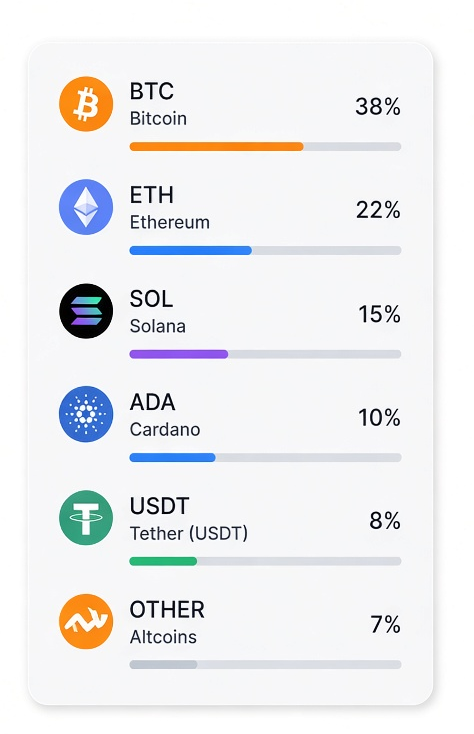
Bitcoin (BTC) stands globally recognized as the premier digital store of value, often likened to digital gold. Boasting a dominant market capitalization that frequently commands over 50% of the total crypto market share, Bitcoin acts as the primary macroeconomic barometer for the entire industry. For a $10,000 portfolio, allocating a major portion—roughly 50% to 60%, or $5,000 to $6,000—to Bitcoin establishes a safe defensive posture.
Ethereum (ETH) functions as the world’s leading programmable blockchain, powering decentralized applications, smart contracts, and decentralized finance (DeFi) ecosystems. Ethereum represents the economic settlement layer for thousands of applications and web3 protocols. Dedicating 20% to 25% of your capital—around $2,000 to $2,500—to Ethereum introduces vital utility exposure and smart-contract diversification.
Combined, these two industry titans should consume approximately 70% to 80% of your total $10,000 budget. This heavy weighting minimizes emotional stress and ensures your portfolio tracks the macro maturation of blockchain technology rather than relying on short-lived speculative trends.
Incorporating Growth Assets and Layer-One Smart Contract Platforms
Once your foundational core is locked in place, you can look toward high-performance alternative layer-one blockchains and web3 infrastructure providers that offer dynamic ecosystem growth. These assets carry higher volatility than Bitcoin or Ethereum, but they also introduce opportunities for capital appreciation driven by developer activity and user adoption.
Solana (SOL) has established itself as a dominant high-throughput smart contract platform optimized for speed and low transaction fees. Processing thousands of transactions per second with sub-second finality, Solana captures significant market share in decentralized trading, consumer applications, and digital collectibles. Allocating roughly 10% ($1,000) of your portfolio to a high-performance chain like Solana bridges the gap between safety and aggressive growth.
Another vital sector is decentralized utility and data oracle infrastructure, represented by networks like Chainlink (LINK). Chainlink provides secure middleware that connects blockchain smart contracts with real-world data feeds, institutional banking systems, and cross-chain communication protocols. Dedicating 5% ($500) to cross-chain infrastructure projects rounds out your growth exposure by backing the plumbing that makes modern decentralized applications functional across multiple networks.
Utilizing Stablecoins and Cash Reserves for Strategic Opportunities
A common mistake made by novice investors is deploying 100% of their capital immediately on a single day. Markets move in cycles, and sharp corrections or sudden liquidations happen frequently. Having dry powder in reserve is one of the most powerful tactical advantages an investor can hold.
Stablecoins—digital currencies pegged directly to the value of the United States Dollar, such as USD Coin (USDC) or Tether (USDT)—allow you to hold cash equivalents natively on-chain without converting back to traditional fiat bank accounts.
- The Liquidity Buffer: Keep about 5% to 10% of your total portfolio ($500 to $1,000) in stablecoins.
- Capitalizing on Dips: When broader market panics cause temporary double-digit price drops across major assets, your stablecoin reserve enables you to scoop up high-quality assets at a discount without needing to inject fresh external funds.
- Yield Generation Opportunities: Stablecoins can often be utilized within secure, over-collateralized lending protocols to earn modest passive yields while waiting for optimal deployment windows.
Executing Your Strategy Through Dollar-Cost Averaging (DCA)
How you enter the market matters just as much as what you buy. Investing the entire $10,000 lump sum on a random Tuesday exposes you entirely to short-term price fluctuations. If the market dips sharply the following day, psychological pressure can lead to panic selling.
To mitigate this behavioral risk, professional investors frequently employ Dollar-Cost Averaging (DCA). Instead of executing a single order, you divide your deployment schedule into predictable increments.
For example, you can split your $10,000 capital into four equal tranches of $2,500 deployed once a month over four months, or break it down into ten weekly installments of $1,000. This method automatically purchases more units when prices are low and fewer units when prices are high, smoothing out your average entry cost and protecting your emotional well-being against short-term market noise.
Implementing Portfolio Rebalancing and Long-Term Maintenance
Building a crypto portfolio is not a “set-and-forget” exercise. As market prices fluctuate independently, your carefully planned allocations will drift. If Solana or Ethereum rallies aggressively while Bitcoin moves sideways, your growth assets will suddenly represent a much larger percentage of your portfolio than originally intended, shifting your overall risk profile upward.
To maintain discipline, establish a systematic rebalancing routine. Many disciplined investors choose a calendar-based approach—such as reviewing and adjusting asset weights on a quarterly basis—or trigger rebalancing whenever an asset class drifts more than 10% away from its target allocation. Rebalancing forces you to systematically take profits on outperforming assets and re-allocate capital back into underperforming or foundational holdings, enforcing the timeless investing adage of buying low and selling high.
By adhering to a structured asset breakdown, prioritizing heavy allocations in established blue-chip networks, maintaining a cash buffer, and automating your market entries, your $10,000 portfolio will be positioned for sustainable, long-term growth within the digital asset economy.