What Is a Romance Scam and How Does It Work?

Romance scams have evolved into one of the most financially and emotionally devastating forms of cybercrime worldwide. Every year, thousands of individuals searching for love, companionship, or meaningful connections end up targeted by manipulative fraudsters. Understanding how these scams operate, recognizing the psychological tactics behind them, and knowing how to protect yourself are essential steps in staying safe online.
What Is a Romance Scam? Understanding the Basics of Online Dating Fraud

A romance scam occurs when a cybercriminal creates a fake online profile to build trust, affection, and a romantic relationship with a victim. Once trust is firmly established, the scammer manipulates the victim into sending money, sharing personal sensitive data, or performing financial favors under false pretenses.
Unlike traditional fraud schemes that rely on immediate technical exploits or malware, romance scams rely heavily on social engineering. Fraudsters invest significant time—often weeks or months—building what feels like a genuine, deep connection. They capitalize on emotional vulnerability, loneliness, and the natural human desire for affection.
Romance scams can happen anywhere people interact online. While dating platforms like Tinder, Bumble, Hinge, and Match.com are common hunting grounds, scammers also frequent social media networks such as Instagram, Facebook, TikTok, and direct messaging apps like WhatsApp or Telegram.
How Does a Romance Scam Work? Step-by-Step Anatomy of a Love Scam
Although individual scam scripts vary, almost all romance scams follow a predictable multi-stage pattern designed to lower your defenses and isolate you from critical thinking.
1. Profile Creation and Targeting
Scammers meticulously construct convincing fake personas, often stealing real photos from military personnel, high-profile executives, offshore workers, doctors, or fashion models. They write engaging bio descriptions tailored to attract specific demographics, frequently targeting widowed, divorced, or older individuals who may be seeking companionship.
2. The Initial Contact and Love Bombing
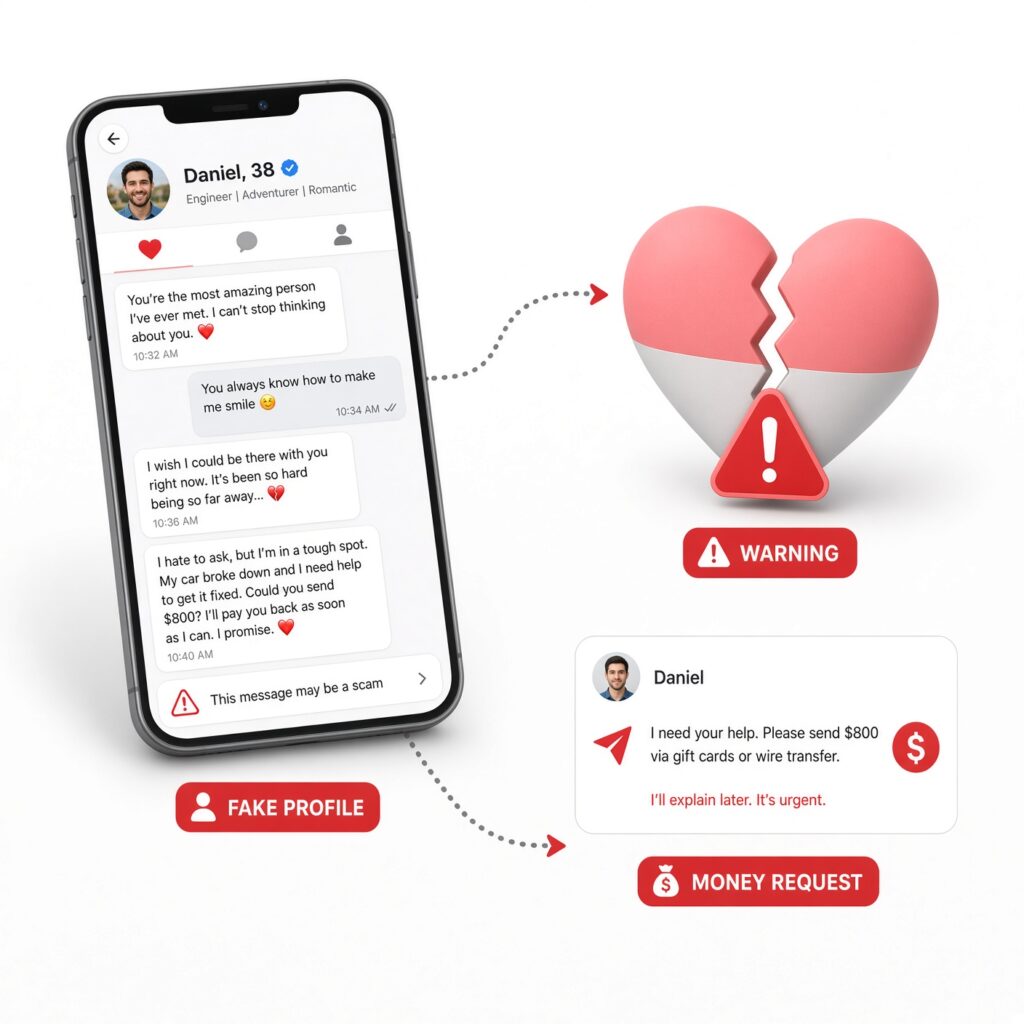
After initiating contact, the scammer moves quickly to build intense intimacy—a tactic known as “love bombing.” They shower the victim with compliments, declarations of deep affection, promises of a long-term future, and constant messaging. This rapid escalation creates a strong psychological bond before the victim has time to verify the person’s identity.
3. Moving Communication Off-Platform
Early in the conversation, the scammer will request to move the chat off the original dating site or app to private messaging channels like WhatsApp, Google Chat, or encrypted apps. This strategy serves two main purposes: it prevents dating app safety moderation algorithms from detecting fraud, and it isolates the victim in a more personal environment.
4. Crafting the Excuse for Never Meeting in Person
A central feature of any romance scam is the inability to meet face-to-face or participate in video calls. Scammers always have a plausible excuse ready. Common cover stories include working on an offshore oil rig, serving on an overseas military deployment, working as a doctor for an international relief organization, or traveling constantly for high-stakes business deals. Technical issues like a broken camera or poor network connection are frequently cited during video call requests.
5. The First Financial Request
Once emotional dependency is established, the scammer presents a sudden emergency or financial hardship. The initial request is often modest to test the victim’s willingness to help. Examples include money for a sudden medical bill, travel visas, plane tickets to visit the victim, custom duties on a sent package, or emergency phone credit.
6. Escalation and Financial Extraction
If the first payment succeeds, the requests escalate in frequency and size. New emergencies inevitably arise: legal troubles, detained shipments, frozen bank accounts, or lucrative investment opportunities. The scammer promises repayment once their situation normalizes, keeping the victim trapped in a cycle of hope and financial commitment.
Common Types of Romance Scams to Watch Out For
Cybercriminals continuously refine their tactics. Here are the most prominent variations of romance scams operating online today:
- The Emergency Crisis Scam: The scammer claims to be stuck in a foreign country, facing sudden medical emergencies, arrest, or customs fees, urgently needing funds transferred via wire transfer, gift cards, or cryptocurrency.
- The Pig Butchering Scam (Sha Zhu Pan): Originating in Southeast Asia, this hybrid scheme combines romance with fraudulent investment opportunities. Scammers build a romantic connection and then convince victims to invest in fake cryptocurrency or forex trading platforms, showing artificially inflated profits before stealing the entire balance.
- The Military Romance Scam: Fraudsters impersonate active-duty military members deployed overseas, claiming they need money for communication fees, leave paperwork, or medical care not covered by military benefits.
- The Inheritance or Business Package Scam: The perpetrator claims to have valuable gold, inheritance funds, or a box of cash stuck at customs or held by a legal courier, asking the victim to pay processing fees to release the assets.
- The Money Mule Scheme: Instead of asking for the victim’s money, the scammer asks the victim to receive money into their bank account and transfer it elsewhere. Unbeknownst to the victim, they are laundering money from other crime operations.
Psychological Manipulations Used by Romance Scammers
Understanding why intelligent people fall for romance scams requires looking at the psychological mechanisms scammers exploit:
- Isolation Tactics: Scammers encourage victims to keep the relationship secret from friends and family, framing outside opinions as threats to their romance.
- Sunk Cost Fallacy: Once a victim has invested emotional energy and money, they feel compelled to keep sending funds in hopes that the relationship is real and their money will be returned.
- Sense of Urgency: Emergencies are always framed as immediate life-or-death situations, creating anxiety that pressures the victim into acting quickly without consulting others.
- Mirroring: Fraudsters carefully study a target’s social media posts and profile to mirror their beliefs, interests, values, and relationship goals, creating the illusion of a perfect soulmate.
Red Flags: How to Spot a Romance Scammer Online
Recognizing the warning signs early can save you from severe financial and emotional distress. Look out for these major red flags:
- Instant Affection: The person professes deep love, affection, or plans for marriage within days or weeks of talking.
- Strict Avoidance of Video Calls: They refuse to go on video calls, cancel live video chats at the last minute, or display frozen, blurry video feeds during brief calls.
- Requests for Non-Traceable Payment Methods: They ask for funds sent via wire transfers (Western Union, MoneyGram), cryptocurrency (Bitcoin, Ethereum), prepaid gift cards (Apple, Google Play, Steam), or peer-to-peer payment apps (Zelle, Cash App, Venmo).
- Inconsistent Stories: Their background stories, location details, or personal facts contain subtle contradictions or grammar patterns inconsistent with their stated origin.
- Reluctance to Meet: Plans to meet in person are repeatedly delayed or cancelled at the last minute due to unforeseen crises.
Step-by-Step Guide: What to Do If You Suspect a Romance Scam
If you suspect that someone you are communicating with online is a romance scammer, follow these practical steps immediately:
1. Stop All Communication Immediately
Cut off all contact across all platforms. Do not confront the scammer, as they are trained manipulators who will attempt to play on your guilt, offer elaborate excuses, or issue threats to regain control over you.
2. Perform a Reverse Image Search
Save their profile pictures and run them through reverse image search tools such as Google Images, TinEye, or Yandex. If the photos belong to a public figure, model, or another individual’s social media profile, you are dealing with a fraudster.
3. Secure Your Financial Accounts
If you shared banking details, credit card numbers, or login credentials, contact your financial institutions immediately to freeze compromised accounts, cancel cards, and issue new security credentials.
4. Document Everything
Keep comprehensive records of all interactions. Take screenshots of profile pages, chat conversations, email exchanges, payment receipts, phone numbers, and bank account numbers provided by the scammer.
5. Report the Fraudster to Platforms and Authorities
Reporting helps protect other users and assists law enforcement in tracking down organized fraud networks. Submit reports to:
- The Dating App or Social Platform: Use the built-in report feature to flag the fraudulent profile for removal.
- Internet Crime Complaint Center (IC3): File a detailed report at ic3.gov (for US-based or international cases involving US infrastructure).
- Federal Trade Commission (FTC): Report the scam at reportfraud.ftc.gov.
- Local Law Enforcement: File a police report with your local precinct, providing copies of your documented evidence.
How to Protect Yourself and Stay Safe in Online Dating
Online dating can be a safe and rewarding experience when approached with healthy skepticism and clear boundaries. Implement these safety practices whenever connecting with new people online:
| Safety Rule | Best Practice | Why It Matters |
|---|---|---|
| Keep Chat on Platform | Communicate inside verified dating app chats until meeting in person. | Dating platforms use automated detection tools to flag scammers. |
| Never Send Money | Never transfer funds, buy gift cards, or share financial details with online matches. | Legitimate online matches will never demand financial assistance from a match. |
| Verify via Video Call | Insist on a real-time video chat early in the relationship. | Confirms that the person matches their profile pictures in real time. |
| Protect Personal Info | Avoid sharing home address, workplace, SSN, or sensitive personal details. | Prevents identity theft, harassment, and targeted social engineering attacks. |
Rebuilding Confidence and Overcoming the Emotional Impact
Falling victim to a romance scam is not a reflection of intelligence or character; it is the result of deliberate psychological manipulation by experienced criminal organizations. Victims often experience deep shame, grief, anxiety, and embarrassment, which can prevent them from seeking help or reporting the crime.
If you or someone you know has experienced a romance scam, reaching out to trusted friends, family members, or mental health professionals is a crucial step toward recovery. Joining online fraud victim support groups can also provide a safe space to process feelings without judgment and connect with others who have gone through similar experiences.
By staying informed, maintaining strict privacy boundaries, and recognizing the tactics used by fraudsters, you can confidently navigate online dating and protect your finances, emotional well-being, and personal identity.