What Is a VPN and Does It Really Protect Your Privacy?

In today’s hyper-connected digital age, online privacy feels more like an illusion than a given. Every time you load a webpage, check your email, or scroll through social media, a trail of data is left behind. Because of this growing unease, Virtual Private Networks (VPNs) have exploded in popularity. Marketed heavily as digital invisibility cloaks, they promise to shield your identity, keep hackers at bay, and grant total online anonymity.
But do VPNs actually live up to the marketing hype? To understand what a VPN can and cannot do, we have to look past the catchphrases and explore how the technology actually works under the hood.
Understanding the Basics: What Exactly Is a VPN?
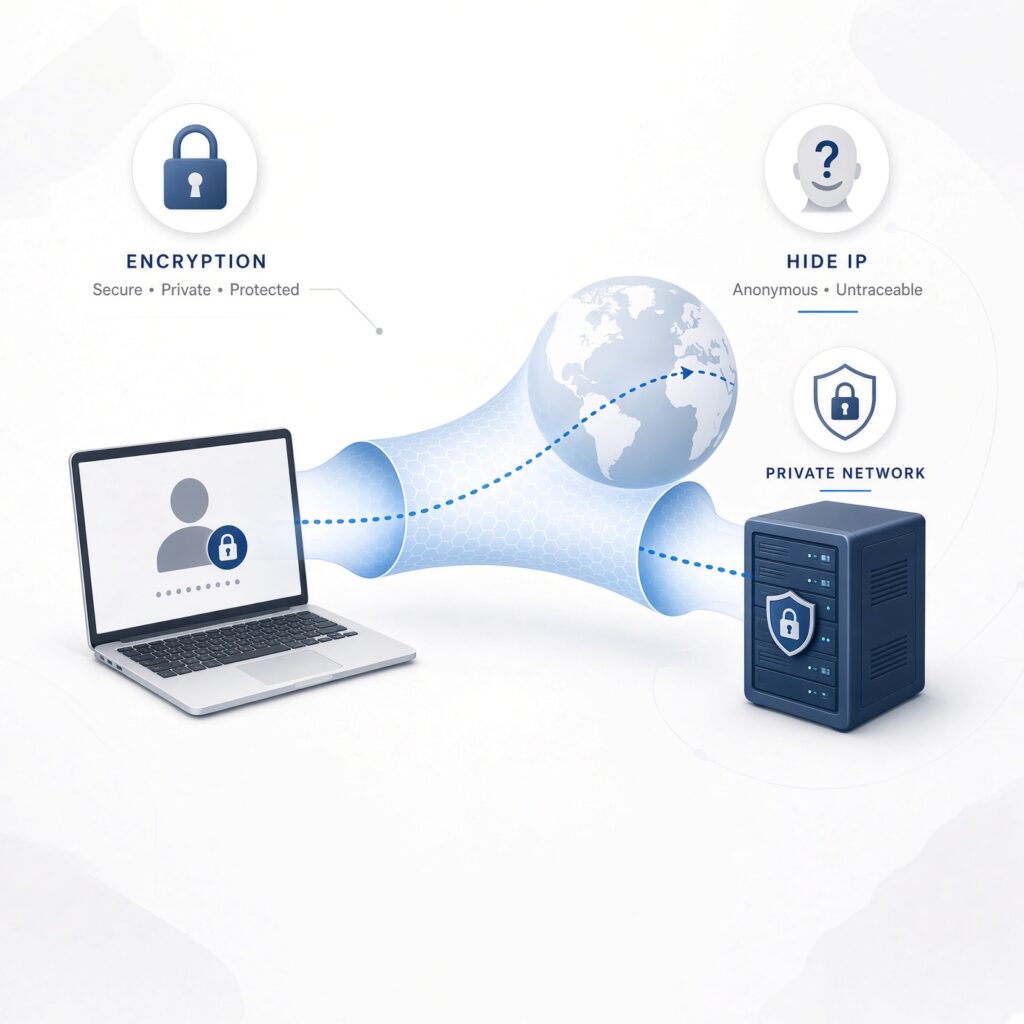
To grasp how a VPN protects you, it helps to look at how regular internet browsing works. Normally, when you visit a website, your device connects directly to your Internet Service Provider (ISP). Your ISP routes your request to the website’s server, which then sends the data back. Along that journey, your real IP address—which reveals your approximate geographic location and network identity—is visible to everyone from your ISP to the website operator.
A VPN acts as an intermediary. VPN stands for Virtual Private Network, and it creates a secure, encrypted “tunnel” between your device and a remote server operated by the VPN provider.
- The Encryption Tunnel: Before your data leaves your device, the VPN wraps it in layers of advanced encryption.
- The Handoff: Your data travels through this tunnel to the VPN server. To your ISP, it only looks like scrambled data going to a single destination (the VPN server).
- The Destination: Once the data reaches the VPN server, it is unencrypted and sent out onto the open internet. To the website you are visiting, the request appears to come from the VPN server’s IP address, not yours.
How a VPN Actually Enhances Your Digital Privacy
While a VPN is not a magic shield against every online threat, it offers several genuine security and privacy benefits that make it an essential tool for modern internet users.
1. Shielding Your Activity from Internet Service Providers (ISPs)
In many regions, ISPs have broad legal allowances to track and log your browsing metadata, and in some cases, aggregate and monetize anonymized customer data. When you use a reputable VPN, your ISP is effectively blinded. They can see that you are connected to a VPN server, but they completely lose visibility over which websites you visit, what files you download, or what searches you type.
2. Securing Your Connection on Public Wi-Fi Networks
We have all logged onto public Wi-Fi at coffee shops, airports, hotels, or libraries. These networks are frequently unencrypted, meaning malicious actors on the same network can intercept data packets passing through the air. A VPN encrypts your traffic right at your device, rendering intercepted data completely unreadable to anyone lurking on that public hotspot.
3. Masking Your IP Address and Location
Your IP address acts like a digital return address, exposing your country, city, and ISP. By routing your traffic through a VPN server in a different city or country, you effectively mask your true location. This prevents location-based tracking by advertisers, third-party data brokers, and websites looking to pigeonhole your browsing habits.
Common VPN Myths vs. Reality: What It Cannot Do
As helpful as VPNs are, misunderstanding their capabilities can lead to a false sense of security. Let’s clear up some of the most common misconceptions.
- Myth: A VPN makes you completely anonymous online.
Reality: A VPN improves privacy by hiding your IP address and encrypting your traffic, but it does not erase your identity. If you log into your personal Google, Amazon, or social media accounts while using a VPN, those platforms instantly know who you are. - Myth: A VPN protects your device from viruses and malware.
Reality: A VPN protects your data in transit, not your actual device. If you download a malicious file or click on a phishing link, a VPN will not stop the infection. Good cyber hygiene and traditional antivirus software are still mandatory. - Myth: All VPNs keep your data entirely private.
Reality: Because your traffic passes through the VPN provider’s servers, the provider could technically see your activity if they wanted to. This is why choosing a trustworthy provider with an independently audited no-logs policy is critical. If a provider doesn’t log your data, they have nothing to hand over if pressured by third parties.
Beyond IP Masking: Advanced Privacy Technologies
If you want to build a truly robust digital defense, a VPN is just one piece of the puzzle. Modern online tracking relies heavily on techniques that go far beyond simple IP addresses.
Understanding Browser Fingerprinting
Even if you mask your IP address with a VPN, websites and advertisers can still track you using a technique called browser fingerprinting. This method gathers data about your device setup—such as your screen resolution, operating system, installed fonts, audio drivers, and browser extensions. Combined, these details create a unique “fingerprint” that can identify your browser across the web.
To combat this, privacy-conscious users often pair a VPN with supplementary tools, such as:
- Privacy-focused browsers or extension blockers (like uBlock Origin or Privacy Badger) that block trackers and script execution.
- Modern VPN protocols like WireGuard, which offer fast connection speeds and lean codebases that reduce latency overhead.
- A built-in kill switch, an essential safety feature that instantly cuts off your internet connection if the VPN drops unexpectedly, preventing unencrypted data leaks.
Free vs. Paid VPNs: The Hidden Costs of “Free”

When searching for a VPN, you will encounter numerous free options. However, running a secure, high-speed global network of servers requires immense financial investment in hardware, bandwidth, and maintenance.
- The Problem with Free: If you aren’t paying for a product, you are the product. Many free VPN services monetize their user base by logging browsing behavior and selling that data to advertising agencies, or by injecting ads directly into your web traffic. Some free apps have even been found to contain malicious trackers or poor security architecture.
- The Value of Paid: Premium, reputable VPN services generally cost a few dollars a month. That subscription fee funds strict no-logs policies, high-speed servers across dozens of countries, independent security audits, and dedicated customer support—ensuring your privacy is actually being protected rather than exploited.
The Verdict: Do You Really Need a VPN?
So, does a VPN really protect your privacy? Yes, but within specific boundaries.
A VPN is not a magic cloak that makes you a ghost on the internet. It won’t protect you from poor password habits, phishing scams, or the data you willingly hand over to social media giants. However, it is an exceptionally powerful tool for securing your connection on public Wi-Fi, blocking your ISP from snooping on your habits, and reclaiming control over your digital footprint.
When combined with smart browsing habits, strong passwords, and tracker-blocking extensions, a quality VPN fills a vital role in any modern online safety toolkit.