What Is Cboe Global Markets and How Does It Work?

Financial markets rely on robust infrastructure to ensure liquidity, transparency, and efficient price discovery. At the heart of global capital markets stands Cboe Global Markets, one of the world’s largest exchange holding companies. Originally founded as a specialized market for options trading, Cboe has expanded into a global network facilitating transactions across multiple asset classes, including equities, derivatives, foreign exchange, and market data solutions.
Understanding how Cboe Global Markets operates provides valuable insight into modern trading, risk management, and the financial architecture that supports individual and institutional investors worldwide.
What Is Cboe Global Markets?
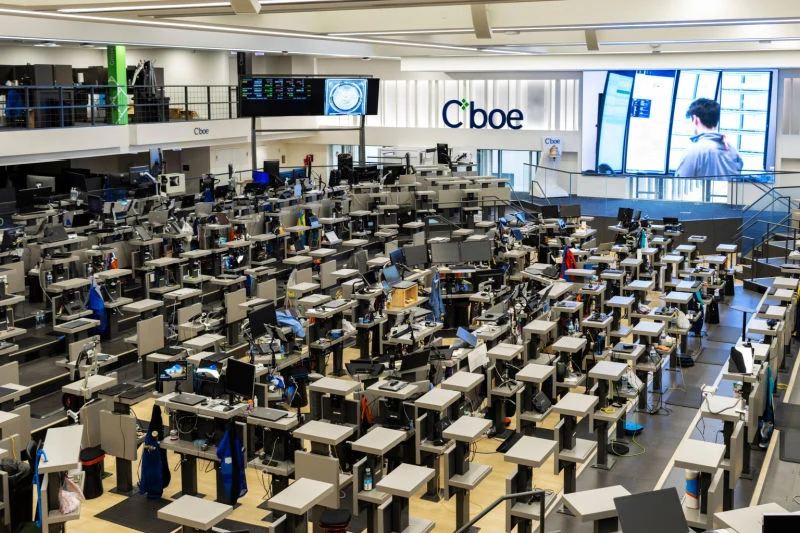
Cboe Global Markets, Inc. is a leading provider of market infrastructure and tradable financial products. The acronym “Cboe” originally stood for the Chicago Board Options Exchange, which was founded in 1973 as the first exchange to trade standardized stock options.
Over the decades, through internal development and strategic acquisitions—such as the purchase of Bats Global Markets—the company transformed into a multi-asset global exchange operator. Today, Cboe operates venues across North America, Europe, and the Asia-Pacific region. It provides trading capabilities in equities, index options, futures contracts, foreign exchange (FX), and digital assets, alongside analytics and clearing services.
The Origin and Evolution of Cboe
To understand Cboe’s role in modern finance, it helps to examine its evolutionary timeline:
- 1973: The Chicago Board Options Exchange opens on April 26, creating the world’s first standardized exchange-listed stock options market.
- 1983: Cboe introduces index options, allowing market participants to trade contracts based on broad stock market benchmarks like the S&P 500 Index (SPX).
- 1993: The exchange creates the Cboe Volatility Index (VIX), an benchmark designed to measure expected market volatility.
- 2004: The Cboe Futures Exchange (CFE) launches to facilitate trading in VIX futures.
- 2017: The acquisition of Bats Global Markets rebrands the unified entity as Cboe Global Markets, expanding its footprints into U.S. and European equities and FX.
- 2020 and Beyond: Cboe expands its global presence by acquiring MATCHNow in Canada, Chi-X Asia Pacific, and establishing clearinghouses like Cboe Clear Europe.
Core Asset Classes and Markets Operated by Cboe
Cboe Global Markets operates a diverse portfolio of trading venues tailored to different financial instruments:
1. Options Markets
Options remain Cboe’s foundational strength. The company operates multiple U.S. options exchanges—including Cboe Options, C2 Options, Cboe BZX Options, and Cboe EDGX Options. These platforms offer options on individual equities, exchange-traded funds (ETFs), and proprietary indexes like the S&P 500 Index (SPX) and the Cboe Volatility Index (VIX).
2. Cash Equities
Cboe is one of the largest stock market operators in the world. In the United States, it manages four primary equity exchanges: BZX, BYX, EDGA, and EDGX. It also holds dominant market share in European equity trading and operates active venues in Canada and Australia.
3. Futures Contracts
Through the Cboe Futures Exchange (CFE), traders access exchange-traded futures products focused primarily on volatility indices (such as VIX futures) and corporate bond indices.
4. Foreign Exchange (FX)
Cboe FX provides an institutional spot foreign exchange platform, offering transparent execution and deep liquidity for global currencies.
5. Market Data and Analytics
Cboe delivers real-time and historical market data, execution management technologies, risk analytics, and index calculation services to retail brokers, institutional investment firms, and market makers worldwide.
How Cboe Works: Infrastructure, Execution, and Technology
The mechanics of Cboe rely on a combination of electronic matching engines, specialized trading floors, clearing organizations, and market data routing.
       [ Investor / Trader ]
                 │
                 ▼
       [ Order Placement via Broker ]
                 │
                 ▼
    ┌─────────────────────────┐
    │  Cboe Matching Engine   │
    │ (Proprietary Technology)│
    └────────────┬────────────┘
                 │
        ┌────────┴────────┐
        ▼                 ▼
 [Electronic Order]   [Hybrid Open Outcry Floor]
        │                 │
        └────────┬────────┘
                 │
                 ▼
   [ Clearing & Settlement ]
    (Options Clearing Corp / Cboe Clear)
High-Speed Electronic Matching Engines
At the core of Cboe’s infrastructure is its low-latency technology platform. When an investor submits a buy or sell order through a brokerage, that order is routed electronically to one of Cboe’s trading venues. High-performance algorithms match buyers and sellers based on price and time priority within milliseconds.
The Hybrid Trading Model
While most trading across Cboe’s markets is fully electronic, Cboe Options Exchange maintains a hybrid trading model that combines electronic trading with an open-outcry trading floor. This physical trading floor in Chicago allows market makers and floor brokers to negotiate complex, multi-leg options positions and large-block institutional trades that benefit from human price discovery.
Central Clearing and Settlement
To eliminate counterparty risk, trades executed on Cboe venues are processed through central clearinghouses. For example, U.S. options contracts traded on Cboe are cleared through the Options Clearing Corporation (OCC), which guarantees contract performance for both buyer and seller. In international equity markets, subsidiaries like Cboe Clear handle clearing and settlement tasks.
Key Innovations and Signature Products Introduced by Cboe
Cboe is widely recognized for introducing financial products that changed modern portfolio management:
Standardized Options Contracts
Before Cboe’s establishment in 1973, stock options were traded over-the-counter with customized, non-standard terms, making them illiquid and difficult to offset. Cboe standardized strike prices, expiration dates, and contract sizes, creating a liquid public market.
The Cboe Volatility Index (VIX)
Introduced in 1993, the VIX measures 30-day expected market volatility derived from real-time S&P 500 option prices. Often referred to as the “fear index,” the VIX provides a snapshot of market sentiment and serves as the benchmark for volatility-based derivatives.
FLexible EXchange (FLEX) Options
FLEX options allow institutional investors to customize contract terms—such as exercise style, expiration date, and strike price—while still retaining the clearing guarantees and transparency of exchange-traded products.
Weeklys Contracts
Cboe expanded product flexibility by introducing short-term options that expire every week (and in some cases, every business day), known as 0DTE (zero days to expiration) options. These instruments allow traders to target specific market events and manage short-term risk efficiently.
The Role of Cboe in Global Financial Markets
Cboe Global Markets performs several functions in the international financial system:
- Risk Transfer: Investors, corporate treasurers, and portfolio managers use Cboe derivatives to hedge equity portfolios against downside risks.
- Liquidity Provision: By operating multiple exchanges, Cboe pools liquidity, reducing bid-ask spreads and execution costs for traders.
- Price Discovery: Real-time quote generation across Cboe’s cash equities and options venues helps establish fair market values for global assets.
- Benchmark Creation: Financial indices generated by Cboe serve as benchmarks for fund managers, structural products, and macroeconomic analysis.
Cboe vs. Traditional Stock Exchanges
It is helpful to compare Cboe Global Markets with traditional equity exchanges like the New York Stock Exchange (NYSE) or Nasdaq:
| Feature | Cboe Global Markets | Traditional Equities Exchanges |
|---|---|---|
| Primary Focus | Derivatives (Options & Volatility), Multi-Asset Trading | Corporate Stock Listings & Primary IPOs |
| Flagship Products | SPX Options, VIX Futures, Index Options | Individual Company Shares (e.g., Apple, Microsoft) |
| Market Structure | Multi-exchange networks (BZX, EDGX, etc.) | Primary centralized exchange listings |
| Trading Mechanics | Fully Electronic & Hybrid Open-Outcry | Fully Electronic or Designated Market Maker Floors |
How Individual and Institutional Investors Interact with Cboe
Investors access Cboe Global Markets indirectly every time they place a trade through a broker:
- Retail Investors: Individual traders buying equity options, index options, or ETFs on trading platforms benefit from the execution speeds and competitive pricing supplied by Cboe’s order book.
- Institutional Investors: Pension funds, hedge funds, and asset managers utilize Cboe’s proprietary index options (such as SPX) and block trading venues (such as BIDS Trading) to manage large allocations with minimal market impact.
- Market Makers: Liquidity providers submit continuous bid and ask quotes to Cboe systems, earning margins while ensuring market order execution.
Cboe’s Ongoing Impact on Modern Finance
Cboe Global Markets has grown from a single options trading pit into a global market network. By creating standardized options contracts, introducing the VIX index, and implementing electronic trading infrastructure across equities, options, and foreign exchange, Cboe remains a core pillar of modern capital markets.
Whether protecting investment portfolios from volatility or seeking exposure to international asset classes, investors worldwide rely on the liquidity, efficiency, and technological infrastructure provided by Cboe Global Markets every day.