What Is the New York Stock Exchange (NYSE)?

If you have ever watched the financial news or seen a movie about Wall Street, you have likely seen images of a bustling trading floor filled with traders, computer screens, and iconic ringing bells. That vibrant marketplace is the New York Stock Exchange (NYSE), often referred to as “The Big Board.” But what is the NYSE, how does it actually work, and why does it hold such immense influence over the global economy?
Whether you are a beginner looking to make your very first stock investment or simply curious about how international markets operate, understanding the New York Stock Exchange is an essential starting point. In this complete guide, we will break down everything you need to know about the world’s premier equity market—in plain, easy-to-understand language.
What Is the NYSE and How Does It Work?
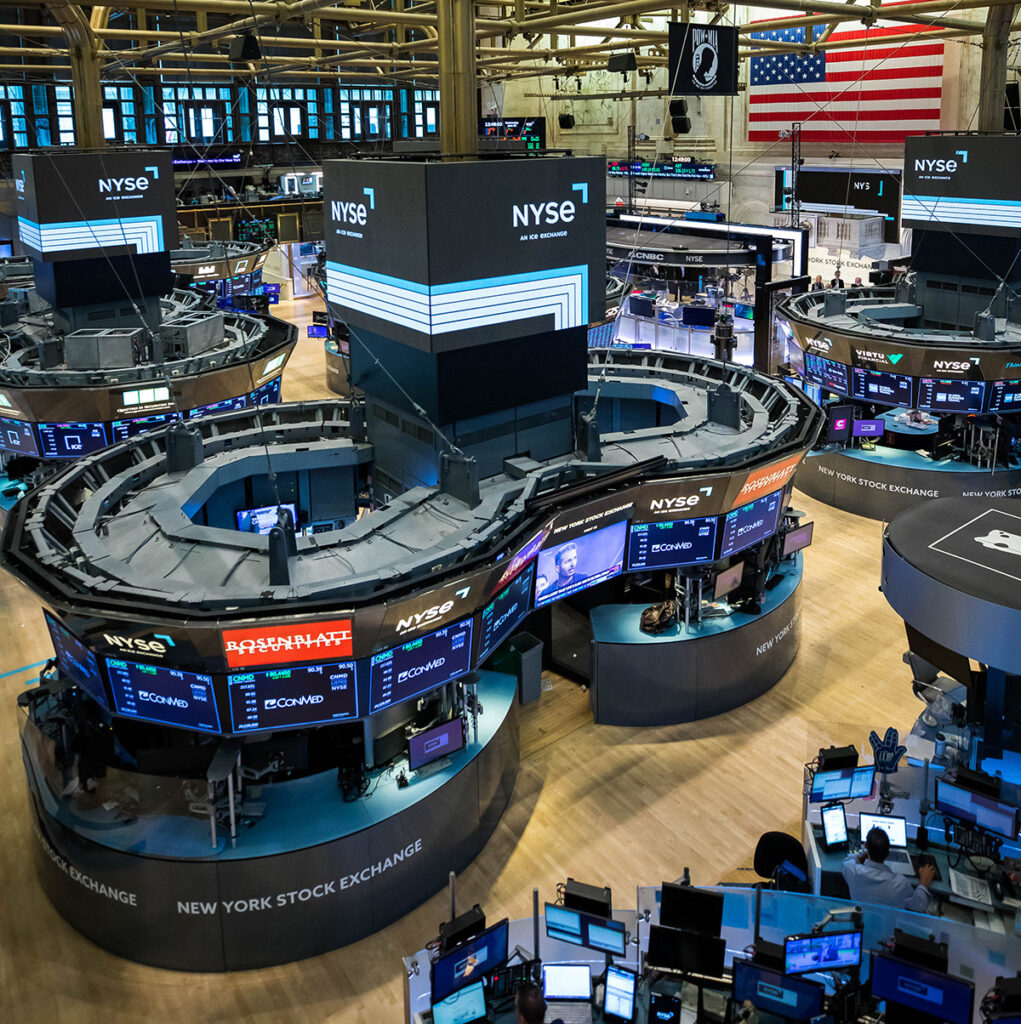
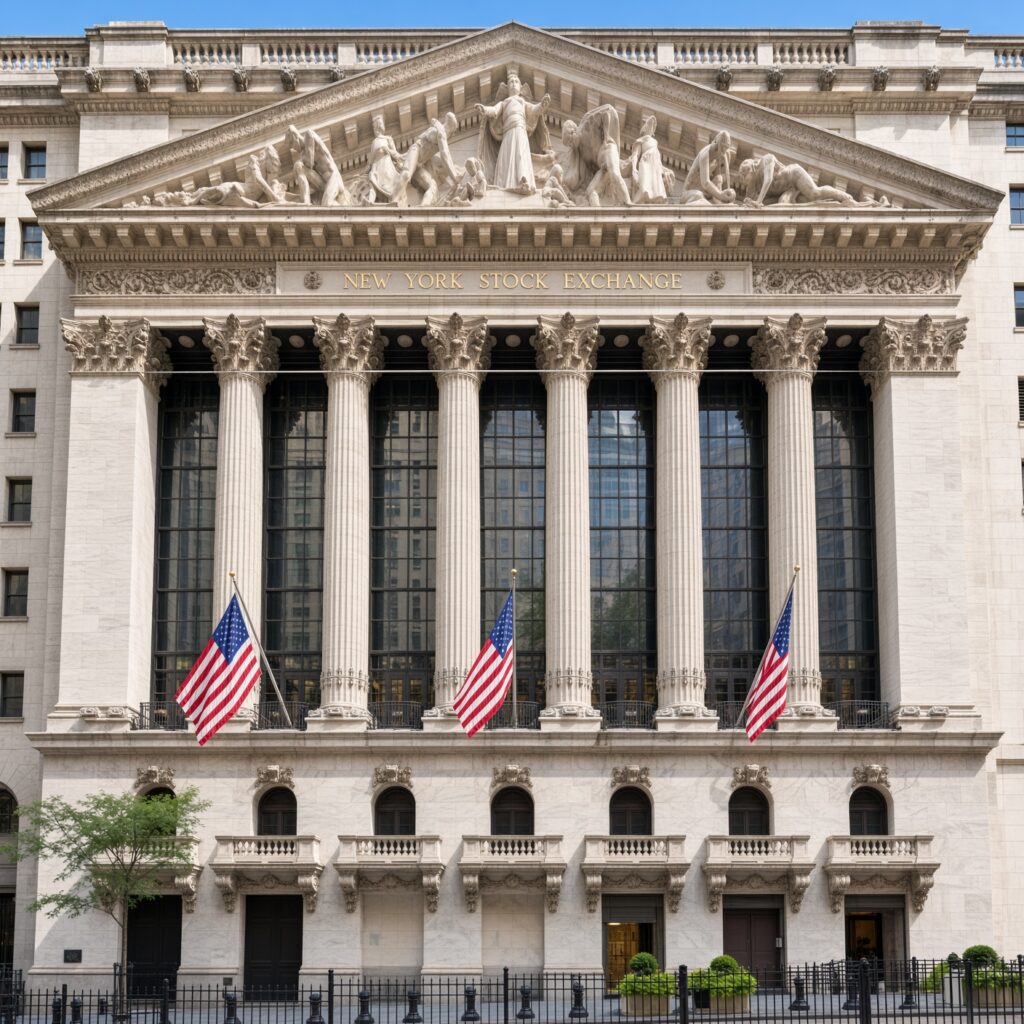
The New York Stock Exchange (NYSE) is the largest stock exchange in the world by market capitalization. Located at 11 Wall Street in Lower Manhattan, New York City, it serves as a central marketplace where investors buy and sell shares of publicly traded companies.
To understand the NYSE, it helps to think of it as a massive, highly regulated digital and physical farmers’ market—but instead of produce, people are buying and selling ownership stakes in major global businesses.
The Two Main Roles of the NYSE
The exchange fulfills two critical functions in the global financial system:
- Helping Companies Raise Capital: When a private company wants to grow, expand operations, or fund research, it can offer shares to the general public through an Initial Public Offering (IPO). By listing on the NYSE, the company sells these shares to investors in exchange for capital.
- Providing Liquidity for Investors: Once a stock is listed, investors can freely buy and sell their shares among themselves. This creates liquidity, meaning you can quickly convert your investment into cash whenever you choose.
When you buy a share of stock on the NYSE, you are purchasing a tiny fraction of that company. If the company thrives and earns higher profits, the value of your share typically rises. Conversely, if the company struggles, the stock price may drop.
The History of Wall Street: How the NYSE Was Founded
The history of the New York Stock Exchange is closely tied to the history of the United States itself. Its origins date back over two centuries to a simple agreement signed outdoors under a tree.
The Buttonwood Agreement of 1792
On May 17, 1792, twenty-four stockbrokers met outside 68 Wall Street under a buttonwood tree. They signed a document known as the Buttonwood Agreement, establishing basic rules for trading securities and setting standard commission rates. This informal meeting marked the official birth of what would eventually become the NYSE.
Key Milestones in NYSE History
- 1863: The organization officially adopted the name New York Stock Exchange.
- 1903: The exchange moved into its famous building at 18 Broad Street / 11 Wall Street, featuring majestic neoclassical columns and a large open trading room.
- 1967: Muriel Siebert became the first woman to purchase a seat on the NYSE trading floor, breaking long-standing gender barriers in finance.
- 2006: The NYSE transitioned from a private, non-profit member organization to a publicly traded corporation (NYSE Group, Inc.).
- 2013: Intercontinental Exchange (ICE), a major American Fortune 500 company, acquired the NYSE. Today, ICE continues to operate and expand the exchange’s global infrastructure.
How Trading Works: Auction Market vs. Hybrid Model
Historically, stock trading was done entirely by humans shouting prices across a crowded floor—a process known as an “open outcry” system. However, modern financial markets have evolved dramatically.
The Hybrid Trading Model
Unlike pure electronic markets, the NYSE operates on a hybrid model. This means it combines state-of-the-art high-speed electronic execution with human oversight right on the physical trading floor.
While over 90% of all trades occur instantly across servers and algorithms, physical floor traders and specialized market experts remain present to oversee complex orders and manage market volatility during critical periods.
The Role of Designated Market Makers (DMMs)
A unique feature of the NYSE is the Designated Market Maker (DMM). Formerly known as “specialists,” DMMs are human traders assigned to specific stocks listed on the exchange.
The job of a DMM is to ensure fair, orderly, and continuous trading for their assigned stocks. They do this by:
- Setting opening and closing prices each business day.
- Step-in with firm capital to buy or sell shares when there is an imbalance of public buyers or sellers.
- Dampening sudden market fluctuations to prevent unnecessary price spikes or drops.
What Are the NYSE Trading Hours?
Standard equity trading on the NYSE takes place during specific operational hours in the Eastern Time (ET) zone.
Core Market Hours
- Monday through Friday: 9:30 AM to 4:00 PM Eastern Time (ET).
- Weekends & Holidays: Closed on Saturdays, Sundays, and official U.S. federal holidays (such as New Year’s Day, Martin Luther King Jr. Day, Thanksgiving, and Christmas Day).
Extended Hours Trading Sessions
In addition to regular core market hours, qualified retail and institutional investors can participate in extended trading sessions via electronic brokers:
- Pre-Market Session: Starts as early as 4:00 AM ET and runs until 9:30 AM ET.
- After-Hours Session: Runs from 4:00 PM ET to 8:00 PM ET.
Note: Trading during extended hours carries unique risks, including lower trading volume (liquidity) and higher price volatility compared to core trading hours.
The Iconic NYSE Opening and Closing Bells
Few financial traditions are as famous as the ringing of the NYSE opening and closing bells. The opening bell rings at exactly 9:30 AM ET to mark the start of the trading day, while the closing bell rings at 4:00 PM ET to signify the end of trading.
In the 1800s, the exchange used a brass gongs to signal trading sessions. In 1903, when the current building opened, the system was updated to the loud electric brass bell used today.
Ringing the bell has evolved into a ceremonial honor. Business executives, founders celebrating their company’s initial listing, public figures, athletes, and charitable organizations are regularly invited to step onto the balcony to press the button that sounds the bell.
NYSE vs. NASDAQ: What Is the Difference?
Beginner investors often confuse the NYSE with another major U.S. stock exchange: the NASDAQ. While both platforms host publicly traded securities, they differ in several important ways.
| Feature | New York Stock Exchange (NYSE) | NASDAQ |
|---|---|---|
| Market Structure | Hybrid model (Electronic execution + Physical floor with DMMs) | 100% electronic dealer network |
| Physical Location | 11 Wall Street, New York City | No physical trading floor (Headquartered in NYC) |
| Company Focus | Blue-chip, established industrial, energy, and financial giants | Technology, biotechnology, and high-growth internet companies |
| Market Maker Model | Single Designated Market Maker (DMM) per stock | Multiple competing market makers per stock |
| Famous Listings | Walmart, Coca-Cola, JPMorgan Chase, Disney | Apple, Microsoft, Amazon, Alphabet (Google) |
Listing Requirements: How Companies Get on the NYSE
Not just any company can list its shares on the New York Stock Exchange. The NYSE maintains strict financial, managerial, and governance standards to ensure that only reputable businesses are made available to investors.
To qualify for a listing on the NYSE, a public company must satisfy initial standards regarding:
- Market Capitalization: The total value of a company’s outstanding shares must meet high minimum dollar thresholds.
- Share Public Float: The company must issue a specific minimum number of publicly available shares to ensure healthy liquidity.
- Financial Performance: Companies must demonstrate consistent pre-tax earnings over prior financial years or maintain significant revenue and cash flow.
- Corporate Governance: Listed entities must adhere to strict corporate board oversight, independent auditing, and transparent shareholder communication rules.
When a business listed on the NYSE fails to maintain these ongoing standards (for example, if its share price remains under $1.00 for an extended period), it faces potential warning notices or delisting from the exchange.
Major NYSE Market Indices: Dow Jones and S&P 500
When financial analysts talk about “how the stock market is doing,” they are usually referencing broader market indexes that track groups of stocks listed on the NYSE and NASDAQ.
1. The Dow Jones Industrial Average (DJIA)
The “Dow” is one of the oldest and most watched stock market indexes in the world. Created by Charles Dow in 1896, it tracks 30 prominent, high-grade American companies. Most of the stocks included in the Dow Jones—such as Boeing, McDonald’s, and Goldman Sachs—are listed on the NYSE.
2. The S&P 500 Index
The Standard & Poor’s 500 (S&P 500) tracks the performance of 500 of the largest publicly traded U.S. corporations. Because the NYSE lists over 80% of the S&P 500’s components, movement on the NYSE floor directly impacts the overall index. Many institutional investors consider the S&P 500 to be the best single gauge of large-cap American equities.
How the NYSE Protects Investors from Market Crashes
During extreme economic crises or market shocks, panic selling can cause stock prices to plummet rapidly. To protect investors and maintain orderly markets, the NYSE uses automated safeguard mechanisms known as Circuit Breakers.
Market-Wide Circuit Breakers (Trading Curbs)
Trading curbs freeze market activity temporarily across all exchanges when the S&P 500 index experiences severe declines relative to the previous day’s closing price:
- Level 1 (7% Drop): Trading across all exchanges pauses for 15 minutes if the decline occurs before 3:25 PM ET.
- Level 2 (13% Drop): Trading pauses for another 15 minutes if the drop occurs before 3:25 PM ET.
- Level 3 (20% Drop): Trading halts completely for the remainder of the business day regardless of when the drop occurs.
These temporary pauses give institutional and retail investors a chance to process news, evaluate financial information rationally, and prevent emotional panic selling from spiraling out of control.
How Beginners Can Start Trading NYSE Stocks

You do not need to be a Wall Street professional or hold millions of dollars to buy shares of companies listed on the NYSE. Today, modern technology makes retail investing accessible to almost anyone.
Here is a step-by-step roadmap for beginners interested in trading NYSE stocks:
Step 1: Choose a Regulated Online Brokerage
To place orders on the NYSE, you must open an investment account through a regulated brokerage firm. Popular U.S. online brokerages include Charles Schwab, Fidelity Investments, E*TRADE, and Robinhood. Look for platforms offering $0 commission fees on stock and ETF trades.
Step 2: Fund Your Investment Account
Once your account is approved and verified, transfer funds from your bank via ACH transfer or electronic wire. Only invest money that you will not need for short-term daily living expenses.
Step 3: Research NYSE-Listed Securities
Before buying any stock, examine the underlying business thoroughly. Review key metrics such as corporate earnings reports, price-to-earnings ratios (P/E), balance sheet debt, and competitive advantages.
Step 4: Select Your Order Type
When buying or selling shares through your online trading platform, you can select different order types:
- Market Order: Executes immediately at the best currently available market price.
- Limit Order: Executes only when the stock reaches a specific price target set by you.
Step 5: Diversify Your Portfolio
Avoid putting all your capital into a single stock. Spread your investments across multiple industries or consider low-cost Exchange-Traded Funds (ETFs) that track major NYSE indices to reduce overall portfolio risk.
The New York Stock Exchange (NYSE) has remained at the beating heart of global finance for more than two centuries. From its humble beginnings beneath a buttonwood tree in 1792 to its current position as a high-speed hybrid trading powerhouse, the NYSE continues to drive economic growth, help corporations raise capital, and provide retail investors worldwide with a gateway to wealth creation.
Whether you plan to buy shares in established blue-chip companies or invest systematically via broad index funds, understanding how the NYSE operates empowers you to navigate today’s dynamic financial markets with knowledge and confidence.