What Is the New York Stock Exchange (NYSE)?

The New York Stock Exchange (NYSE), often referred to as “The Big Board,” stands as the largest stock exchange in the world by market capitalization. Situated at 11 Wall Street in Lower Manhattan, New York City, this institution serves as the primary marketplace for buying and selling equity shares of public corporations, exchange-traded funds (ETFs), and fixed-income securities. For centuries, the exchange has played a central role in driving economic growth, enabling public companies to raise capital from global investors and providing liquid financial markets.
Understanding how the New York Stock Exchange operates is essential for individual investors, financial analysts, and corporate leaders. Beyond its iconic trading floor, the exchange combines advanced electronic networks with physical human oversight to facilitate billions of shares traded daily. This complete guide examines the history, operational structure, listing standards, market mechanics, and global economic influence of the world’s most famous financial market.
The History and Evolution of Wall Street Trading

The origin of the New York Stock Exchange traces back to May 17, 1792, when twenty-four stockbrokers signed the historic Buttonwood Agreement under a buttonwood tree on Wall Street. This foundational agreement established rules for trading securities and set commissions on transactions without intermediaries. In its early years, the exchange operated out of rented rooms on Wall Street and primarily traded government bonds and bank stocks.
In 1817, the group formalised its structure and adopted the name New York Stock & Exchange Board. Over the course of the nineteenth and twentieth centuries, the exchange experienced explosive growth parallel to the industrial expansion of North America. Key historical milestones include:
- 1863: The organization officially changed its name to the New York Stock Exchange.
- 1867: The introduction of stock tickers revolutionized the market by transmitting price changes over telegraph lines in real time.
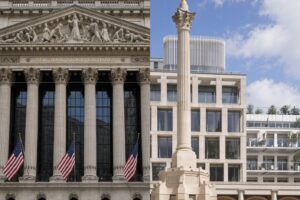
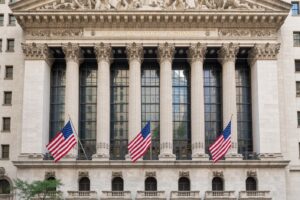
- 1903: The exchange moved into its landmark building at 11 Wall Street, designed by architect George B. Post, featuring a majestic classic facade and a vast trading floor.
- 1971: The NYSE transitioned into a non-profit corporation, expanding its regulatory frameworks and technological infrastructure.
- 2006: The exchange merged with Archipelago Holdings to become NYSE Group, Inc., transforming into a publicly traded, for-profit institution.
- 2013: Intercontinental Exchange (ICE) acquired the NYSE, integrating advanced global commodities and derivative technology into the exchange’s trading ecosystem.
How the NYSE Works: Trading Models and Market Mechanics
Unlike fully electronic equity exchanges that operate without physical trading floors, the New York Stock Exchange utilizes a unique hybrid market model. This hybrid structure integrates algorithmic high-speed execution technology with human decision-making on a physical trading floor, designed to provide price discovery, order execution efficiency, and market stability.
Designated Market Makers (DMMs)
At the center of the trading floor sits the Designated Market Maker (DMM), formerly known as a specialist. Every company listed on the exchange is assigned a specific DMM firm. The DMM is responsible for maintaining a fair and orderly market for designated stocks. DMM duties include facilitating opening and closing auctions, quoting buy and sell prices continuously, and stepping in with proprietary capital to buy or sell stock during severe liquidity shortages or extreme market volatility.
Floor Brokers and Electronic Order Routing
In addition to DMMs, floor brokers operate directly on the floor representing institutional clients, investment funds, and brokerage firms. Floor brokers use mobile technology and specialized order management systems to execute large block orders, leveraging floor intelligence to achieve optimal execution prices. Concurrently, the exchange’s electronic platform, powered by advanced matching engine technology, processes thousands of retail and institutional orders per second with microsecond latency.
Trading Hours and Market Phases
Standard trading hours run Monday through Friday, excluding public holidays:
- Pre-Market Session: 4:00 AM to 9:30 AM Eastern Time (ET), allowing institutional and retail participants to trade early based on overnight corporate filings or macroeconomic events.
- Regular Session: 9:30 AM to 4:00 PM Eastern Time (ET), commencing with the Opening Bell and concluding with the Closing Bell.
- Post-Market Session: 4:00 PM to 8:00 PM Eastern Time (ET), providing extended trading hours following earnings announcements or quarterly statements.
NYSE Listing Requirements for Public Companies
Becoming a listed company on the exchange is viewed globally as a mark of corporate prestige, stability, and financial transparency. To list shares, corporations must meet stringent financial, governance, and distribution criteria established by the regulatory arm of the exchange and national securities commissions.
Financial and Valuation Benchmarks
Companies applying for an Initial Public Offering (IPO) or direct listing must satisfy quantitative thresholds under one of several financial standards:
- Earnings Test: Pre-tax earnings from continuing operations must aggregate at least $10 million over the prior three fiscal years, with a minimum of $2 million in each of the two most recent fiscal years.
- Global Market Capitalization Test: Total global market capitalization must meet or exceed $200 million for existing public transfers or specific IPO qualifying models.
- Minimum Share Price: At the time of listing, shares must maintain a minimum bid price of $4.00 per share.
Liquidity and Shareholder Distribution Requirements
To ensure robust trading liquidity, listing candidates must satisfy specific public float distribution guidelines:
- A minimum of 1.1 million publicly held shares must be available for public trading.
- The company must have at least 2,200 total shareholders, or 500 total shareholders with an average monthly trading volume exceeding 1 million shares over the preceding 12 months.
- The aggregate market value of publicly held unrestricted shares must meet or exceed $40 million for IPOs.
Corporate Governance Standards
Listed companies must comply with corporate governance rules, including maintaining an independent board of directors, establishing audit committees composed entirely of independent financial experts, and establishing transparent executive compensation practices.
Major Stock Market Indexes Tracking the Exchange
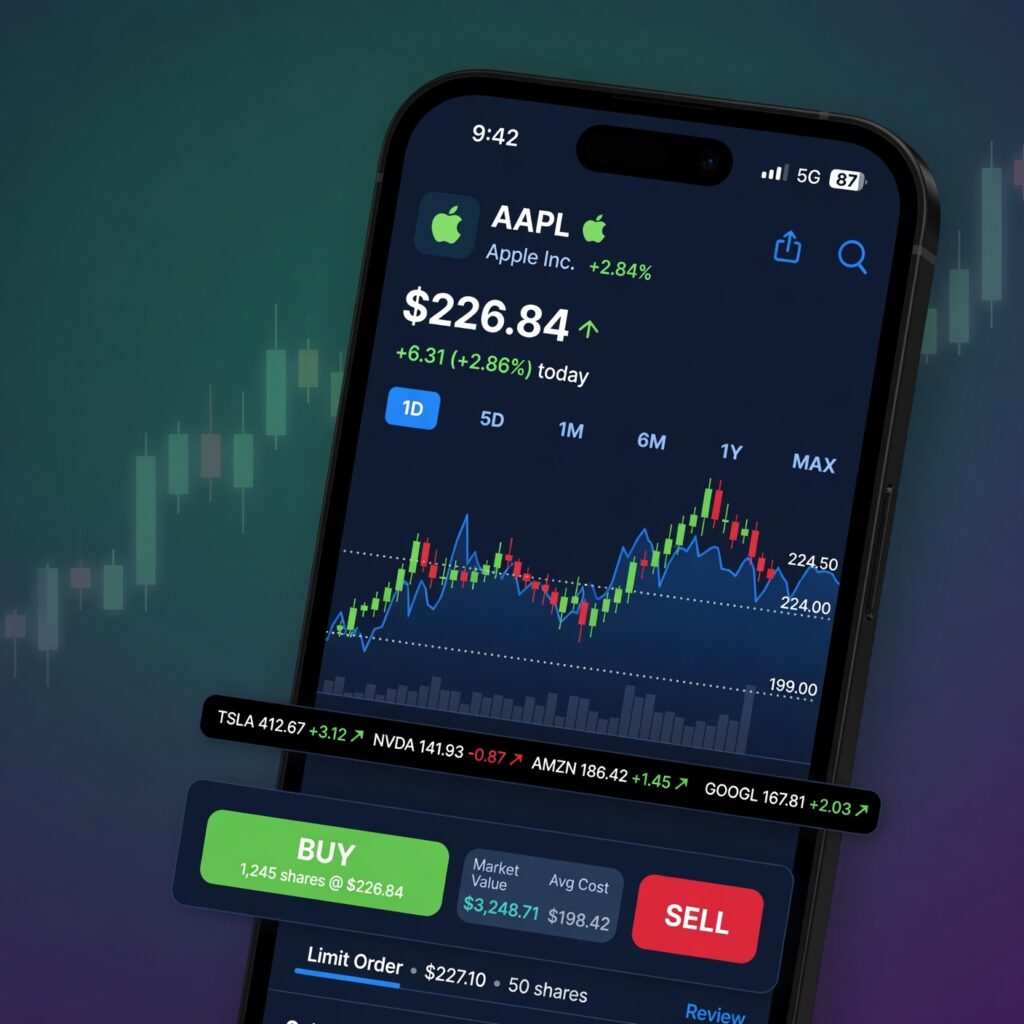
The overall health and performance of the companies listed on the exchange are tracked through benchmark stock market indexes used by global financial institutions, pension funds, and individual investors.
The Dow Jones Industrial Average (DJIA)
Created by Charles Dow in 1896, the Dow Jones Industrial Average is a price-weighted index tracking 30 blue-chip, large-cap companies. The majority of DJIA constituent companies maintain primary listings on the exchange, serving as a historic barometer for corporate performance.
The NYSE Composite Index
The NYSE Composite Index ($NYA) offers a broad, comprehensive measurement of market activity by tracking all common stocks listed on the exchange. This includes real estate investment trusts (REITs), American Depositary Receipts (ADRs) representing foreign issuers, and tracking stocks. Because it includes thousands of international and domestic assets, it provides a complete picture of total market performance.
The S&P 500 Index
While the S&P 500 index includes equities traded across multiple electronic venues, the majority of its total market capitalization is composed of large-cap equities listed on the exchange. The market-capitalization-weighted index is widely regarded as the single best representation of large-cap equity performance.
NYSE vs. NASDAQ: Key Differences Explained
Investors often contrast the New York Stock Exchange with NASDAQ, the second-largest stock exchange globally. While both facilitate equity trading, fundamental differences exist between their market architecture, company profiles, and cost structures.
| Feature | New York Stock Exchange (NYSE) | NASDAQ |
|---|---|---|
| Market Model | Hybrid (Physical Floor + Electronic Matching with DMMs) | 100% Electronic Dealer Network (Multiple Market Makers) |
| Dominant Sectors | Industrial, Energy, Financial Services, Consumer Goods, Healthcare | Technology, Biotechnology, Software, Digital Platforms |
| Listing Cost | Higher initial and annual listing fees | Comparatively lower listing and maintenance fees |
| Market Perception | Blue-chip, established, high market-cap legacy corporations | High-growth, innovative, technology-focused enterprises |
Market Circuit Breakers and Volatility Safeguards
To safeguard investors against systemic crashes and algorithmic instability, modern stock markets enforce automated market-wide circuit breakers. First introduced following the Black Monday crash of October 1987, these safeguards halt trading temporarily across all equity markets when benchmark indexes drop sharply.
Circuit breaker thresholds are evaluated against the S&P 500 Index closing price from the preceding trading day:
- Level 1 Decline (7% drop): Trading halts across all exchanges for 15 minutes if the decline occurs before 3:25 PM Eastern Time.
- Level 2 Decline (13% drop): Trading halts for an additional 15 minutes if the drop occurs before 3:25 PM Eastern Time.
- Level 3 Decline (20% drop): Trading is suspended for the remainder of the trading day, regardless of the time the threshold is breached.
In addition to market-wide circuit breakers, single-stock limit-up and limit-down (LULD) bands prevent individual equities from trading outside specific price boundaries during five-minute intervals, mitigating sudden spikes or drops caused by order imbalances.
How Retail Investors Can Trade on the Exchange
Participating in the public equity market no longer requires directly contacting a physical floor broker. Modern fintech innovation allows retail investors worldwide to execute trades on the exchange within seconds.
Step 1: Choose a Regulated Brokerage Account
Investors begin by opening an account with a regulated brokerage firm, investment platform, or financial mobile application. Look for brokers that offer commission-free trading, robust clearing services, high security protocols, and direct market access routing.
Step 2: Fund the Trading Account
Once identity verification and anti-money laundering checks are completed, capital is transferred into the brokerage account via wire transfer, ACH transfer, or electronic deposit.
Step 3: Conduct Fundamental and Technical Research
Before placing orders, analyze key corporate financial indicators, including price-to-earnings (P/E) ratios, debt-to-equity metrics, revenue growth rates, balance sheets, dividend yields, and macroeconomic interest rate trends.
Step 4: Select an Order Type
When submitting an order through a brokerage interface, choose the execution type that aligns with your risk management strategy:
- Market Order: Executes immediately at the best available current market price.
- Limit Order: Sets a specific maximum purchase price or minimum selling price, executing only when the market reaches that price.
- Stop-Loss Order: Triggers an automated sell order if the asset price falls to a designated threshold, protecting capital against severe downside movements.
The Economic Impact and Global Role of Wall Street
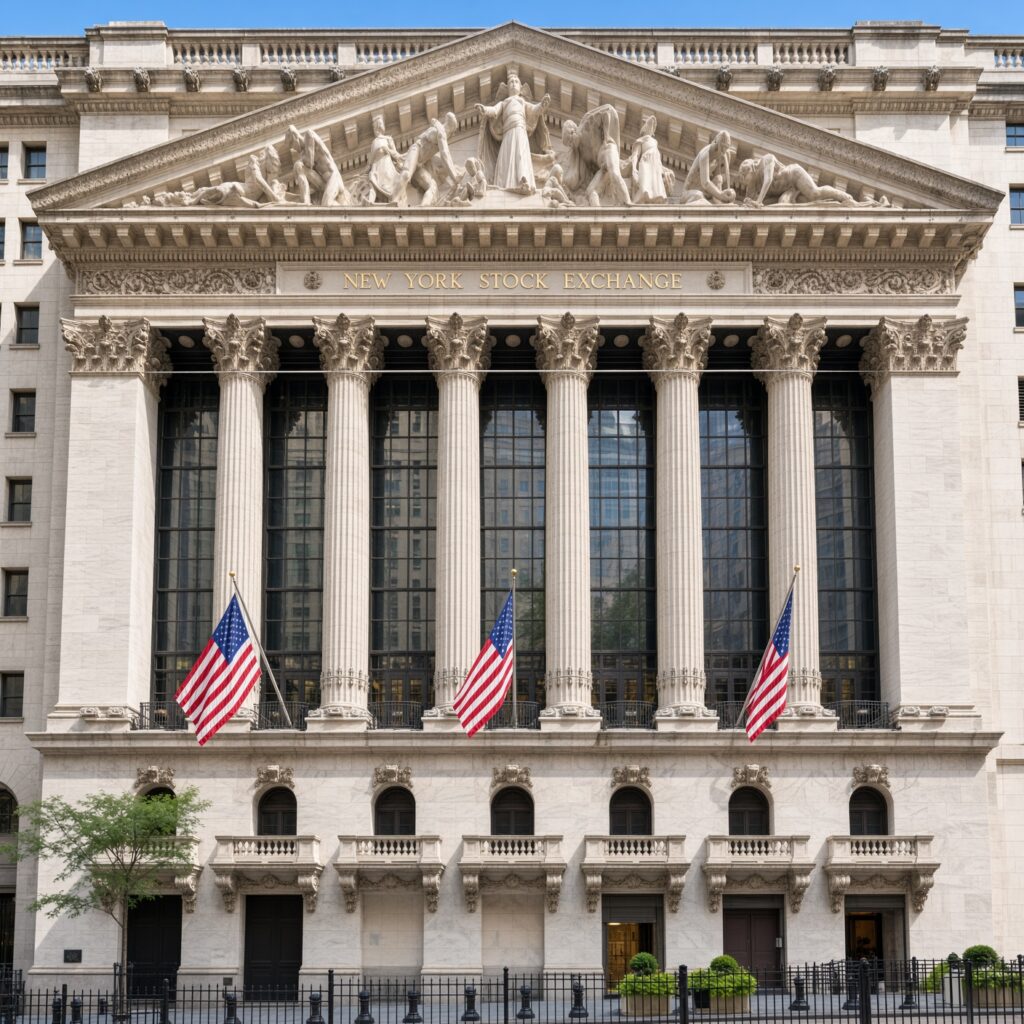
The capital markets centered on Wall Street serve as a primary engine for global capital allocation. When corporations issue shares through initial public offerings, they raise billions of dollars utilized to build factories, invest in research and development, finance green energy initiatives, construct infrastructure, and create millions of jobs worldwide.
Furthermore, the exchange offers institutional entities—such as pension funds, endowment funds, insurance firms, and sovereign wealth reserves—the liquidity required to deploy long-term capital efficiently. By providing structured regulatory oversight, standardized accounting requirements, and deep market depth, the institution maintains global confidence in public security markets.
The New York Stock Exchange remains a cornerstone of the international financial ecosystem. From its humble origins under a buttonwood tree in 1792 to its modern position managing tens of trillions of dollars in market capitalization, the exchange has continuously evolved to meet the demands of global capitalism. By integrating human oversight on its historic trading floor with high-speed electronic execution, the exchange provides the transparency, regulatory rigor, and liquidity needed to power global enterprise. Whether you are a beginner establishing your investment portfolio or an experienced financial analyst, understanding how this financial marketplace functions provides a strong foundation for navigating the modern stock market.